|

The case for NOK longs against SEK

There are some compelling reasons for NOK (Norwegian Krona) strength against SEK (Swedish Krona) as we head into year-end. Remember that one of the key trading principles is to trade a strong currency pair against a weak one. Yesterday, the Norges (Norway) and the Riksbank (Sweden) both met and decided on their current interest rate. Their outlook was very different as they showed a policy divergence.

Swedish Riksbank

They raised interest rates to 0% from -0.25% in a retreat from negative interest rates. The general view of the meeting was that the Riksbank saw this hike as a ‘one and done’ hike and expected interest rates to remain at 0% for the coming years

Norwegian Norges Bank

The Norges bank kept interest rates at 1.50% vs 1.50% expected and acknowledged a less expansionary rate path ahead. However, the have retained an upside bias with expectations of a 1.60% interest rate increase in 2020.

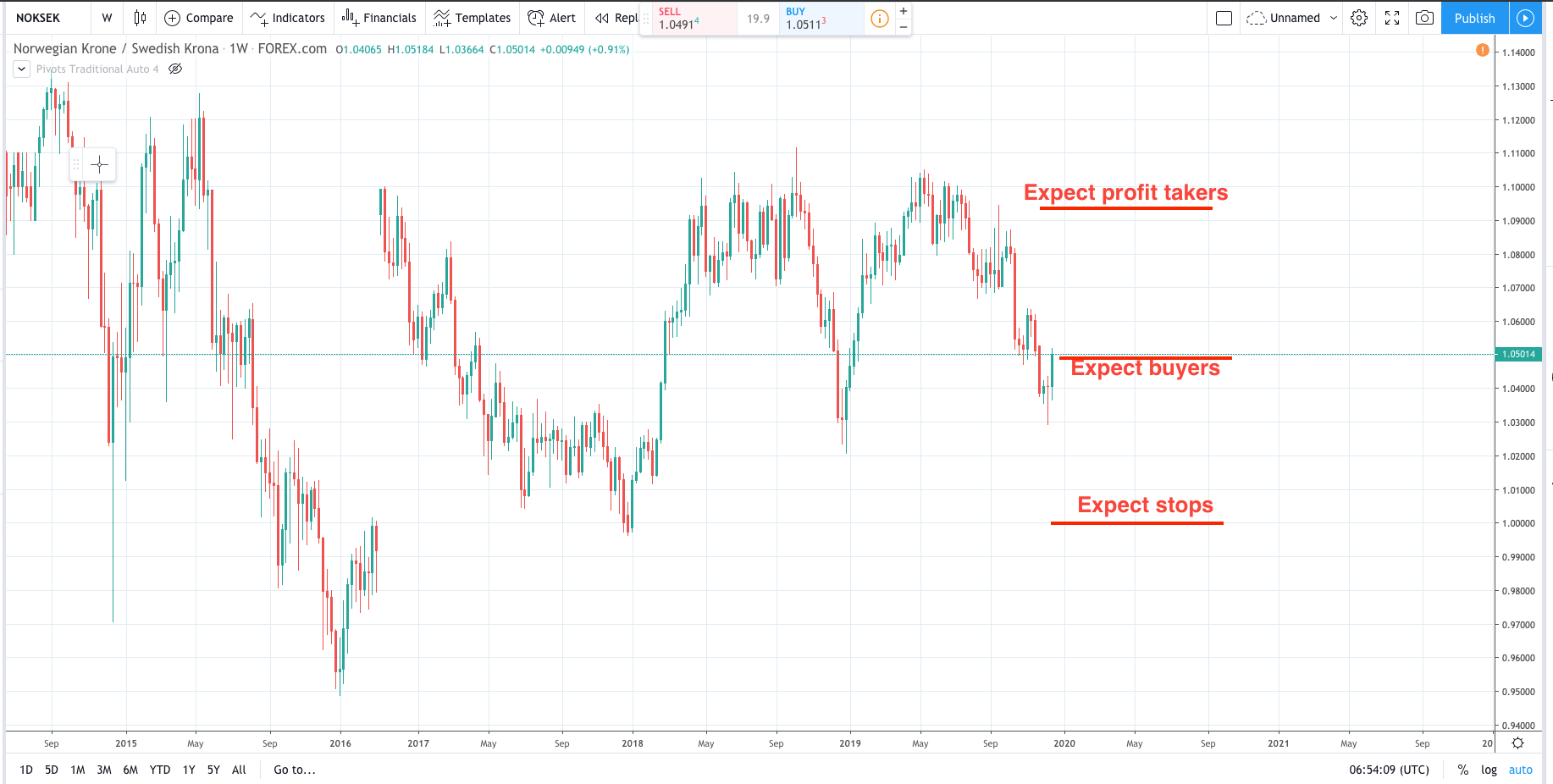
So these two central banks have diverging outlooks and NOKSEK looks likely to attract buyers.

Timing is everything

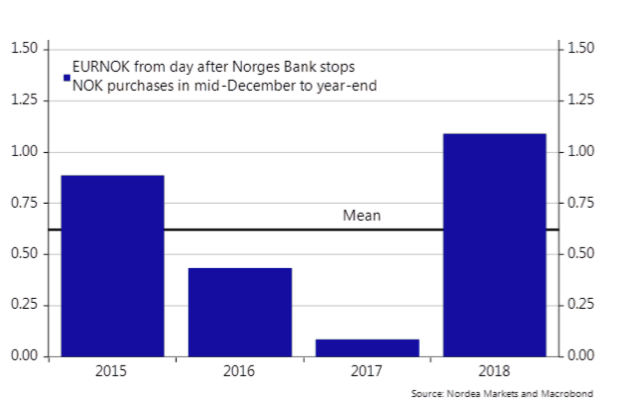
One aspect to be aware of is that, according to Nordea markets, Norges bank stops FX purchases for NOK which usually leaves NOK vulnerable over Christmas. Here is a chart showing the EURNOK from the day after Norges Bank stop NOK purchases in mid-December to year-end.
EURNOK

The timing for buyers, therefore, would be entering the market late December/early Jan to avoid any Christmas NOK weakness.
NOKSEK

Learn more about HYCM

Author

Giles Coghlan LLB, Lth, MA

Giles is the chief market analyst for Financial Source. His goal is to help you find simple, high-conviction fundamental trade opportunities. He has regular media presentations being featured in National and International Press.


More from Giles Coghlan LLB, Lth, MA
Share:

Editor's Picks

GBP/USD clings to moderate gains near 1.3400

GBP/USD enters a consolidation phase near 1.3400 after closing in positive territory on Tuesday. Weaker-than-expected June CPI readings from the US make it difficult for the US Dollar to gather strength and allow the pair to stay afloat. Fed Chair Warsh's second day of congressional testminoy and US producer inflation data could ramp up the market volatility in the American session.

EUR/USD holds steady above 1.1400 ahead of US data

EUR/USD stabilizes following Tuesday's rebound and trades in a narrow channel above 1.1400. The US Dollar (USD) struggles to stay resilient against its rivals following the soft inflation data but escalating tensions in the Middle East limit the pair's upside for now. Later in the day, June producer inflation data from the US will be watched closely by market participants.

Gold struggles to build on Tuesday's gains, retreats toward $4,000

After rising more than 1% on Tuesday, Gold loses its traction midweek and declines toward $4,000. While the USD stays on the back foot following the soft June inflation data, escalating tensions in the Middle East causes XAU/USD to stretch lower. Markets await PPI data from the US, while keeping a close eye on headlines surrounding the US-Iran conflict.

Bitcoin, Ethereum, and Ripple show tentative recovery as key technical levels hold

Bitcoin, Ethereum and Ripple trade with a mild positive bias on Wednesday as sentiment improves across the cryptocurrency market. BTC is testing its 50-day Exponential Moving Average, ETH has broken above a key resistance level at $1,800, while XRP has found support around a key level.

BoC set to keep interest rates steady for sixth consecutive meeting

The Bank of Canada is widely expected to keep its policy rate unchanged at 2.25% on Wednesday. The central bank will announce its policy decision at 13:45 GM. This would be the sixth consecutive event with the central bank keeping its hand steady. The BoC left its policy rate unchanged at 2.25% last month, as widely anticipated.

-0.4%: Why the biggest CPI drop since 2020 couldn't buy back a single cut

The June CPI fell 0.4% on the month, the largest one-month decline since April 2020, dragging the annual rate to 3.5% from May's 4.2% and snapping a three-month acceleration streak. Core prices went nowhere, flat on the month and down to 2.6% YoY, both under consensus.