The Bank of Canada Preview: Lower oil prices and headline inflation will keep rates on hold in January
- The Bank of Canada is widely expected to keep its target for the overnight rate at 1.75% in January as oil prices slump weighs on headline inflation and CAD trades lower.
- Oil prices fell 38% since the beginning of October until the end of 2018 weighing on headline inflation globally.
- Trade conflicts are weighing more heavily on global demand.

The Bank of Canada is widely expected to keep the target for the overnight rate unchanged at 1.75% at the beginning of 2019 as global inflation is set to remain subdued due to lower oil prices while the Bank wants to keep calm to see what are impacts of trade wars on Canada’s economy.
Inflation is “expected to ease in coming months by more than the Bank had previously forecast, due to lower gasoline prices,” the Bank wrote in the policy statement on December 5 and now it is the time to repeat the same message to justify its neutral stance.
Even with the policy rates unchanged in January, the Bank of Canada Governor Stephen Poloz is expected to remain on track for further rate hike voicing the data dependent policy approach. With Canada’s inflation at 1.7% over the year in November and the Ivey PMI survey beating the market estimates on the upside in December while rising to 59.7, the Bank of Canada Governor Stephen Poloz can easily opt for a wait and see approach as major deceleration in the economic activity in Canada tracks back to September last year.
“Governing Council continues to judge that the policy interest rate will need to rise into a neutral range to achieve the inflation target. The appropriate pace of rate increases will depend on a number of factors. These include the effect of higher interest rates on consumption and housing, and global trade policy developments. The persistence of the oil price shock, the evolution of business investment, and the Bank’s assessment of the economy’s capacity will also factor importantly into our decisions about the future stance of monetary policy,” the Bank of Canada said in December policy statement while keeping the monetary policy unchanged after three rate hikes in 2018.
The Bank of Canada senior Deputy Governor Carolyn Wilkins indicated that the neutral range refers to 2.5%-3.5% range.
Along with the monetary policy statement, the Bank of Canda will release also monetary policy report and reason its neutral policy stance at the subsequent press conference at which it will try to strike a balanced tone on rates, even as the market is currently reprising the options of the US actually cutting rates in 2019 due to a sharp deceleration in the economic confidence.
Inflation in Canada
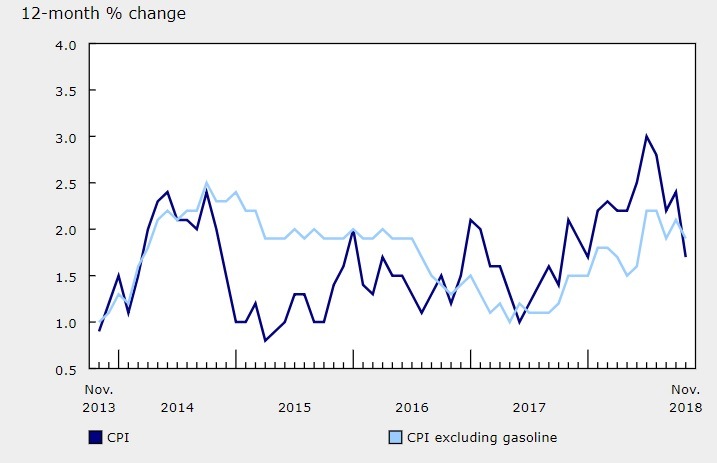
Source: Statistics Canada
Author

Mario Blascak, PhD
Independent Analyst
Dr. Mário Blaščák worked in professional finance and banking for 15 years before moving to journalism. While working for Austrian and German banks, he specialized in covering markets and macroeconomics.
















