Warsh is cutting the Fed's rate meetings. Fewer decisions, bigger moves
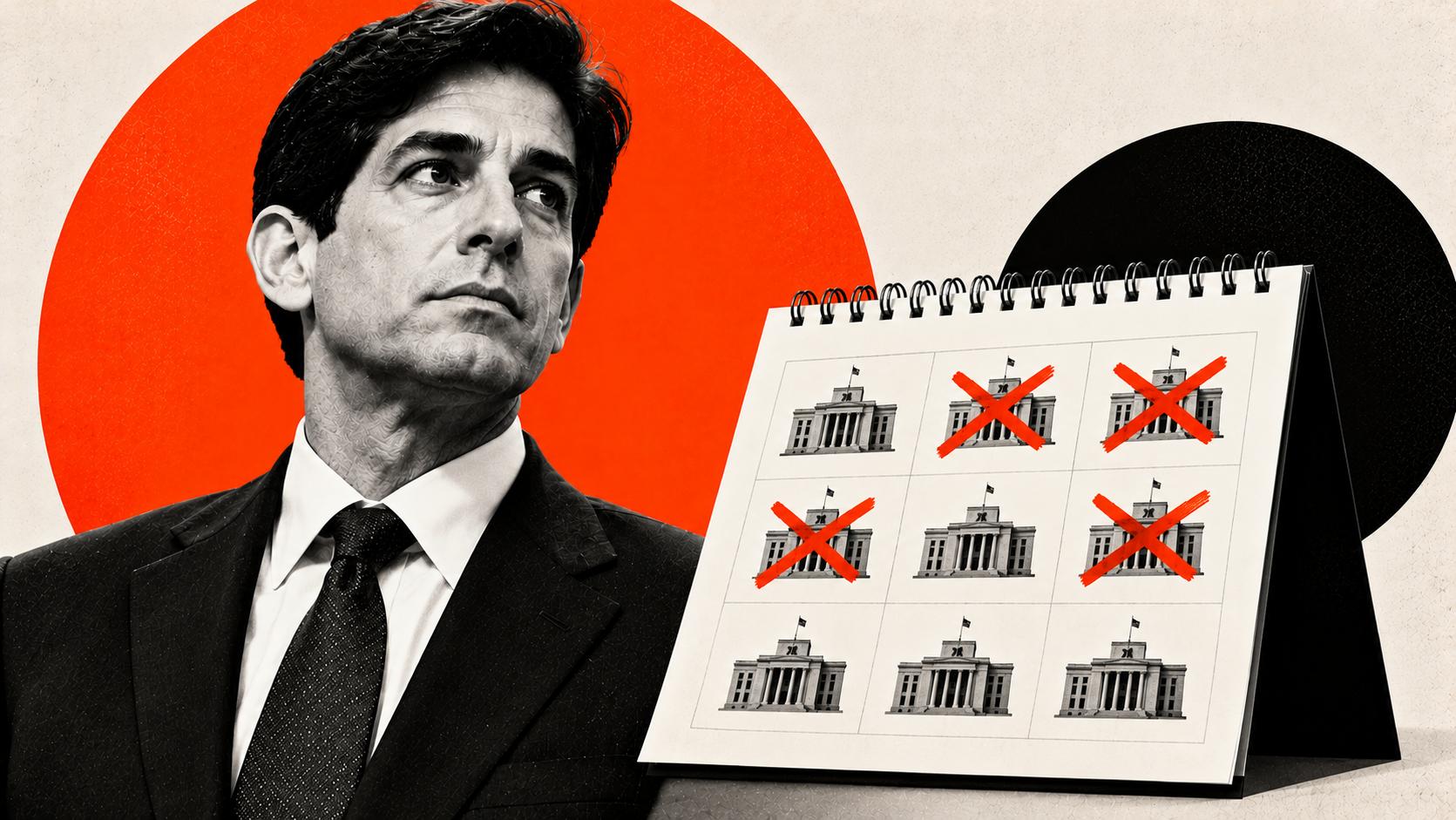
Federal Reserve Chair Kevin Warsh will drop the interest rate vote from one Fed meeting a year in 2027 to two in 2028. More news will pile up before each remaining decision, so each should move rates and bond yields further.
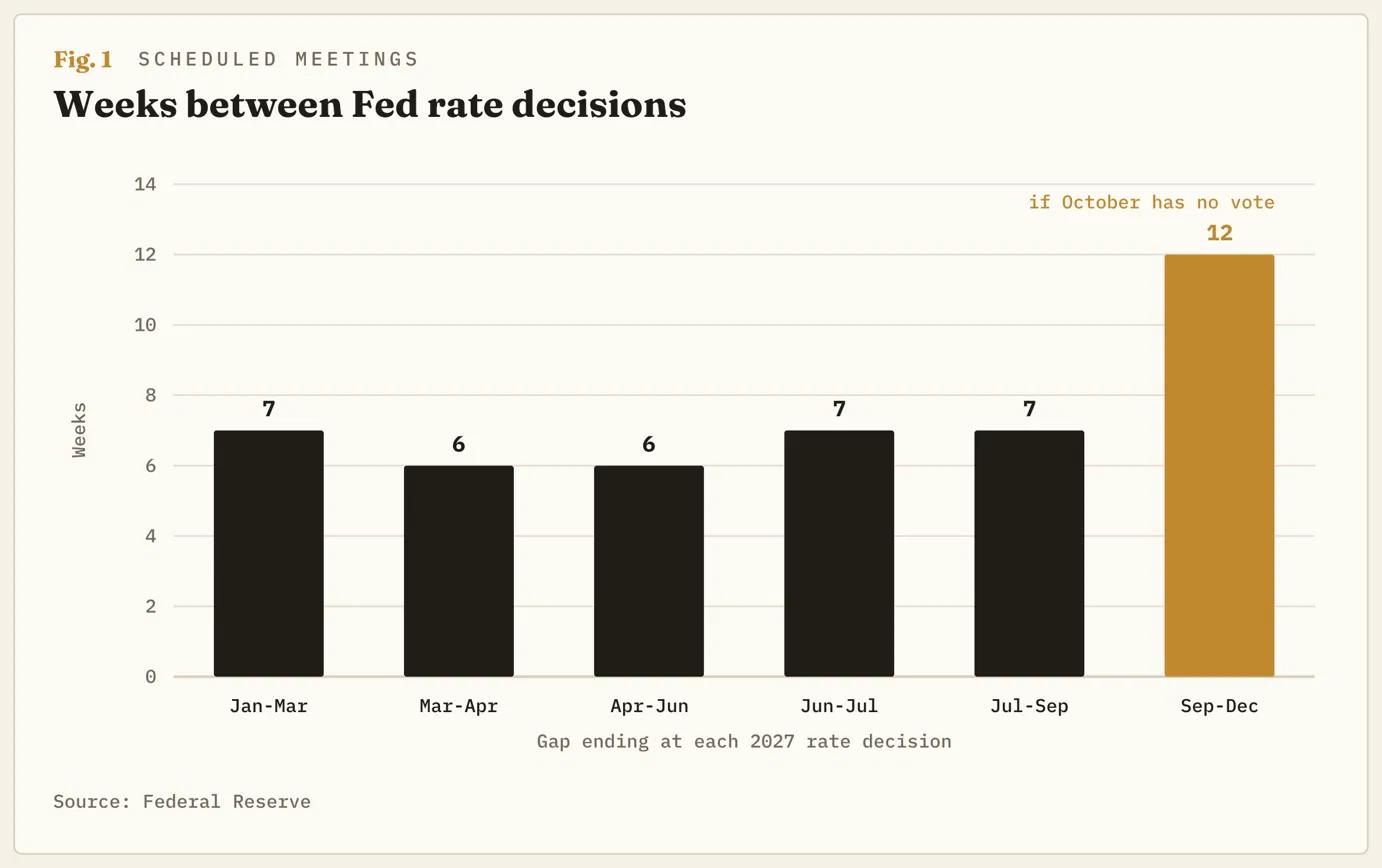
From the fall of 2027, the Fed will vote on interest rates at seven of its eight yearly meetings instead of all eight, and in 2028 at six. Fewer votes in the same year mean more news lands before each one, so the votes that remain will move rates and markets further. Fed Chair Warsh announced the change in October. The Fed's rate-setting group, the Federal Open Market Committee (FOMC), has voted on rates at all eight of its yearly meetings since 1981. By 2028, it will still meet eight times a year and decide the rate at six of them.
The first place this shows up is the two-year Treasury yield, the interest rate on two-year US government debt, which moves with traders' bets on where the Fed's rate is heading. Decision days are when traders find out whether those bets were right, and the new calendar means fewer of those days, each one covering more news.
Eight meetings stay, two votes go
The meeting without a vote will focus on long-term strategy, with no rate decision and no statement. Chair Warsh's reason is that rate decisions work best with plenty of new information between them. Nobody outside the Fed has to sign off, since the law asks the committee to meet four times a year and says nothing about voting.
The Fed hasn't said which meeting loses its vote first. One forecasting firm expects October 2027, because it sits between two meetings where the Fed publishes its economic forecasts. That would leave 12 weeks between rate decisions, from September 15 to December 8, instead of the usual six or seven. Two monthly inflation reports would land in that gap instead of one, and traders would have to bet on both with no Fed decision in between.
Twice the wait, double the surprise?
Twice as long between decisions doesn't mean twice the surprise, because good and bad news partly cancel out. A strong jobs report and a weak Retail Sales number can land in the same month and pull in opposite directions. A standard rule from statistics says a 12-week gap carries about 1.4 times the surprise of a six-week gap, which is still 40% more.
Until June, the Fed's statement hinted at its next move, so traders usually had a decision built into prices before the day. Chair Warsh dropped those hints. More of each move now happens on decision day itself, and a longer gap makes that day bigger.
The Fed usually moves its rate a quarter point at a time. With six decisions a year, that caps a year of moves at 1.5 points instead of 2. A Fed that falls behind on inflation then has to catch up in half-point steps, which move the two-year yield more than quarter-point ones. For scale, the Fed raised rates by that much in just three meetings between March and June 2022.
Sweden tried five meetings and moved to eight
Sweden's central bank, Sveriges Riksbank, tried this. It cut its rate meetings from six a year to five in 2019. When inflation took off in 2022, it had to raise rates in big jumps, including a full percentage point in one go that September.
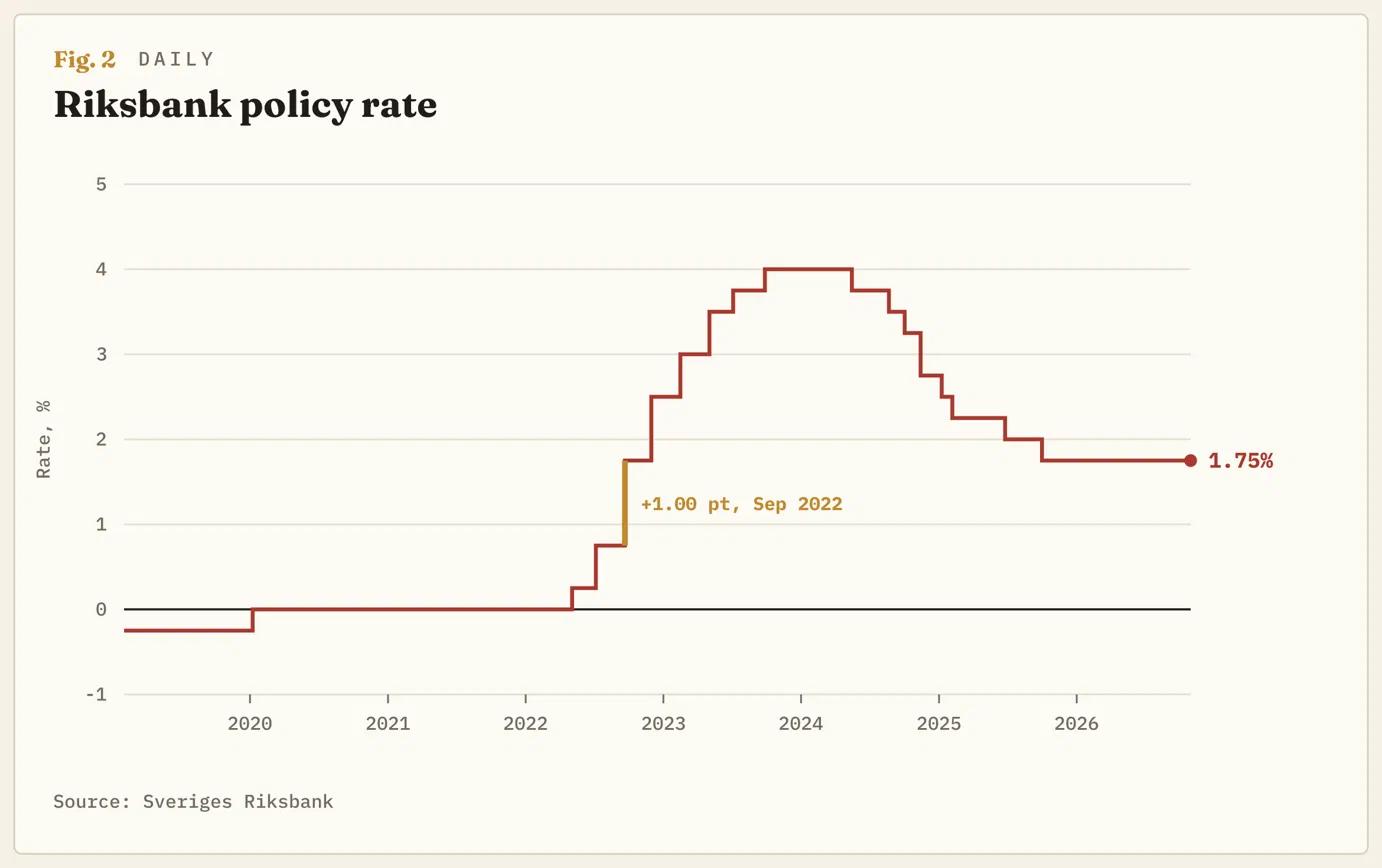
In 2023, it decided to move to eight meetings a year from 2024, saying more meetings would let it react faster. Anna Breman, then the Riksbank's First Deputy Governor, said in the August 2024 minutes that more meetings meant it didn't have to move rates in such big steps. The Fed is now making the change Sweden made in 2019, three years after Sweden decided to undo it.
For US traders, that's the lesson: when a central bank has fewer chances to move, each move tends to be bigger, and the two-year yield moves with it.
Decision days haven't gotten bigger yet
This hasn't shown up in the market yet. On Chair Warsh's four decision days since June, the two-year yield moved by a bit under a tenth of a percentage point on average. That's about the same as on former Fed Chair Powell's decision days in 2024.
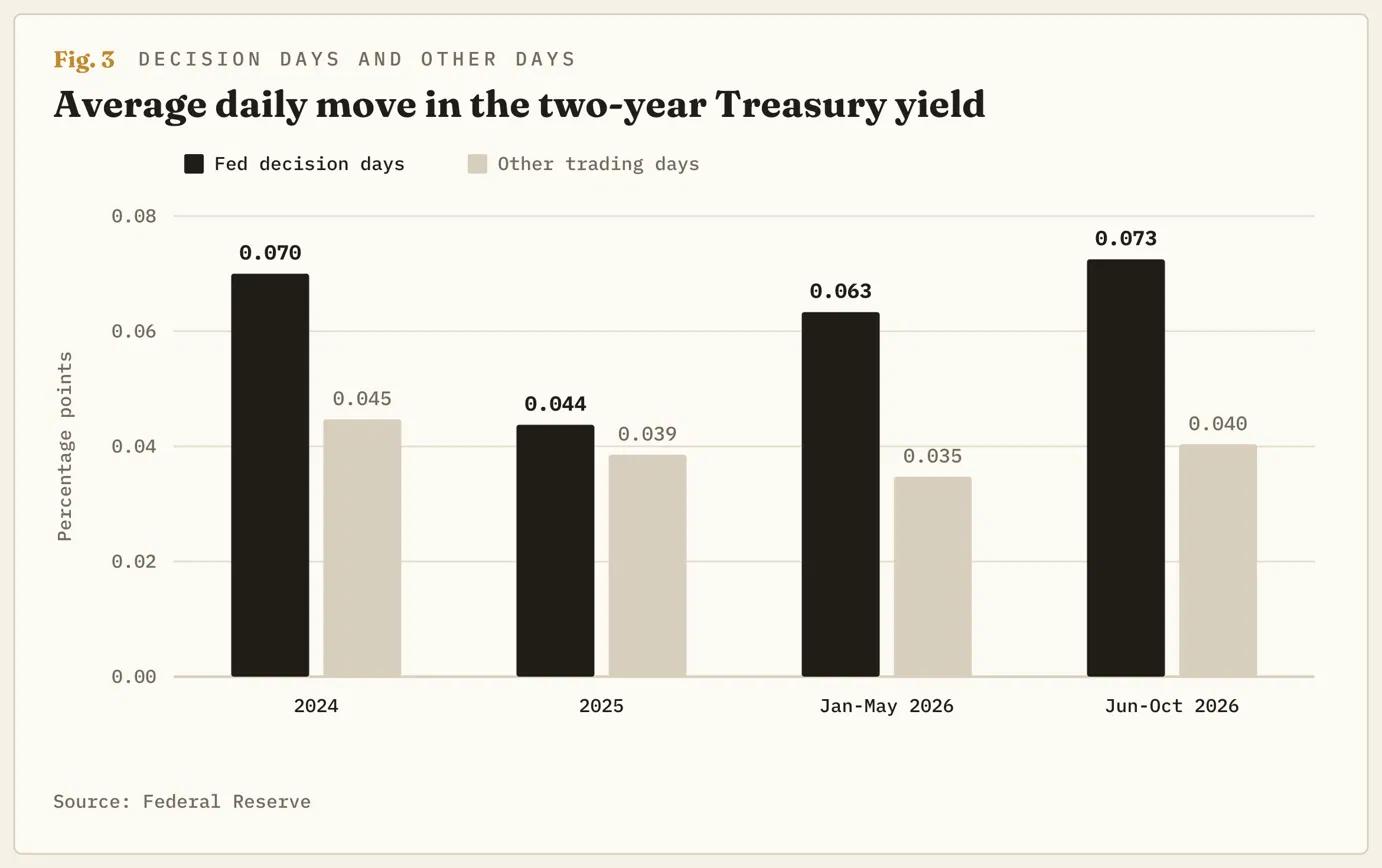
That doesn't count against the idea, because none of those decisions came after a long gap, and the new calendar doesn't start until the fall of 2027. The October meeting, which announced the change, moved the two-year yield by three hundredths of a percentage point.
Fewer decisions put more of the risk on each one
Whether the moves get bigger depends on what the Fed does with the longer gaps. It can still change rates between meetings, as it did twice in March 2020, and Fed officials can use speeches to tell traders what the committee is thinking. Either would spread the surprise across the gap.
A Fed that sticks to the calendar and says little in between puts all of the year's surprises on six days. Chair Warsh describes the change as giving the committee time for the big questions, and for anyone holding two-year Treasuries, it means the same amount of news priced on fewer days.
Two things will show which way it goes. The first is the Fed naming which 2027 meeting becomes the strategy meeting, and if it's October, the September-to-December gap is the first real test. The second is how much the two-year yield moves on decision days compared with a normal day, which since 2024 has ranged from about the same to almost double. If it stays in that range through 2028, the case is wrong. If it climbs, anyone holding short-term Treasuries or betting on the Fed's next move is taking more risk on each of the six days a year.
Author

Joshua Gibson
FXStreet
Joshua joins the FXStreet team as an Economics and Finance double major from Vancouver Island University with twelve years' experience as an independent trader focusing on technical analysis.

















