Term premiums are screaming – And the bond market’s done pretending
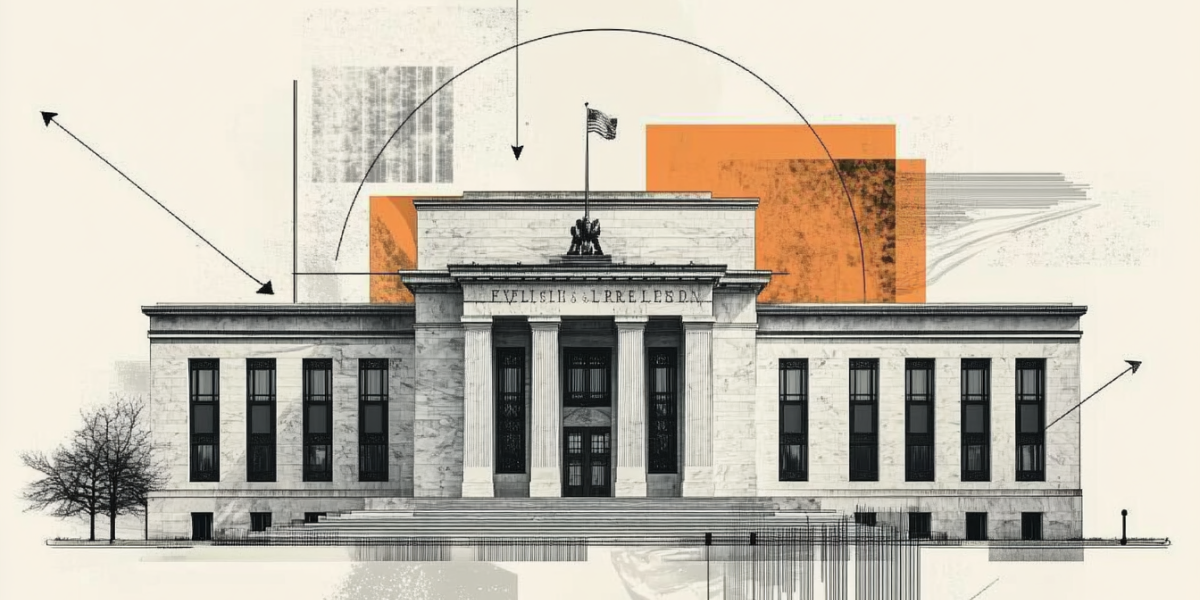

The bond market just flipped the “fragile” sign back on—and this time, it’s not just about the downgrade, it’s about the math catching up with the myth. Traders looking for déjà vu from 2011—when Treasuries rallied after S&P’s historic downgrade—are staring at a completely different beast in 2025. Back then, the U.S. still had dry powder, debt was high but not grotesque, and the Fed had rates at 25bps with inflation melting like an ice cube on hot pavement.
Now? Welcome to the molten core of macro dysfunction.
Debt-to-GDP is flirting with 100% and climbing toward 134% over the next decade, and the Fed is at 4 %. Inflation has cooled a bit, but tariff pass-through and sticky services data threaten to reignite the fire. Meanwhile, consumers’ inflation expectations are surging like we’re in the middle of a ‘70s reboot—and this time, it’s not a dress rehearsal.
So what’s the signal? The term premium.
It’s the price investors demand to hold longer-dated Treasuries, and it’s starting to scream. In 2011, the term premium collapsed as USTs remained the world’s “get out of jail free” card. But in 2025, that premium is rising like the sea in a hurricane. The U.S. is no longer the unsinkable aircraft carrier of global finance—it’s starting to look more like a heavily-leveraged cruise ship drifting toward a fiscal iceberg.
The bigger issue isn’t the downgrade. It’s the erosion of confidence. And confidence is a currency of its own in global finance. Without it, term premia don’t just rise—they reprice regimes.
Add in a world where foreign central banks are lightening up on Treasuries, and where “de-dollarization” is no longer some fringe blog theory but an asset allocation thesis—that’s a cauldron that doesn’t just simmer, it boils over.
The U.S. still has the biggest markets, the deepest liquidity, and the dollar’s inertia working in its favor. But even inertia can’t outrun compound interest and structural deficits forever.
The term premium is the canary—and it’s gasping.
So buckle up. The next few auctions aren’t just about supply—they’re about whether the world still believes in the full faith and credit of the United States without a risk discount. And if that answer starts to shift, term premium won’t just rise. They’ll rupture.
Author
Stephen Innes
SPI Asset Management
With more than 25 years of experience, Stephen has a deep-seated knowledge of G10 and Asian currency markets as well as precious metal and oil markets.