Stocks corrected down because of weak earnings reports


On Thursday, US stock indices corrected down
Weak quarterly earnings reports of eBay online store (-10%) and American Express payment system (-2.7%) contributed to the market decrease
An additional negative factor was the decrease in shares of automakers Ford Motor (-0.5%) and General Motors (-1.4%) due to the risk of introducing mutual duties on imports of cars of the US and the European Union. The financial sector was the top loser. Bank of New York Mellon stocks fell by 5.2% after the report on the reduction of customers. Shares of JPMorgan, Bank of America and Citigroup fell by more than 1%. This was contributed by a decrease in the difference of 2-year and 10-year US government bond yields to the 11-year low. By the way, amid this, the growth of the US dollar index stopped. According to FedWatch service, the probability of a 2-fold increase in Fed rate in the current year is 61%, which is not so much. Nevertheless, investors still expect good corporate reports and growth of the aggregate profit of companies from the S&P 500 list by 21.5%. In July 1, before the start of the reporting season, the forecast was much more modest + 20.7%. Today, the earnings reports of Microsoft, Schlumberger, Honeywell International, General Electric and other US companies will be released. No significant economic statistics is expected in the US.
European stock indices fell because of weak earnings reports
The largest French advertising agency Publicis reported a decrease in sales and its stocks fell by almost 9%. After that, the entire European media sector fell by 1.4%
The earnings reports of the German software manufacturer for business SAP also disappointed investors, which led to the decrease in company’s stocks by 3.5%. Shares of the Finnish paper manufacturer Stora Enso collapsed by 12% because of weak quarterly data. The cost of non-ferrous metals markedly decreased amid the China-US trade war and the slowdown in the growth of the Chinese economy. Because of this, stock prices of European mining and metallurgical companies fell. This morning, the Eurozone current account balance for May was published, which turned out to be moderately negative for the euro.
Today, Nikkei continued its decline
Investors were concerned about a noticeable weakening of the Chinese yuan. This can increase the competitiveness of goods from China in comparison with Japanese. Amid a decrease in world metal prices, stock prices of metallurgical companies fell. In particular, Kobe Steel - by 2.3%. Stocks of the semiconductor manufacturers Tokyo Electron (-3%) and Sumco (-4.1%) fell after reports on the reduction in the revenue of the world leader in this sector - Taiwan company TSMC. Weak earnings reports of European advertising agency Publicis caused a decrease in prices of similar Japanese companies, and in particular, Dentsu (-7.5%). This morning, data on inflation for June came out in Japan, which turned out to be positive for the yen. The consumer price index CPI Ex Fresh Food, Energy has slightly decreased.
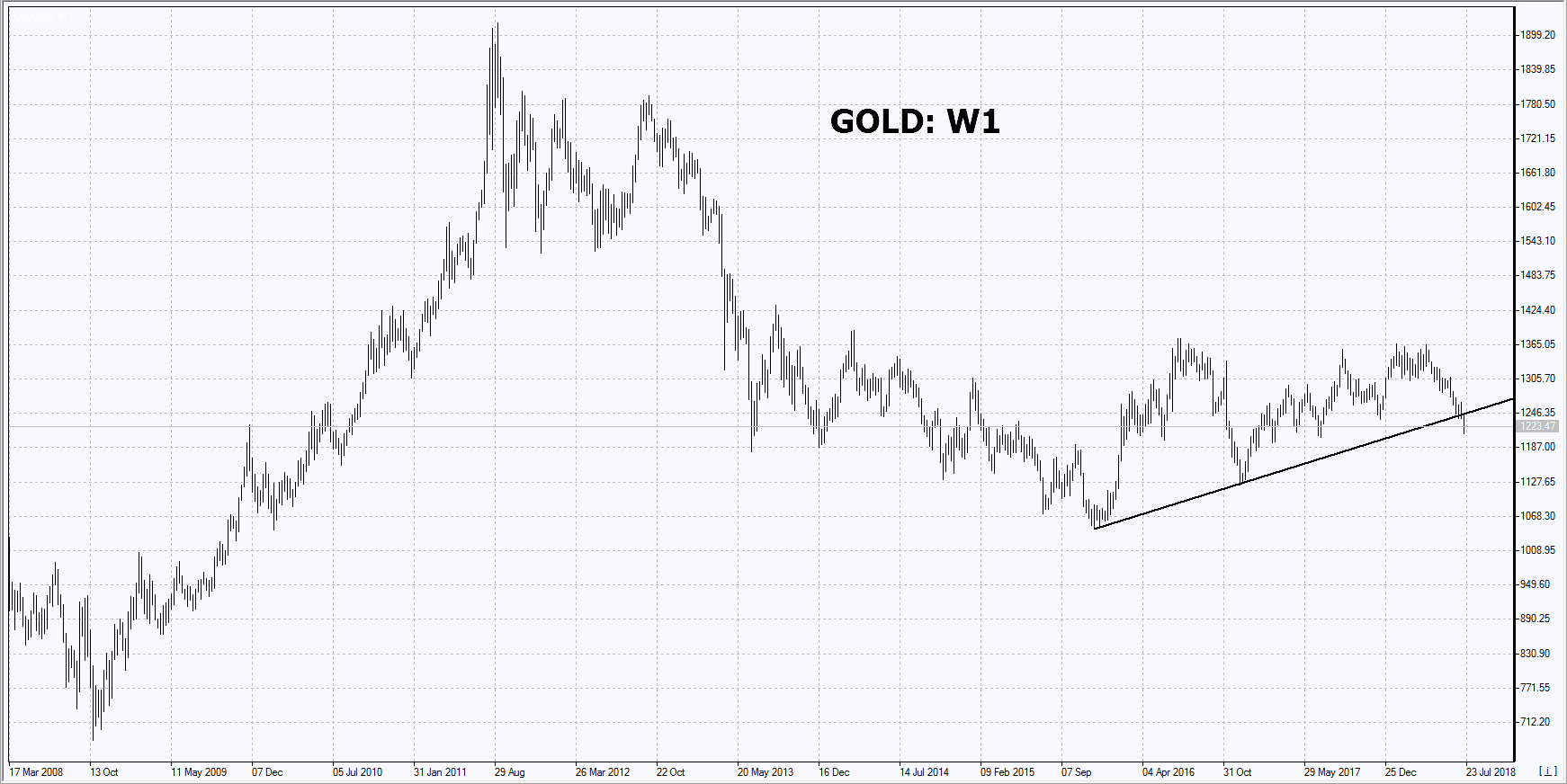
Gold prices have updated the annual low
Some market participants start talking about the fact that gold prices have already fallen enough to become again attractive to buyers. In particular, the World Gold Council forecasts an increase in demand for it in the second half of 2018. This can happen because of the increased risks amid trade wars and the possible increase in inflation. Meanwhile, since the beginning of the week, gold prices have fallen by 2%. Inflation in the US is now at the maximum level for 7 years.
Want to get more free analytics? Open Demo Account now to get daily news and analytical materials.
Want to get more free analytics? Open Demo Account now to get daily news and analytical materials.
Author
Dmitry Lukashov
IFC Markets
Dimtry Lukashov is the senior analyst of IFC Markets. He started his professional career in the financial market as a trader interested in stocks and obligations.
















