Sterling up after higher inflation: The British job report was overall mixed but rates are likely to rise next month

The pound sterling has appreciated against most other major currencies in recent days after higher inflation than expected on 21 October increased further the probability of the Bank of England (BoE) hiking to 4% in November. This article summarises recent major news affecting the pound then looks briefly at the charts of GBPUSD and GBPJPY.
The British job report on 20 October was mixed in that although unemployment in August was unexpectedly down, claimant count change for September was significantly higher than the consensus:
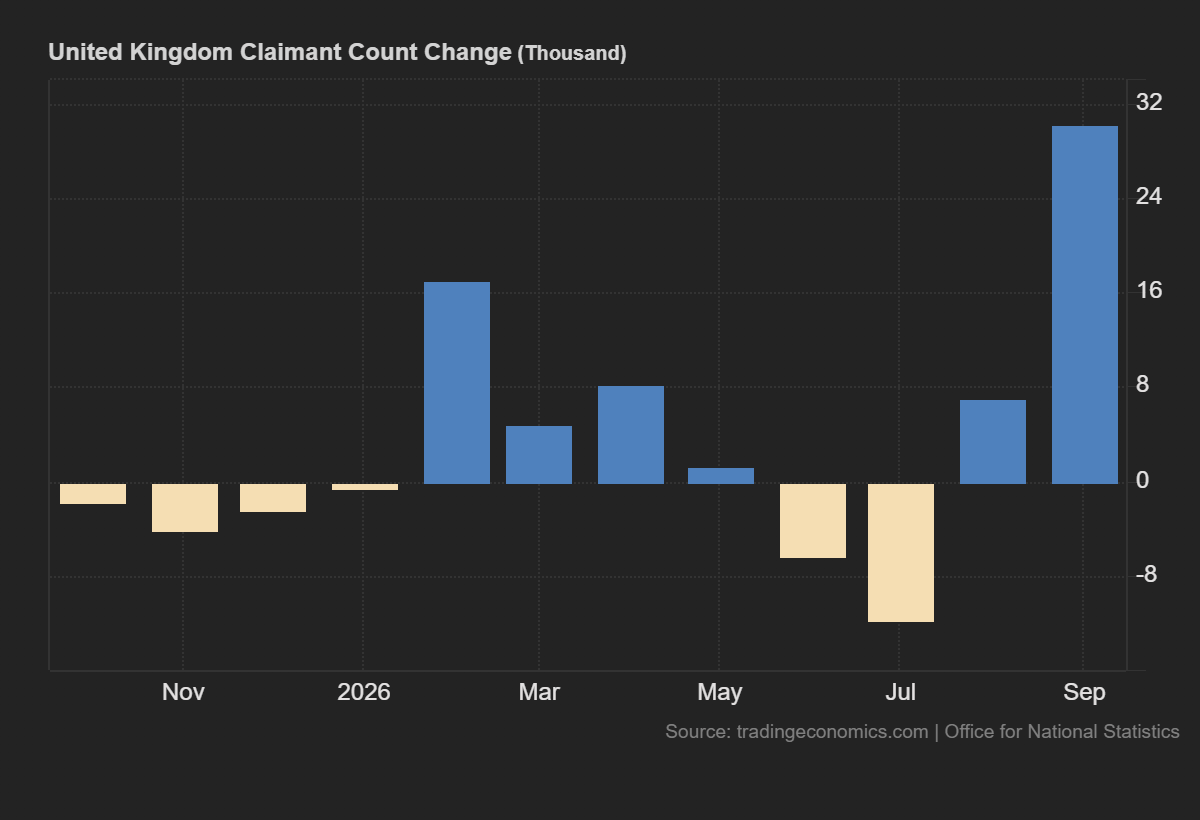
There were 30,300 new claimants against the consensus of slightly less than 20,000. Participants mostly discounted this bad news given that the number for August was revised downward by more than 20,000 and August’s unemployment dropped to 4.7%, the lowest figure for more than a year.
Overall the job market in Britain has strengthened moderately in 2026, giving more room for the BoE to act on inflation if necessary. Annual headline inflation accelerated more than expected last month:
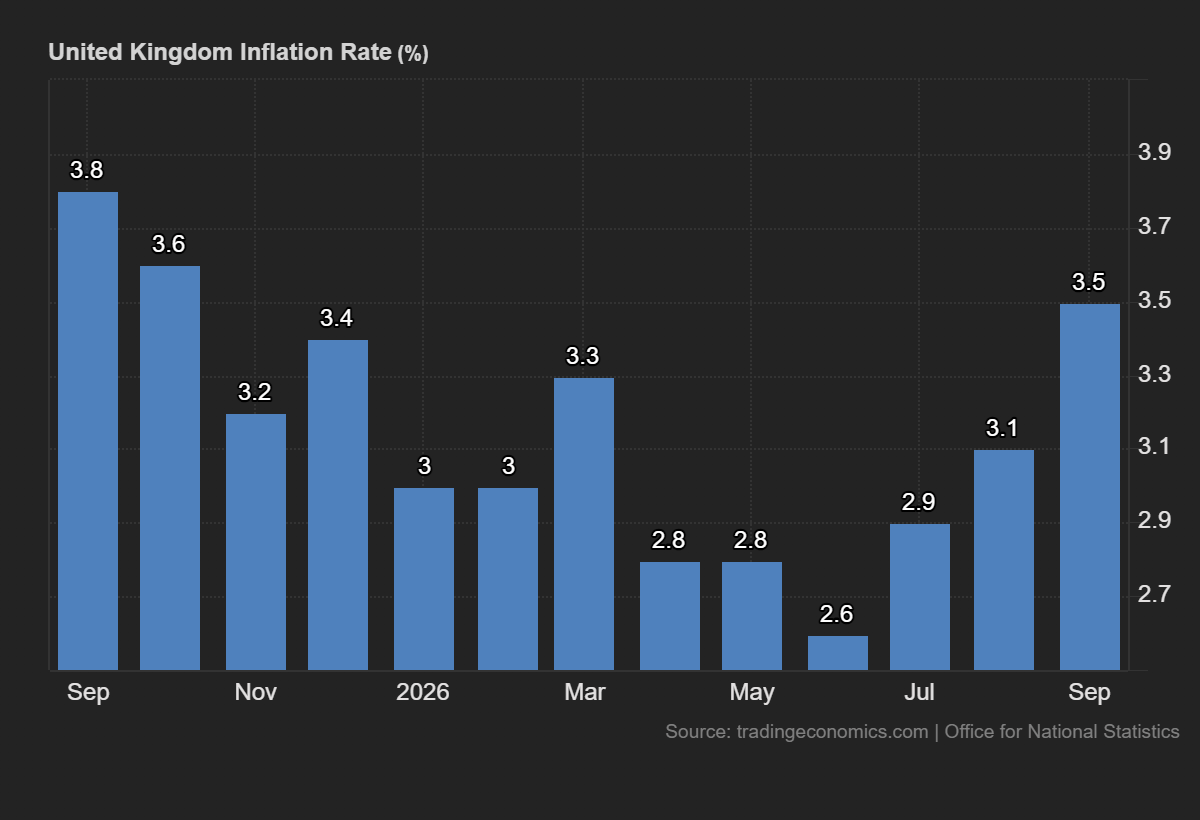
Transport was again the main driver of the higher rate with prices at the pumps reaching highs of more than four years. As for the Fed in the USA, the BoE’s problem is that the options to tackle inflation in the context are limited; monetary policy can’t significantly reduce demand for fuel in the short term.
Nevertheless the BoE is widely expected to call for a single hike to 4% at its upcoming meeting on 5 November. The split of the Monetary Policy Committee (MPC) last meeting was 6-3 hold-hike, so the decision might not be unanimous, but traders will watch the statement and comments at the subsequent press conference for hints on the next hike. 4.25% in December seems unlikely as of now but the BoE will probably hike twice more in the first quarter of next year.
The budget on 28 October is a key item on the agenda with most concentration likely to be on taxes. Sticking to fiscal rules will almost certainly mean that some tax hikes will occur, which would be broadly negative for growth and the pound in the medium to longer term. With both the budget and the Fed’s meeting on the same day, 28 October is likely to be highly volatile for cable.
Cable testing $1.34; traders await the Fed
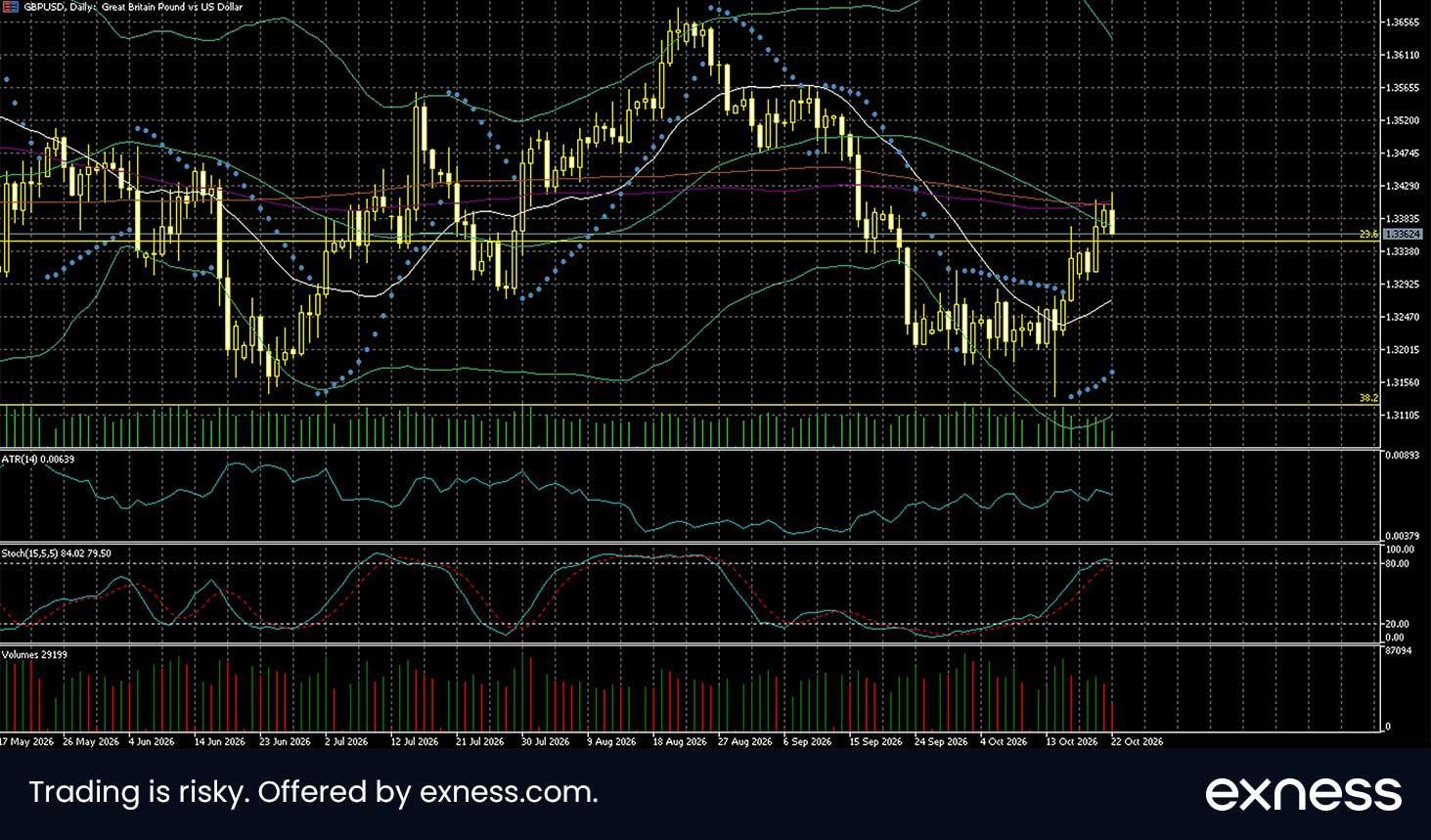
The pound made gains in various pairs in the aftermath of a mixed job report and higher inflation from Britain on 20 and 21 October although these were partially retraced the following day. Current expectations for the BoE suggest three hikes by April next year while the majority position for the Fed according to FedWatch is two hikes or fewer by then. There seems to have been some outflow of capital from the eurozone into Britain in recent days.
$1.34 is a likely candidate for resistance which the price has recently been testing with the 100 and 200 SMAs almost next to each other and the 50 SMA from Bands slightly below giving a value area. The 23.6% weekly Fibonacci retracement is the main technical reference for now around $1.335.
Barring significant changes in sentiment or the tone of the next, the price could continue upward after a pause and especially emergence from overbought based on the slow stochastic. $1.35 is a possible next resistance if the price can break through $1.34. 28 October is a particularly important day for cable with the British budget and the Fed’s meeting both happening then.
Pound-yen’s upward breakout questionable
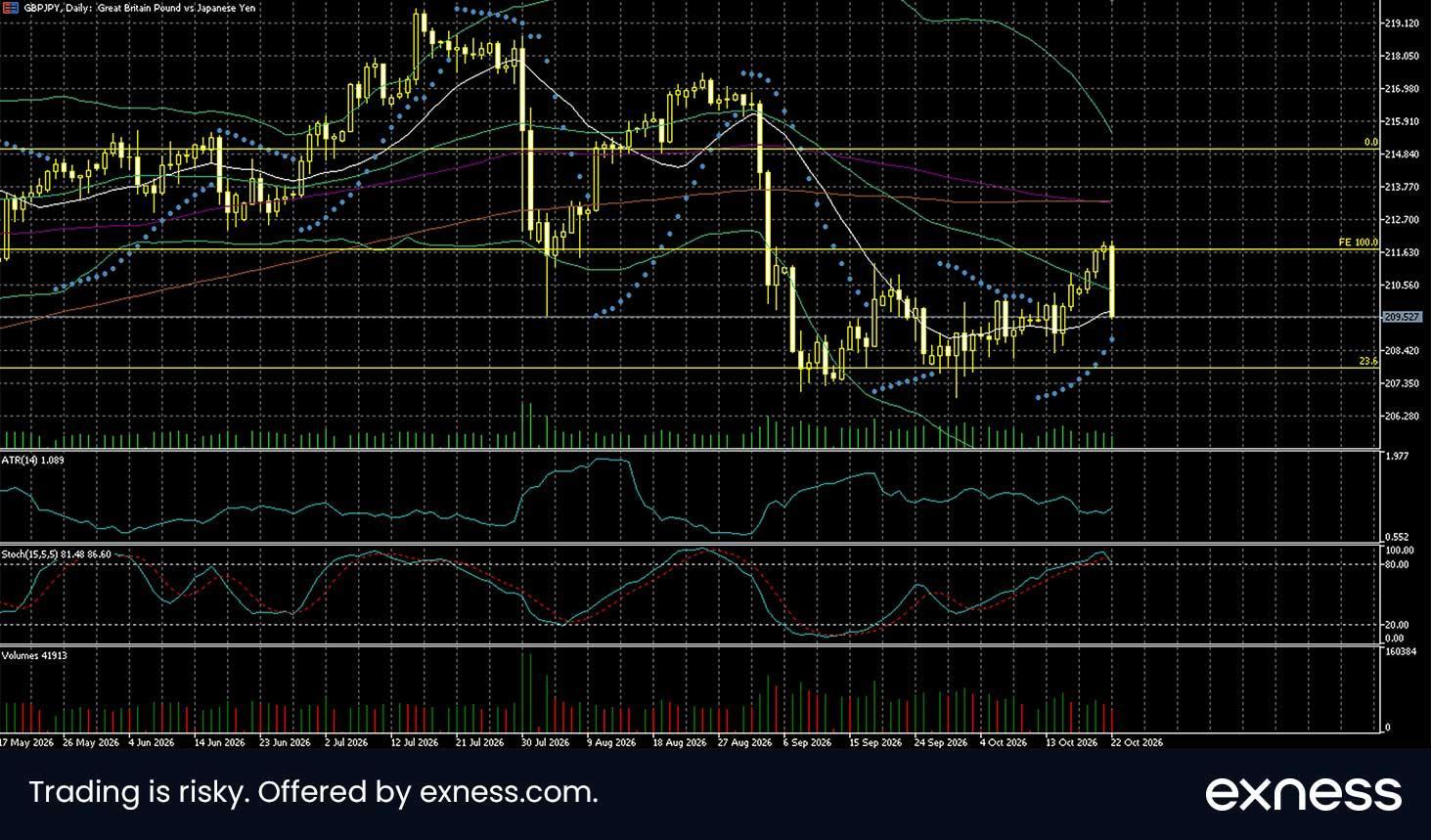
The yen made large intraday gains on 22 October against most major currencies but a significant amount of these were retraced by the late afternoon GMT. Traders are looking ahead to the BoJ’s meeting on 30 October which is unlikely to result in a change of policy although the board might give some hints on how it views the situation with inflation. The differential between the pound and yen will probably increase to 2.75% on 5 November.
¥212 was the area of 21 October’s high so would be a possible initial target although the slow stochastic signals overbought. Volume has generally increased since late August which might indicate more relatively high volatility to come.
¥207.50 seems to be the main static support for now which is unlikely to be broken barring major developments like rumours of another intervention. A close above the 50 SMA might confirm more upward momentum to come sooner or later.
Author

Michael Stark
Exness
Michael has been investing since 2007 and trading CFDs since 2013. He favors considering both fundamental and technical analysis where possible, with a focus on swing and position trading.