S&P 500 vs. EUR/USD: Unpacking the 2024-2025 shift


The analyst will examine the given charts, integrating fundamental analysis and relevant macroeconomic factors to provide a comprehensive assessment.
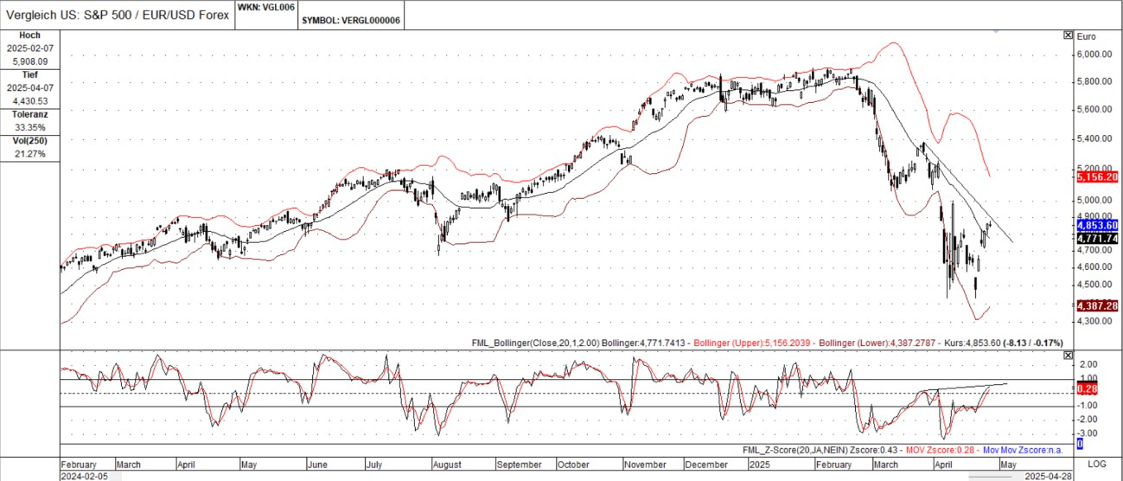
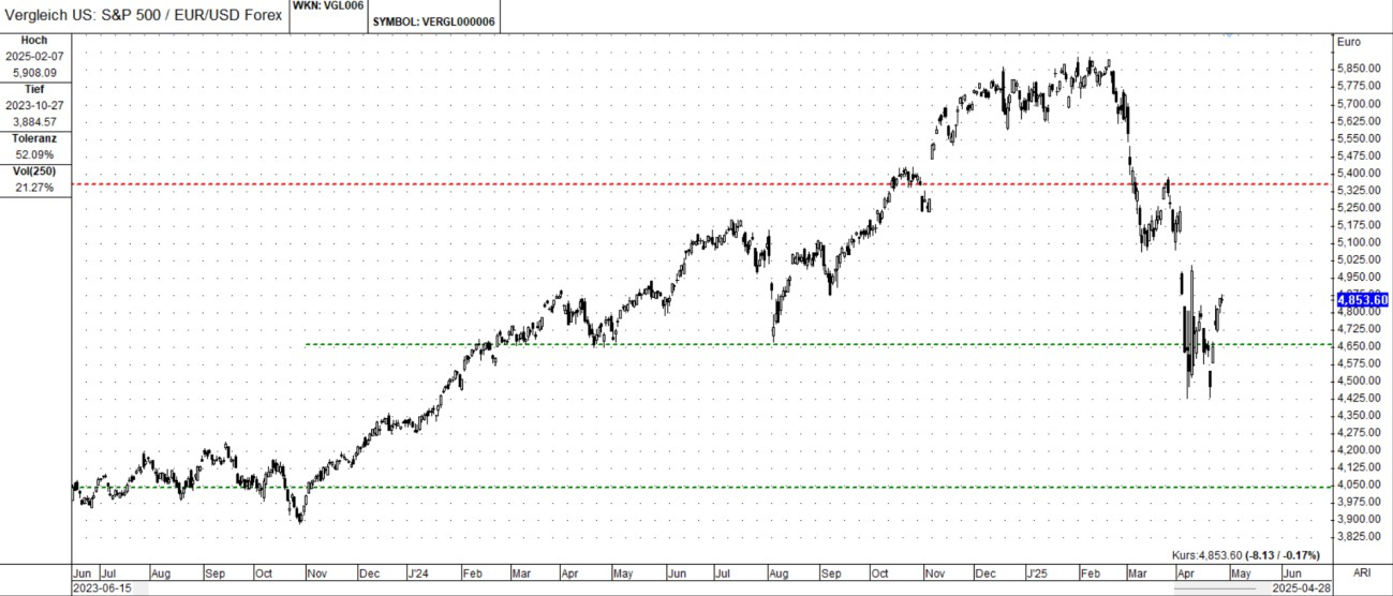
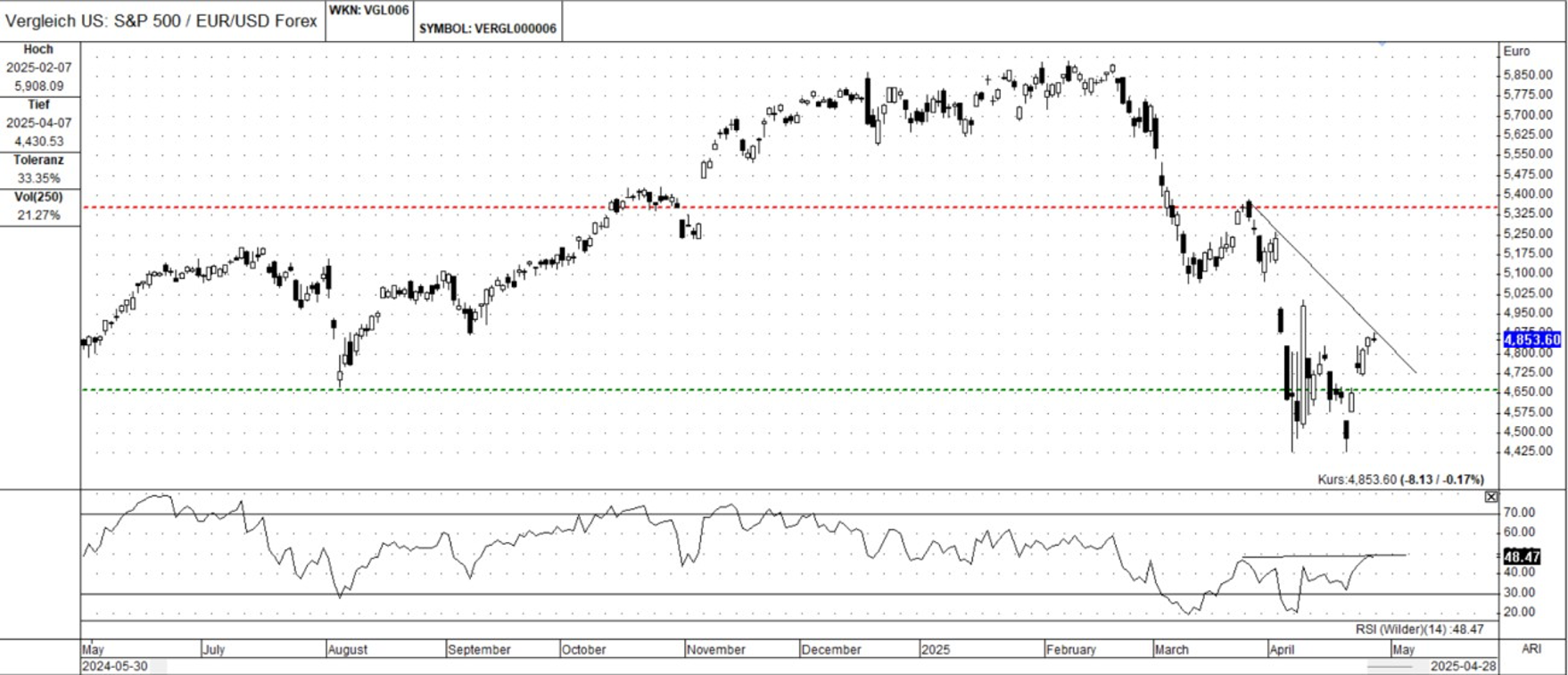
Chart overview and technical analysis
The charts depict the relationship between the US S&P 500 and the EUR/USD Forex pair. This comparison is crucial as it reveals how the US stock market performs relative to the strength of the US dollar against the Euro. The charts span from approximately February 2024 to May 2025, providing a medium-term perspective. Horizontal lines in the second and third chart highlight significant support and resistance levels. These are critical for technical analysts to identify potential entry and exit points. Approximate levels are:
- Support around 4,575-4,600.
- Resistance around 5,400.
All charts show a significant decline in the S&P 500/EURUSD ratio, particularly noticeable in late February and March 2025. This indicates either:
- A weakening of the S&P 500 relative to the Euro.
- A strengthening of the Euro against the US dollar.
- A combination of both factors.
Technical indicators
Bollinger bands (chart 1): The price action breaks below the lower Bollinger Band, suggesting a potential oversold condition and the possibility of a reversal. However, it also signifies high volatility and strong downward momentum.
Z-score (chart 1): The oscillator below the main chart reaches extremely oversold levels, reinforcing the idea of a potential bounce. However, oversold conditions can persist for extended periods.
RSI (chart 3): The Relative Strength Index (RSI) also shows oversold conditions, with a value around 40. However, like the oscillator, this doesn't guarantee an immediate reversal.
Trendlines: A descending trendline can be drawn connecting the recent lower highs, indicating continued downward pressure. The price is currently testing this trendline.
Volatility: The charts demonstrate a period of increased volatility, particularly during the recent decline, as seen in the widening Bollinger Bands and sharp price swings.
Fundamental analysis
To provide a robust analysis, the analyst will consider the underlying fundamental drivers that could influence both the S&P 500 and the EUR/USD exchange rate.
S&P 500 (US stock market)
Corporate earnings: The health of the US economy and the profitability of S&P 500 companies are crucial. Factors like revenue growth, profit margins, and future earnings expectations drive investor sentiment. A decline in earnings or negative outlooks can trigger sell-offs.
Interest rates: The Federal Reserve's monetary policy, specifically interest rate decisions, significantly impacts the stock market. Higher interest rates can increase borrowing costs for companies, reduce consumer spending, and make bonds more attractive than stocks, leading to downward pressure on equities.
Inflation: High inflation can erode corporate profits and consumer purchasing power, negatively impacting the stock market. The Fed's response to inflation (i.e., raising rates) is a key factor.
Economic growth (GDP): A strong US economy generally supports a healthy stock market. GDP growth, employment data, consumer confidence, and manufacturing activity are important indicators.
Geopolitical risks: Global events, trade tensions, and political instability can create uncertainty and negatively affect investor confidence.
EUR/USD
Interest rate differentials: The difference in interest rates between the US (Federal Reserve) and the Eurozone (European Central Bank - ECB) is a major driver of the exchange rate. Higher US interest rates generally make the US dollar more attractive to investors, strengthening it against the Euro.
Economic growth (relative): The relative economic performance of the US versus the Eurozone is crucial. If the US economy is growing faster than the Eurozone economy, the dollar is likely to strengthen.
Inflation (relative): Differences in inflation rates between the two regions also influence the exchange rate. Higher inflation in one region can lead to currency depreciation.
Political and economic stability: Political events and economic policies in both regions can impact investor confidence and currency valuations.
Trade balance: The trade balance between the US and the Eurozone can affect currency demand and supply.
Connecting the technical picture with potential macroeconomic drivers
The sharp, rapid drop could suggest panic or a significant shift in market sentiment, potentially leading to a quicker reversal or a more prolonged downtrend depending on the underlying causes. Conversely, a more gradual decline might indicate a more fundamental shift in relative strength. The sharp decline in the S&P 500/EURUSD ratio in early 2025 could be attributed to a combination of factors:
US economic slowdown: Concerns about a potential US economic slowdown or recession could be weighing on the S&P 500. This could be reflected in weaker GDP growth, rising unemployment, or declining consumer confidence.
Eurozone strength: Unexpected strength in the Eurozone economy, potentially driven by strong exports or fiscal stimulus, could be supporting the Euro.
Interest rate expectations: Changing expectations about future interest rate differentials could be a key driver. If markets anticipate the ECB raising rates more aggressively than the Federal Reserve, the Euro would likely strengthen.
Inflation divergence: If inflation trends diverge, with the Eurozone experiencing lower inflation than the US, the ECB might have more room to maintain accommodative policies, while the Fed might need to continue tightening, further impacting the exchange rate.
Potential scenarios
US recession: If the US enters a recession, the S&P 500 could continue to decline, and the US dollar might weaken as investors seek safe-haven assets. This would further depress the S&P 500/EURUSD ratio.
Continued Eurozone recovery: If the Eurozone economy maintains its strength while the US economy struggles, the Euro could continue to appreciate against the dollar, putting downward pressure on the ratio.
Policy divergence: Significant divergence in monetary policy between the Fed and the ECB could lead to sustained trends. For example, if the Fed remains hawkish while the ECB turns dovish, the ratio might stabilize or even reverse.
It's crucial to remember that the global economy is interconnected. Events in other regions (e.g., China, emerging markets) can also impact the US and the Eurozone. Geopolitical events, pandemics, or other unexpected shocks can significantly alter market dynamics.
Investment implications
The increased volatility highlights the need for robust risk management strategies. Investors should carefully assess their risk tolerance and diversify their portfolios. For investors with international exposure, currency hedging strategies may be necessary to mitigate the impact of exchange rate fluctuations. The analysis suggests a need to review asset allocation strategies. If the trend of Euro strength and S&P 500 weakness continues, investors may consider reducing their US equity exposure or increasing their Euro-denominated assets. In a volatile environment, active portfolio management and tactical asset allocation can be beneficial to capitalize on short-term opportunities and manage risk.
Author
FxPro Traders Research Team
FxPro Traders
The FxPro Traders Research Team delivers advanced analysis and strategies designed to empower your success in today's dynamic forex markets.