Some losses for the Dollar after the Fed holds and GDP lower
The US dollar generally declined somewhat in many of its pairs on 29 and 30 July after the Federal Reserve (Fed) held rates as expected and advance GDP for the second quarter was somewhat weaker than expected. August is likely to be a seasonally slower month but traders’ focus will shift onto the upcoming NFP. This article summarises the latest major news affecting the dollar then looks briefly at the charts of EURUSD and EURCAD.
The Fed held rates on 29 July at the current range of 3.5-3.75% as expected. The latest meeting of the Fed was somewhat unusual in that a probability of around a third according to CME FedWatch of a single hike remained until the day of the meeting. However, three members of the FOMC dissented in favour of a hike. Most of the comments were familiar: economic activity relatively strong, risks to inflation from the conflict in the Gulf and its effects on the price of oil and no significant changes in the overall job market.
Participants still generally expect the Fed to hike on 16 September although the probability of a single hike then increased negligibly after the latest meeting to around 60%. Apart from 7 August’s NFP, traders will also monitor July’s inflation on Wednesday 12 August to update expectations for 16 September’s meeting.
Meanwhile on 30 July advance GDP for the second quarter in the USA came in significantly lower than the consensus:
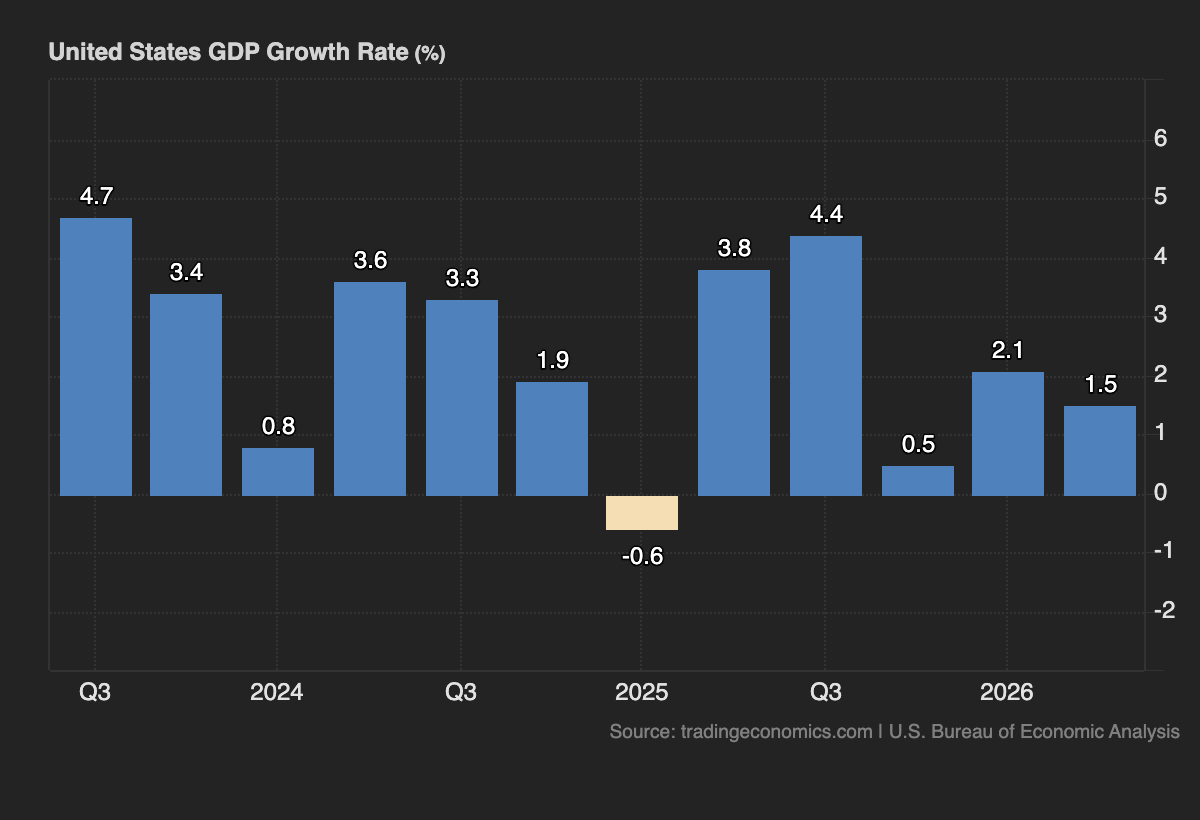
Expectations pointed to around 2.1%, the same as the final figure for the first quarter, but growth slowed. Investment and government spending generally slowed while consumers’ spending was stronger, driven partially by the World Cup. One of the key factors behind the lower growth was a significant ongoing rise in imports while exports slowed down. However, 1.5% is very likely to be revised at the second estimate and final releases.
Peace talks in the Gulf remained in limbo at the end of July as the USA continued striking military targets in Iran. American light oil held around $80-85 after the gap down following 24 July, which might suggest that participants expect the ceasefire to resume soon or at least don’t expect a significant further escalation. For inflation especially, traders will continue to monitor developments in the Gulf in the next few weeks.
Cable bounces as the BoE seems more hawkish
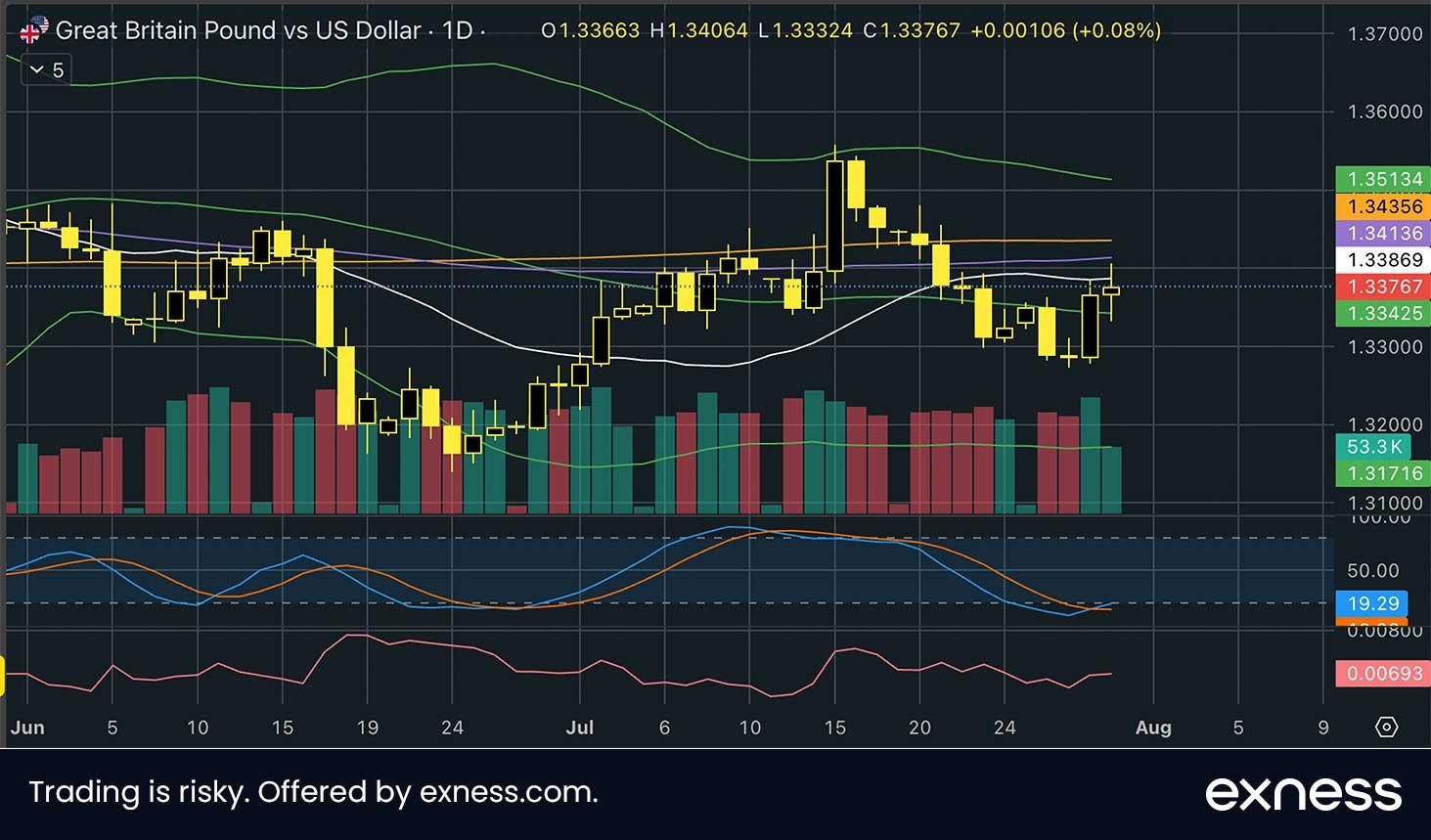
Cable bounced vigorously from 28 July’s lows around $1.327 as the Fed held rates as expected, American growth in Q2 seemed weaker and the Bank of England’s Monetary Policy Committee appeared somewhat more hawkish. The MPC voted 6-3 to hold at 3.75% on 30 July against the consensus of 7-2, highlighting again the risk of inflation rising later in the year. Andy Burnham’s new government is still mostly enjoying its honeymoon in the press so political issues in Britain might remain less important in August as is seasonally typical.
The price showed a fairly strong bounce on 29 July around the Fed’s meeting and is now testing the 20 SMA. However, if it breaks through, both the 100 and 200 SMAs are potentially strong dynamic resistances. The slow stochastic is in the process of an upward crossover in oversold, which might in itself give more confidence in further gains but for the possibly important areas above. Neither ATR nor volume show significant changes: it would be very unusual for volume to increase consistently for a major forex pair at the end of July.
Although the downside seems questionable fundamentally now, ongoing strikes in the Gulf or a possible escalation might drive demand for the dollar as a haven. The recent low around $1.327 could cap losses and the price might then settle into a range unless there’s a significant surprise from 7 August’s NFP.
Dollar-Loonie retests $1.40
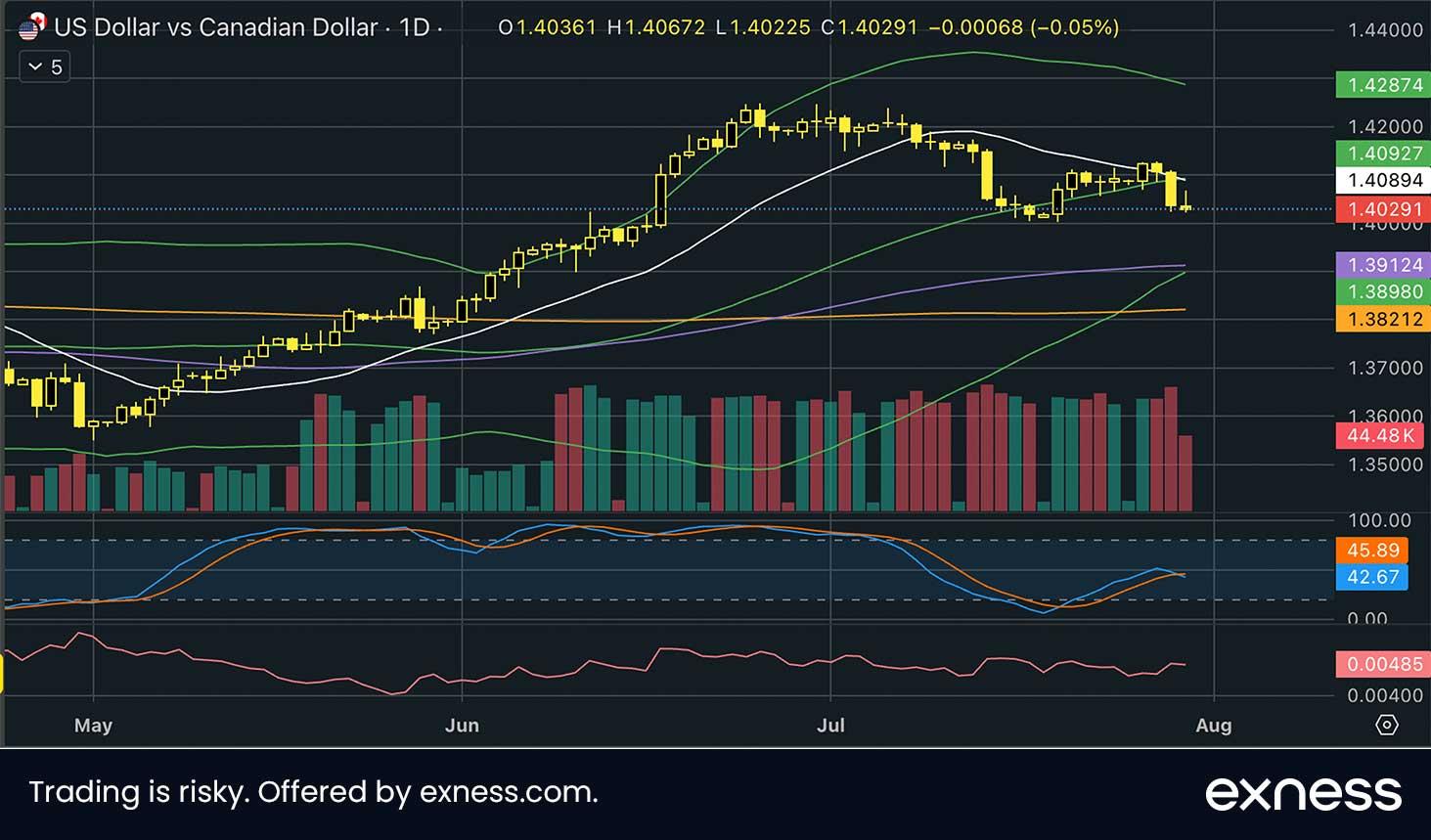
USD/CAD declined after the Fed held as expected and advance US GDP for Q2 was lower than the consensus. The Bank of Canada held earlier in July and commented on an easing situation of inflation, which suggests that the current difference in rates is likely to persist and favour the greenback. There is some negativity from threatened further American tariffs on Canada and the possibility of this round of hostilities in the Gulf driving demand for the US dollar as a haven.
The upcoming death cross of the 20 SMA below the 50 from Bands might in itself suggest further losses, but the area around $1.40 which was testing unsuccessfully earlier in July might be a support. With the slow stochastic close to neutral, ATR and volume little changed for most of July and Bollinger Bands contracting, many signs point to a lull in August as would usually be expected.
Recovery by the greenback is certainly possible but might depend on the dual job report on 7 August. $1.425, the area of June’s high, would be a possible medium-term target. Overall the fundamental situation, especially divergence in monetary policy and job data, makes it difficult for the moment to map out a sustained period of losses.
Author

Michael Stark
Exness
Michael has been investing since 2007 and trading CFDs since 2013. He favors considering both fundamental and technical analysis where possible, with a focus on swing and position trading.