So Einstein was wrong, does it matter?


S2N spotlight
I had no idea that I would write about this subject; it kind of just came out. I am no physics guru, but understanding how the world works is fascinating. The problem of understanding our reality has been locked in a 98-year-old debate that Albert Einstein and Niels Bohr argued about.
Einstein never accepted the idea that two contradictory states could co-exist in reality (superposition). He respected quantum mechanics as a powerful tool but believed it was not the final word on physical reality.
I love these 2 quotes by giants not just in science but in philosophy as well.
Einstein said, “God does not play dice with the universe.”
Bohr replied, “Einstein, stop telling God what to do.”
I came across an article in a science magazine where it shared the results of an MIT experiment that emphatically rejects Einstein’s view and supports Bohr’s complete quantum mechanics view of 2 different states existing simultaneously.
Einstein wanted to reduce reality into a deterministic world. He wasn’t comfortable with the “spooky” probabilistic world that Bohr was describing. He therefore felt compelled to say that quantum mechanics was incomplete and that we simply haven’t fully understood all the parts to the model.
This is exactly what economists, macro strategists, analysts, and expert hired guns try to bring to the market. There is an Einstein obsession with an ability to explain the markets from a cause-and-effect deterministic perspective.
I want to suggest that, just as quantum mechanics teaches us we live in a world where opposing truths can exist simultaneously, the same might be true in financial markets. Until we observe or measure something—like unemployment data or inflation—multiple interpretations coexist, and the very act of revealing the number collapses that uncertainty into a dominant narrative, shaping market reactions and economic paths. If that sounds like I’m smoking my socks, I get it—but quantum thinking might have more to teach us about markets than we realise.
To answer the question I posed in the subject line. No, it doesn’t matter that Einstein was wrong on this matter (you get the pun ). His contribution to physics is unmatched, and so are his theories of general and special relativity. What is ironic is that he laid the foundation for quantum mechanics and Bohr’s discoveries with his discovery that light comes in packets (quanta), later called photons. That discovery earned him the Nobel Prize.
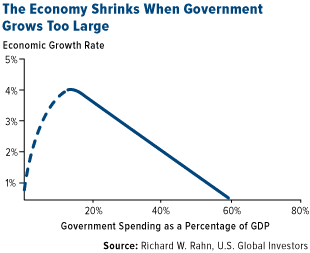
The Rahn Curve was actually what I set out to write about before I veered off on my quantum detour. So let me try to tie it all together.
In political economy, there are also two opposing truths. One school believes government should step in to solve economic shortfalls—stimulate demand, support jobs, and keep the system running. The other argues that government intervention is the problem, crowding out productivity and distorting incentives.
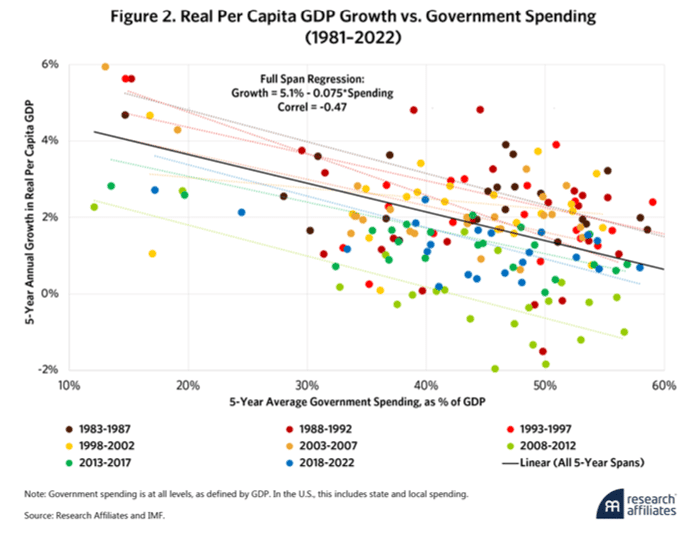
There's solid research on this tension. A great paper by Research Affiliates shows that when government spending exceeds 30% of GDP, it tends to drag on per capita economic growth. Today, developed nations are averaging around 42%, well above that threshold. So maybe, just like in quantum mechanics, the act of "measuring" or interfering too much in the system shifts the outcome—often in unexpected ways.
S2N observations
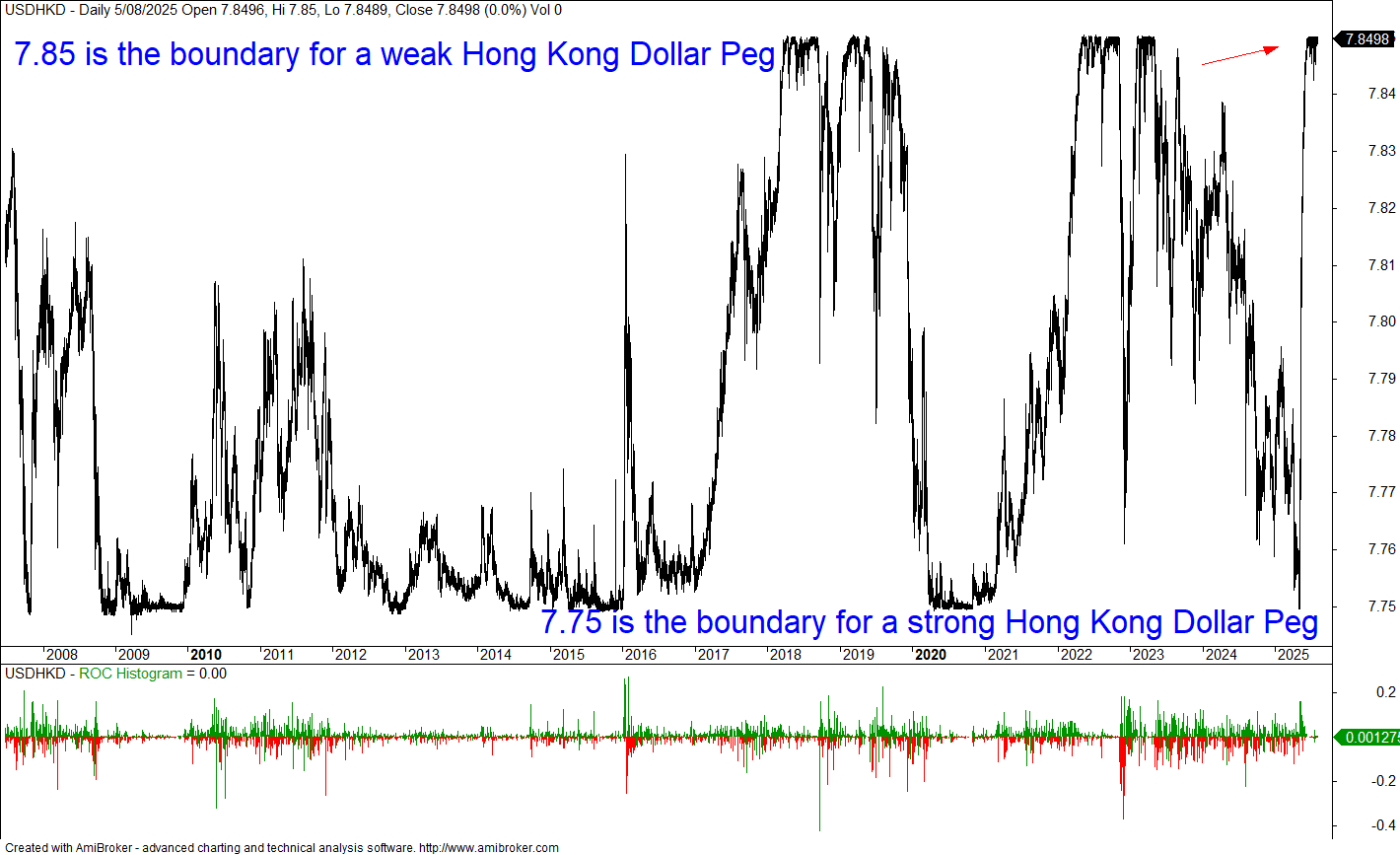
There are strange things happening with short-term interest rates in Hong Kong, raising questions about the sustainability of the currency peg to the U.S. dollar. The Hong Kong dollar is trading near the weakest limit of its allowed band, a level that typically prompts intervention from the monetary authorities.
While the Hong Kong Monetary Authority (HKMA) holds substantial foreign exchange reserves to defend the peg—as it has successfully done many times before—there are signs of market stress that deserve attention.
Below the currency chart, I’ll show you what’s driving the current drama.
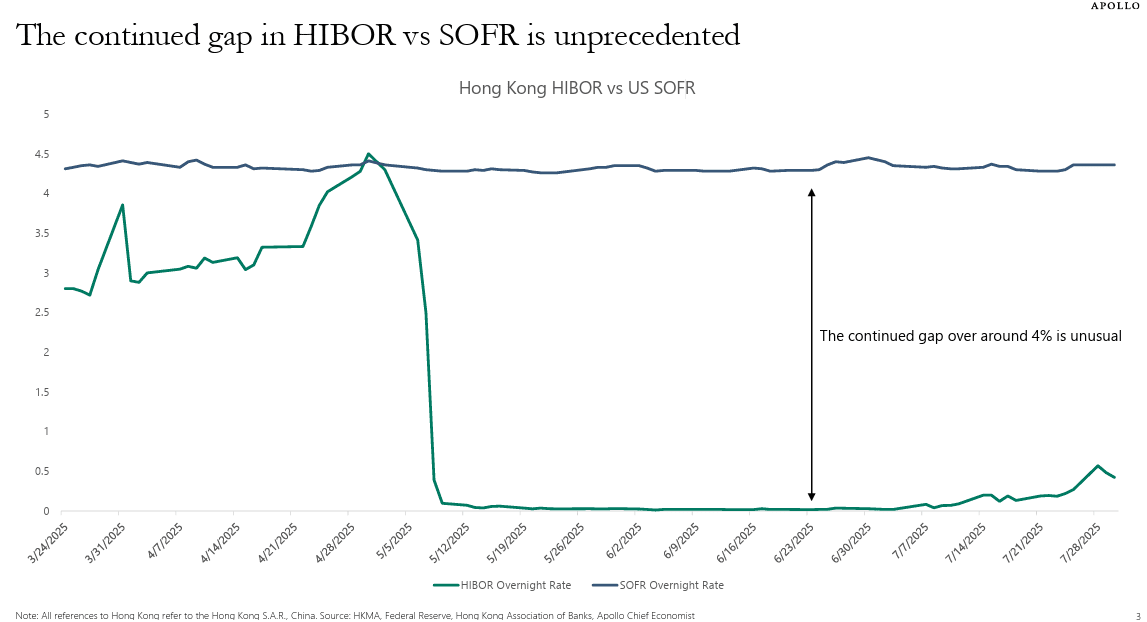
This is the culprit: a sharp divergence in short-term interest rates between Hong Kong and the U.S. suggests growing pressure. Banks appear to be pricing in the risk of a break in the peg. What do they know that the broader public doesn’t?
This is a classic carry trade setup: borrow cheaply in Hong Kong dollars, and invest in higher-yielding U.S. Treasuries. But when the arbitrage becomes too good to be true, something usually breaks.
S2N screener alert
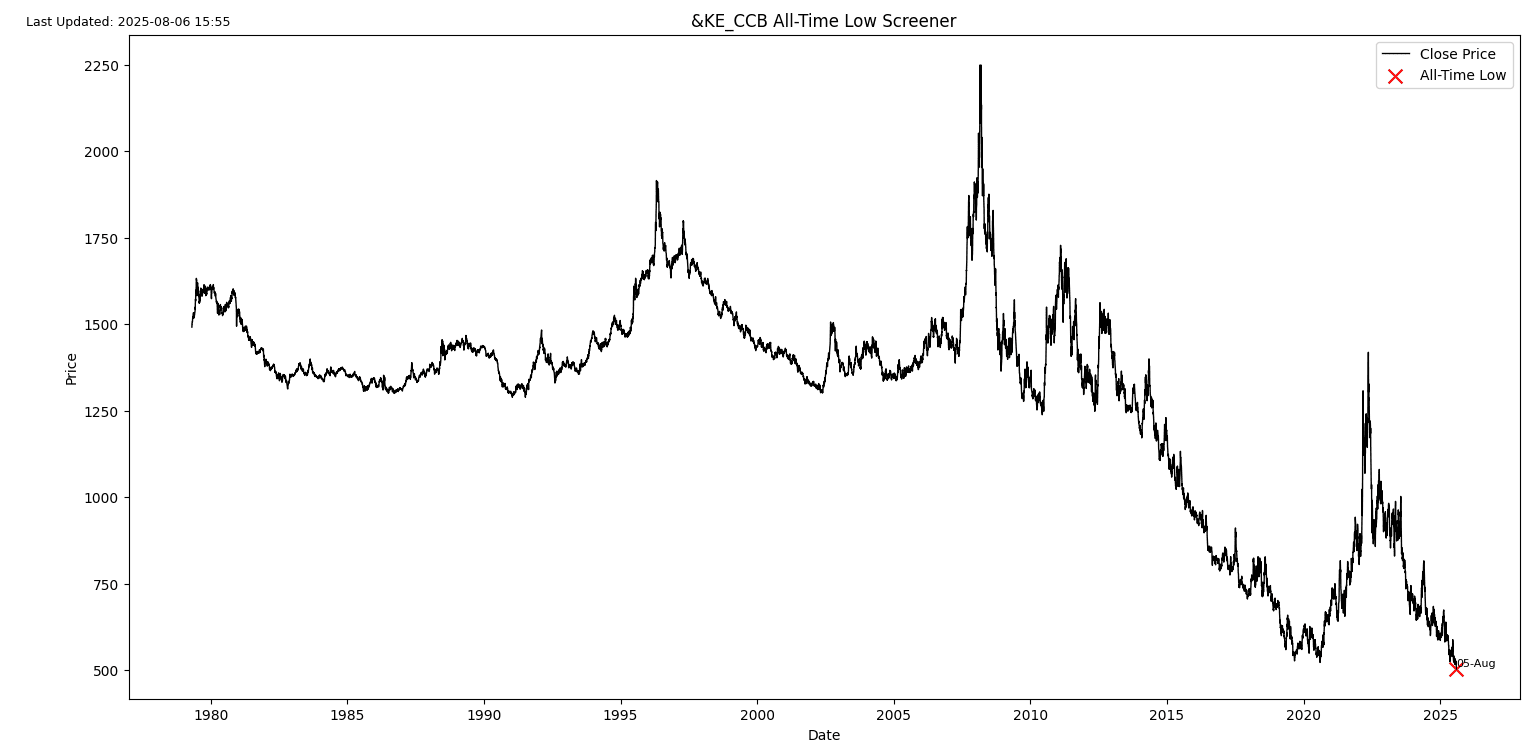
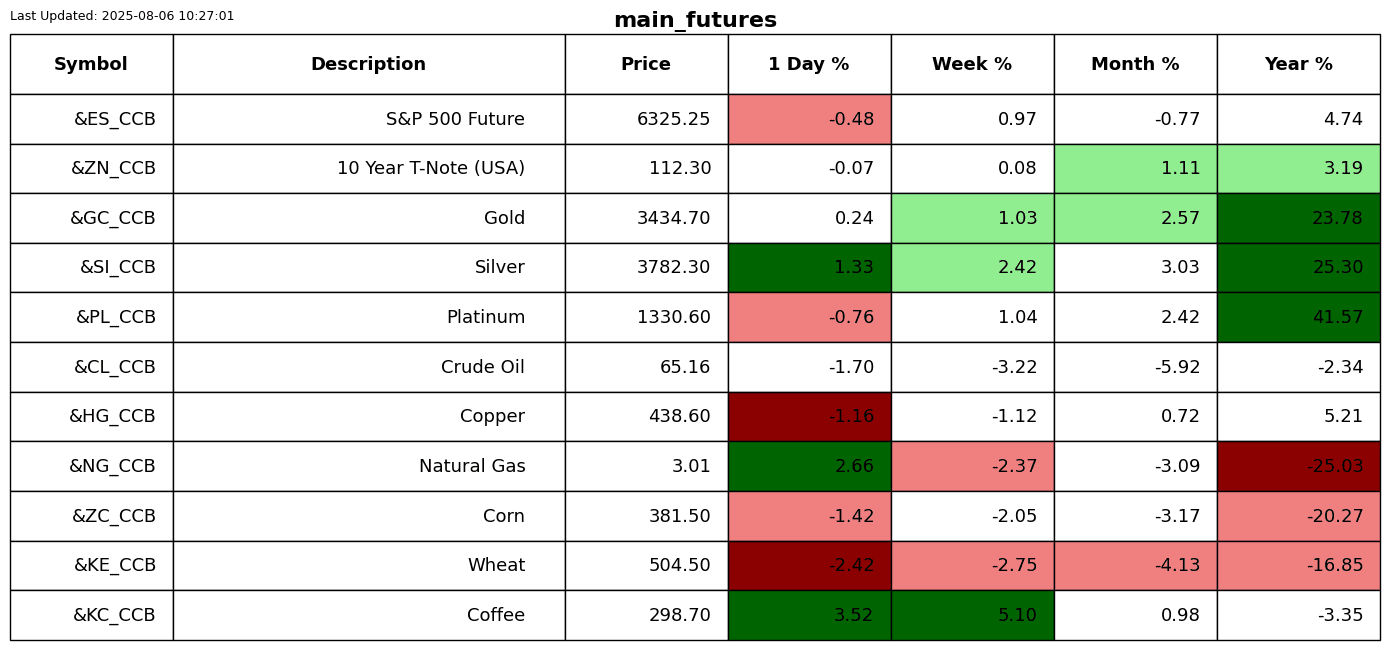
Wheat’s continuous contract back-adjusted futures make a new all-time low.
S2N performance review


S2N chart gallery
S2N news today
Author
Michael Berman, PhD
Signal2Noise (S2N) News
Michael has decades of experience as a professional trader, hedge fund manager and incubator of emerging traders.

















