|

Russia and Brazil

Though having followed different trajectories in the 20th century the Russian and Brazilian economies have much in common so it is worth looking in more detail at their similarities and differences.
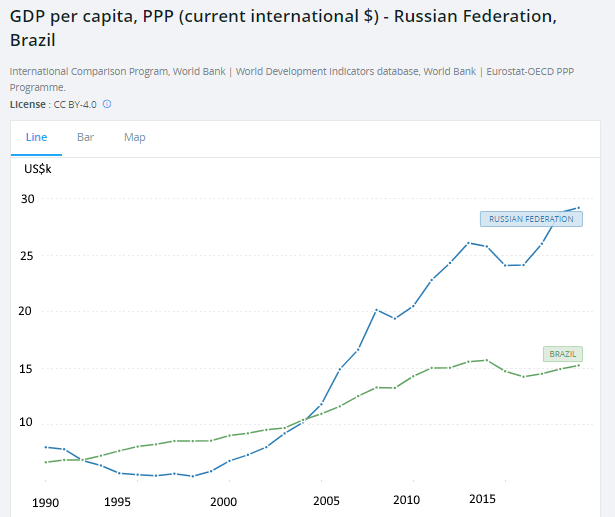
GDP

This chart shows Russia pulling ahead in terms of income per capita despite Brazil leading in the 1990’s due to the chaos in Russia following the collapse of the Soviet Union.
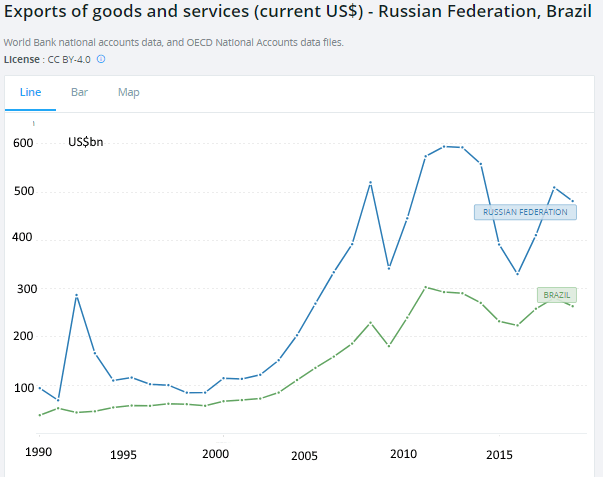
Export

The value in US$ of Russia’s exports is quite variable due to fluctuations in the price of oil but they can be said to average about US$500bn a year compared to US$300bn a year in Brazil.
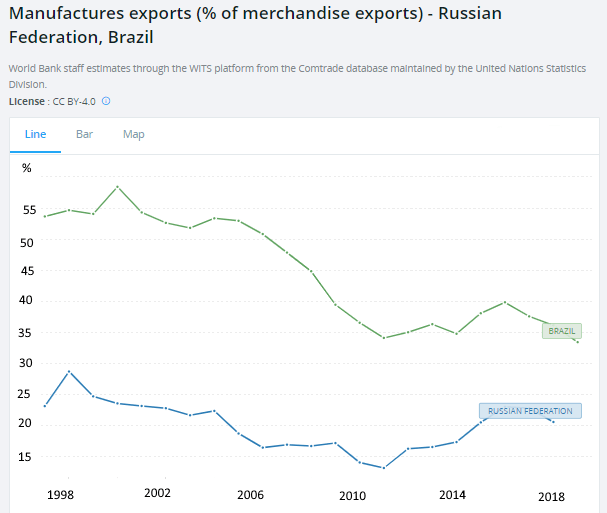
Brazil

Brazil has a higher % of manufactures in it’s overall exports but this has been on a downward slope from 55% at the turn of the Millennium to 35% today which is a worrying trend.
UN

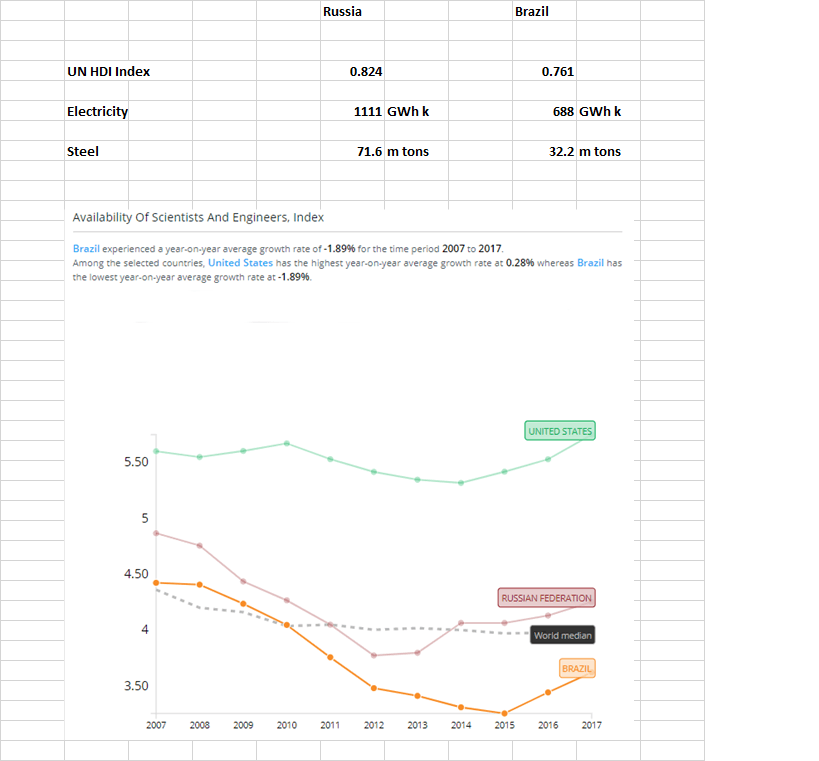
Russia has more engineers and scientists than Brazil but still lags behind the US. The one industry where Russia is still a major force is armaments where many of it’s companies have world beating technologies. In consumer goods both Russia and Brazil mostly manufacture foreign brands.
Brazil

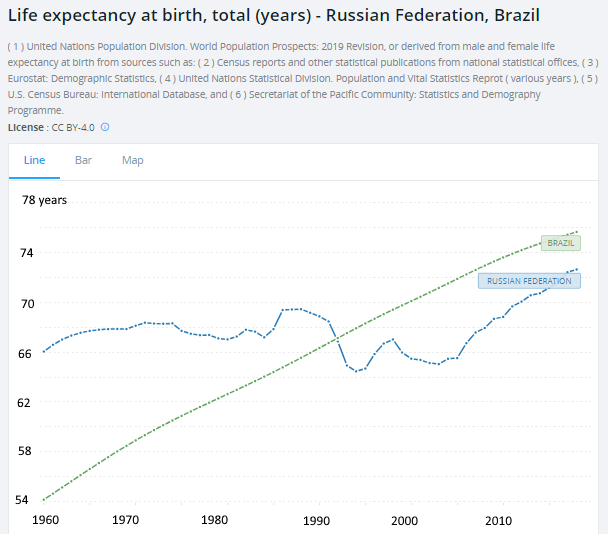
In Brazil life expectancy shows a linear improvement since 1960 whereas in Russia there was little increase during the Soviet period and a decline after it’s collapse. Only since 2005 has Russia experienced improving life expectancy.

Author

Paul Dixon

Paul Dixon

Latin Report

Paul Dixon’s focus is economics from a long term perspective.

More from Paul Dixon
Share:

Editor's Picks

AUD/USD flatlines near 0.6965 as less hawkish RBA counters USD weakness

AUD/USD holds steady above a two-week low, trading near 0.6965 in the Asian session on Wednesday as early midterm election results heighten political uncertainty and weigh heavily on the US Dollar. Moreover, reviving safe-haven demand triggers a fresh leg down in US bond yields, offsetting Fed hike bets and exerting additional pressure on the buck. However, a less hawkish RBA caps the Aussie.

USD/JPY declines below 158.00 as USD weakens on midterm election results

USD/JPY comes under heavy selling pressure on Wednesday, dropping below 158.00 during the Asian session as the US Dollar slumps to a one-month low amid heightened political uncertainty after early US midterm vote counts. Moreover, the prospect of gridlock in Washington drives safe-haven flows, triggering a fresh leg down in US bond yields and further weighing on the buck.

Gold clings to gains near weekly top, comfortably above $4,000 as US elections hit USD

Gold clings to strong intraday gains near the weekly high, trading comfortably above the $4,000 psychological mark during early European session amid a broadly weaker US Dollar. Democrats’ wins in the House and Senate raise the prospect of gridlock in Washington. Moreover, heightened political uncertainty drove investors to safe-haven assets, exerting downward pressure on US bond yields. This is seen weighing on the Greenback and supporting the precious metal.

Bitcoin tests critical support, Ethereum struggles below resistance, XRP extends losses
Bitcoin (BTC), Ethereum (ETH) and Ripple (XRP) remain under pressure on Wednesday as bearish momentum continues to weigh on prices. BTC approaches key support around $76,466, and a decisive close below could open the door to deeper losses. Meanwhile, ETH struggles below key resistance while XRP faces rejection at the upper trendline of a falling channel pattern, all hinting at deeper losses.
US Dollar Index dives to late September lows near 101.25 on US election results

The US Dollar Index, which tracks the Greenback against a basket of currencies, comes under intense selling pressure during the Asian session on Wednesday, dropping to its lowest level since late September as early US midterm election results heightened political uncertainty.

The 2% inflation target came from a throwaway remark. It now moves trillions
The Federal Reserve's 2% inflation goal grew out of an off-the-cuff remark by a New Zealand politician in 1988. Bond investors still price long-term US debt as if 2% holds, so a change in how the Fed measures inflation would move markets.