Revisions unveil a more resilient economy than first reported

Summary
A data deluge this morning gives the U.S. economy a new lease on life. Second quarter GDP, in hindsight, is stronger than it first appeared in light of robust consumer service spending and more robust business fixed investment. August durable goods orders suggest the cap-ex momentum carried into Q3. Jobless claims fell for both first-time filers and those re-filing for existing benefits.
New lease on life
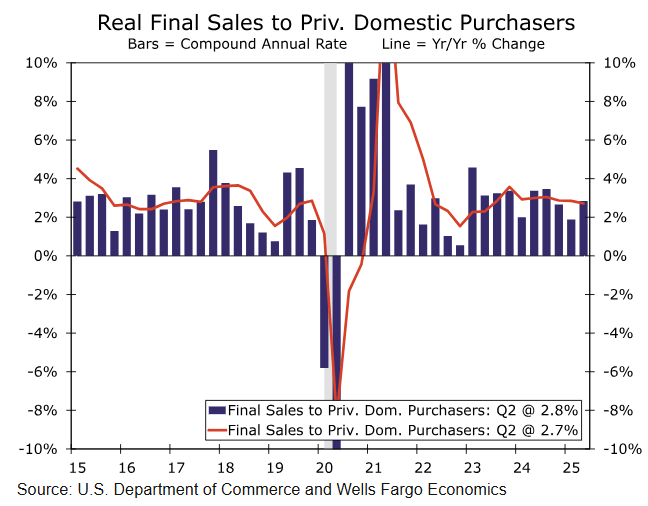
By any reckoning, today's durable goods report for August is better than what we had expected or what was expected by the consensus. The durables report dropped simultaneously with revisions to second quarter GDP that put the annualized growth rate at a head-scratching 3.8%. Much of the GDP revision comes from an improved assessment of consumer services spending. Even as a recent report on service-sector revenue suggested some upside, the newly reported 2.6% annualized growth rate of services consumption in Q2 blew past our expectations. Revisions to that line alone accounted for a 0.6 percentage point boost to headline growth. The broader measure on underlying demand, real final sales to private domestic purchasers, is still trailing headline growth, but the revisions put this measure of 'core' GDP at 2.9%, up a full percentage point (previously 1.9%) from the prior estimate (chart).
The revisions to GDP also do an excellent job of setting up the narrative for this morning's durable goods report because of what is happening with business fixed investment. This component of GDP was boosted in Q1 by a pull-forward in demand for capital goods in anticipation of coming tariffs. The initial estimates for Q2 showed a major air pocket with overall BFI coming in at just 1.9%. But that has twice been subsequently revised and as of today's revisions, the final Q2 annualized growth rate for BFI is now 7.3%. The equipment and intellectual property spending lines both benefited from back-to-back upward revisions as well. In the case of intellectual property outlays it was dramatic; the first look put spending here at 6.4%. As of this morning, the growth rate is 15%. We have highlighted the compositional shift favoring this category of spending, so the development here is surprising only in its magnitude.
While resilient growth is somewhat hard to square with the rapidly slowing jobs market, it perhaps is best explained by the no hire, no fire dynamic playing out today. This morning's swath of data also included the latest read on the number of people filing for unemployment insurance, which continued to run at a low and stable rate through the past two weeks for both first time and continuing claimants.
Ultimately the updated GDP figures suggest the U.S. economy was undeniably resilient in the first half of the year despite the on-again off-again approach to U.S. trade policy. The monthly data also suggest growth continued to run at a decent clip into the third quarter. The durable goods shipments data suggests a slower but still positive pace of equipment investment in Q3. While core nondefense capital goods shipments (excluding aircraft) slipped 0.3% in August, this measure has trended higher on a year-ago basis. The advance goods trade balance data also out this morning suggests net exports will be more of a neutral force on Q3 growth after the whipsaw effects in the first half of the year. Tomorrow's personal income & spending report for August will be key in assessing near-term consumer momentum.
Tariff effects have been smaller and slower to materialize, and the consumer has time and time again flexed their resilience in times of uncertainty. The latest batch of data certainly inject a bit of optimism to our assessment of current conditions, but the economy is still facing headwinds.
Author
Wells Fargo Research Team
Wells Fargo