|

Rates spark: Inflation pricing sends mixed signals

Markets are fearful of near-term inflation risks, reinforced by this week's US CPI numbers, yet the structural outlook looks benign. We think markets risk underestimating the possibility that mounting fiscal pressures leave central banks having to tolerate higher inflation.

Long-term inflation pricing is not reflecting upside risks

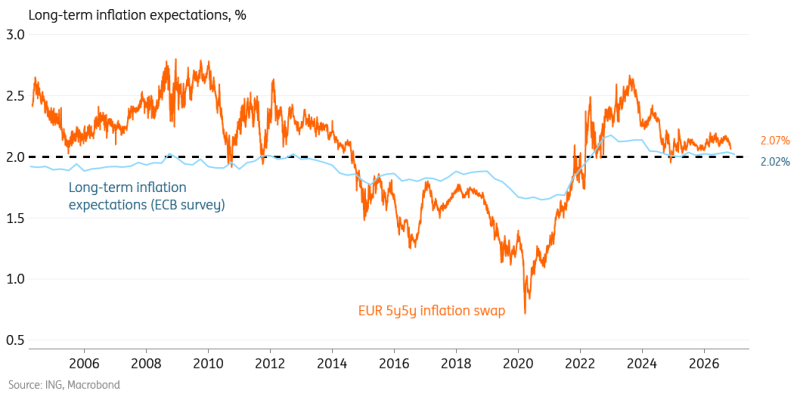
Markets are anxious about near-term inflation surprises but seem to view structural inflation very benignly, a risk we see as possibly underpriced. Despite this week’s US inflation surprise and still-high energy prices, long-term market measures of inflation expectations remain low by historical standards. The 5Y5Y EUR inflation swap is just 2.07%, only slightly above the ECB’s target. Before the global financial crisis, this number was often closer to 2.4%. For the US, the difference is even bigger.

We have seen lower inflation swap rates since 2008, when inflation failed to return to 2%, but we argue this should be seen as quite an exceptional period. Current growth dynamics remain healthy and central banks have plenty of room to ease policy if needed. Structural growth challenges remain, but so does the increased risk of supply shocks amid global tensions. Low unemployment rates also mean wages can quickly add to price pressures.

One could even argue that central banks might be forced to tolerate higher inflation in the future. High government debt piles are hard to sustain if policy rates are kept too high, which can trigger financial stability concerns. The volatility around France is a test in the making and a similar parallel should be drawn with the US. In an environment of deteriorating fiscal conditions, central banks might be more comfortable leaning on the dovish side than risking a sovereign debt crisis. So, whilst our baseline sees quite favourable inflation dynamics going forward, we do think the risk is tilted to the upside.

Long-term inflation pricing looks low compared to pre-GFC period
Chart

Thursday’s events and market view

After UK GDP numbers, we turn to weekly US jobless claims and October's Federal budget balance. We also have a list of central bank speakers, including the ECB's Nagel and Lagarde, and from the Fed, Schmid and Williams.

In terms of supply, the UK will auction £4bn of 6y Gilts. Italy will auction 3y BTPs, 7y BTPs and 20y Green BTPs for a total of €7.25bn. The US will auction $25bn of new 30y Bonds.

Read the original analysis here

Author

ING Global Economics Team

ING Global Economics Team

ING Economic and Financial Analysis

From Trump to trade, FX to Brexit, ING’s global economists have it covered. Go to ING.com/THINK to stay a step ahead.


More from ING Global Economics Team
Share:

Editor's Picks

AUD/USD hits eight-month lows below 0.6850 amid bullish USD

AUD/USD stays defensive below 0.6850, hitting an eight-month low in the Asian session on Thursday as the possibility of a steeper Fed rate hike in December helps the US Dollar hold near its highest level since April 2025. Geopolitical uncertainty also supports the safe-haven buck, while the RBA’s cautious, on-hold stance limits the Aussie.

USD/JPY eases from near 160.00 amid looming intervention risks, BoJ hike bets

USD/JPY retreats slightly from an over two-month high as the recent surge back to the 160.00 psychological mark prompted verbal warnings from Japanese authorities and sparked fears of direct FX intervention. Moreover, data showed that Japan’s wholesale inflation picked up again in October, strengthening the case for a BoJ hike in December and lifting the Japanese Yen. However, a bullish US Dollar, bolstered by odds of a jumbo Fed rate hike in December, could cap the pair's downside.


Gold hits fresh one-week low, eyes $3,950 amid sustained USD buying and Fed hike bets

Gold extends its descending trend for the third straight day, sliding back to $3,950, or its lowest level in more than a week. The US Dollar buying remains unabated amid firming Federal Reserve rate-hike expectations, bolstered by hot US consumer inflation figures. Adding to this, Middle East uncertainties further underpin the safe-haven buck, which, in turn, is seen as a key factor exerting downward pressure on the commodity.

MSCI drops Strategy from indexes: What it means for Bitcoin

Strategy and Bitcoin (BTC) came under fresh pressure late Wednesday after MSCI finalized its decision to remove the Bitcoin treasury company from its global indexes, raising concerns about potential selling pressure on MSTR shares and its future Bitcoin purchases.

Why the US Dollar's rally isn't as strong as it looks

The US Dollar Index (DXY) is back at an 18-month high, but most of its climb since August is the Euro falling. Against a wider group of trading partners, the Dollar has gained half as much, and the Federal Reserve has raised rates once this year. The US Dollar Index, which measures the Dollar against six other currencies, is trading near 103.

What the US CPI headline doesn’t tell you about inflation

Brent crude has fallen about a third since mid-October on hopes the Iran war is ending, but diesel, freight and fertiliser costs haven't followed. Those costs reach US consumer prices in stages through 2027 and could keep inflation high after gasoline gets cheaper.