One Strait, two blockades
‘Final and best offer’
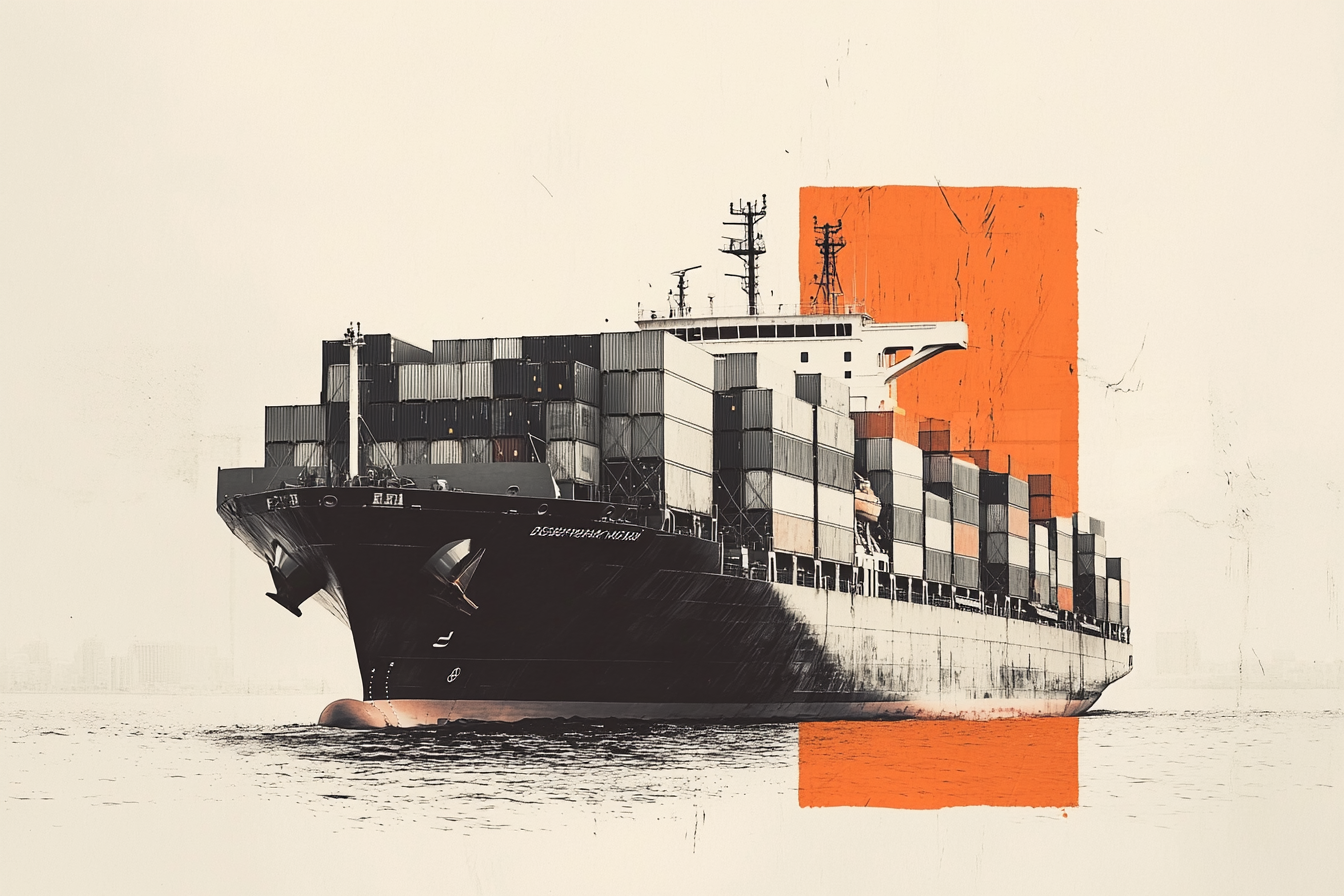
Following the breakdown of weekend peace talks – with US Vice President JD Vance departing Islamabad after delivering what he called a ‘final and best offer’ – President Trump moved swiftly, announcing a US naval blockade of the Strait of Hormuz, effective at 10:00 am ET yesterday.
The US blockade restricts shipping from the Strait to Tehran, targeting shipments carrying Iranian oil. Recent reports stated that Qatar’s LNG tankers and Saudi crude vessels have refused to cross the Strait, amid heightened concerns about retaliation; you will note that Iran has made clear that such retaliation could include Gulf ports.
Accidental alliance
So, we initially had an Iranian blockade in place, but now the US is competing with it. This almost establishes an ‘unintended’ alliance to cripple the global economy, even though the objective is to open the Strait. The result delivers a perverse symmetry: two rival blockades, each pursuing opposing ends and together achieving the same outcome – a strangled strait and a rattled economy.
Frankly, it is not clear how this blockade will be managed and, more importantly, how it will end. But it does cut off one of Iran’s key advantages: its ability to get its oil shipments out while blocking other vessels, thereby putting pressure on the country.
Interestingly, nearly 90% of oil transiting the Strait is bound for Asia, with roughly a third of that destined for China alone. Therefore, stopping Iranian shipments could be considered a calculated threat against China, which has called for restraint.
The road back will be long
If the Strait opened tomorrow, how quickly could things normalise? Not quickly, and perhaps not fully.
I find it very difficult to believe this will go back to the pre-war era. Strategies of ship owners will take this into account and factor in this risk, and damage to energy infrastructure will take considerable time to repair, with recovery potentially taking months – if not years.
Ultimately, nothing is clear at this point; there are too many moving parts, and clarity is limited. This has left ship owners, insurers, and, of course, traders very much on edge.
Risk-on markets, for now
It is fascinating that markets traded risk on yesterday, given the ongoing uncertainty. However, trading volumes were lighter, and we are heading into a major earnings season. The S&P 500 rallied 70 points (1.0%) to 6,886, with 357 stocks gaining ground, and the technology sector (XLK) was the biggest driver, up 2.1%.
Oil prices initially gapped higher at the open on Monday, driven by recent developments, pushing WTI and Brent benchmarks above US$100/barrel. However, the day ended with both markets settling modestly south of the big figure.
In FX, the USD index shed 0.3% and dipped a toe under the 50- and 200-day SMAs, almost countering the recent ‘Golden Cross’. US Treasuries also bull steepened, with the two-year yield trading below 3.80% and the 10-year yield settling at 4.29%.
Day ahead: Fed speak, PPI, and earnings
Six Fed speakers are in the spotlight today, with their comments likely to be watched carefully for clues about how the central bank views inflation and the future trajectory of policy. Fed funds futures are pricing a mere 9 bps of easing by year-end, with the first full cut pushed out to mid-2027.
We also have the US March PPI inflation data landing today at 12:30 pm GMT. Economists forecast a jump to 4.6% YY, up from 3.4% – what is interesting is that the estimate range is incredibly broad, spanning 5.9% and 3.4%, per LSEG. A hotter reading closer to the upper end of the forecast will narrow the Fed’s room to cut rates and, as a result, may provide a short-term USD bid as traders price in the new data.
On the earnings front, a bank quartet of Q1 26 earnings hit the wires today, including JPMorgan (JPM), Wells Fargo (WFC), Citigroup (C), and BlackRock (BLK). The broad expectation is higher profits across the board, though the numbers themselves will matter less than the words.
Author

Aaron Hill
FP Markets
After completing his Bachelor’s degree in English and Creative Writing in the UK, and subsequently spending a handful of years teaching English as a foreign language teacher around Asia, Aaron was introduced to financial trading,