|

NFP release ominous for USD rally

NFP release ominous for USD rally

Yesterday’s release of US Non-Farm Payrolls needed to be a blowout to avoid Dollar bulls having to question the long term health of the rally. Chairman Warshes dovish tone during the Sintra speeches “price pressures have cooled over the last four weeks” should have already but traders on edge, even as the Dollar continued to grind higher.
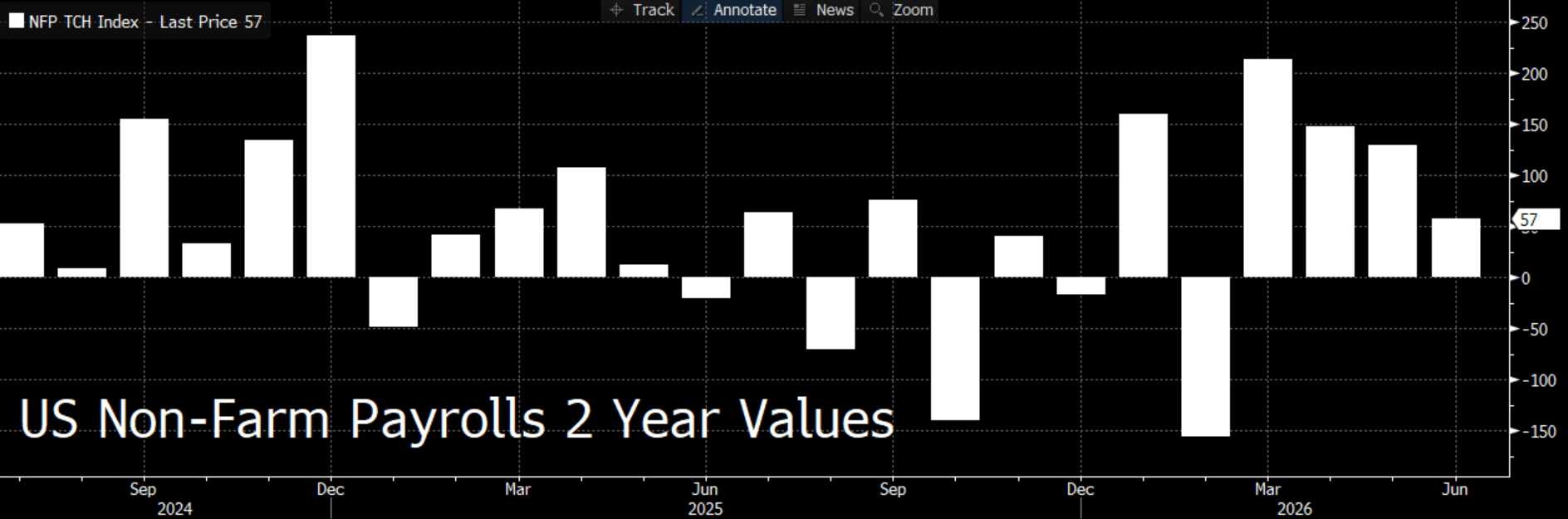
A headline jobs figure of 57,000 against expectations closer to 113,000 is a bad start, even as unemployment fell to 4.2% and jobless claims remain arrested. An interesting fact however is that the US hospitality sector, still reeling from tighter consumer budgets off the back of successive years of high inflation, appears to have received no world cup bounce at all, even as an extra $1 billion is estimated to have been spent on beer alone during the course of the tournament.

Not to mention, data also saw a 74,000 jobs downward revision to the previous two months of data, the participation rate also contracted sharply, down to 61.5% from 61.8%, quite aggressive a drop for a relatively steady data piece. This suggests people are leaving the US labour market, somewhat juicing the overall headline jobs figure and keeping jobless claims lower.
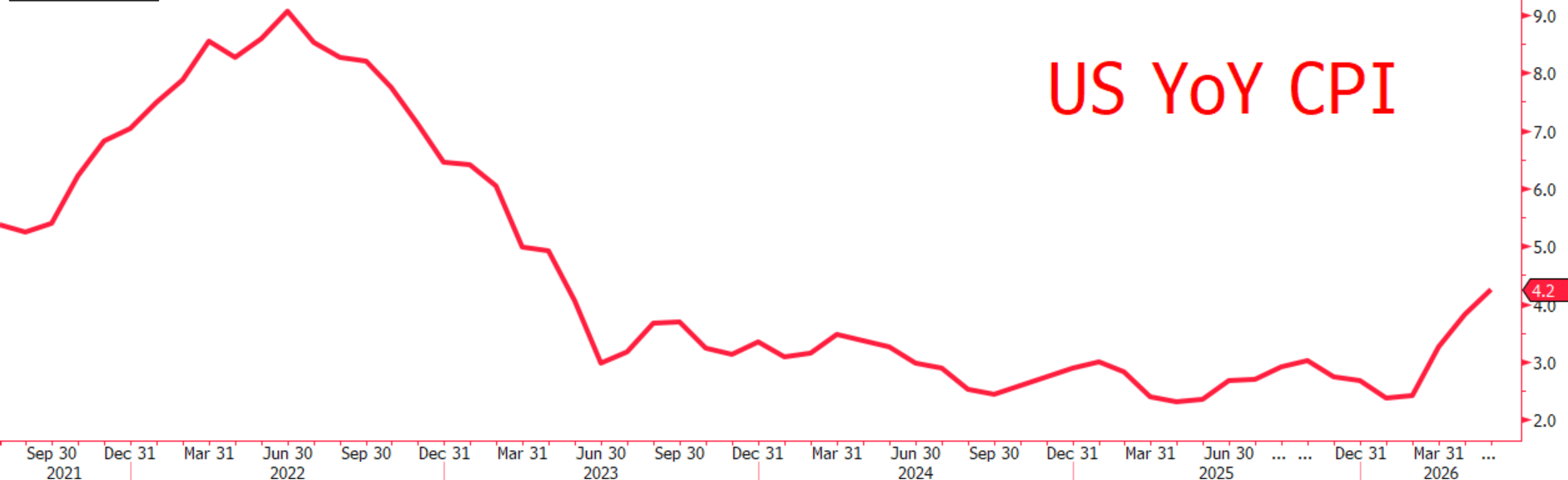
With Warsh seeing receding inflationary pressures and the FOMC now contending with a slip, which is all it is for now, in the labour market. it certainly should give pause for thought to those previously all in on the latest Dollar rally.

Author

David Stritch

Working as an FX Analyst at London-based payments provider Caxton since 2022, David has deftly guided clients through the immediate post-Liz Truss volatility, the 2020 and 2024 US elections and innumerable other crises and events.


More from David Stritch
Share:

Editor's Picks

AUD/USD sits at fresh 10-month lows, nears 0.6700

AUD/USD refreshes ten-month lows below 0.6750 and approaches 0.6700 in Wednesday’s Asian session. Fed rate-hike bets, along with fresh exchange of fire between the US and Iran, underpin the safe-haven US Dollar. Furthermore, the RBA’s dovish tilt weighs on the Aussie and the pair.

USD/JPY defends bids near 159.50 on hawkish BoJ Ueda

USD/JPY is defending bids near 159.50 in the Asian session on Wednesday, holding a three-day losing streak after hawkish commentary from BoJ Governor Ueda supports the Japanese Yen amid looming intervention risks. Meanwhile, escalating Middle East tensions revive US Dollar demand amid hawkish Fed bets, which could limit the pair's downside.


Gold battles $3,800 as downside extends ahead of FOMC Minutes

Gold continues to fall and tests the $3,800 level in the Asian session on Wednesday, hitting its lowest level since September 2025. The US Dollar sits near a 19-month high amid a fresh escalation of US-Iran tensions. This, along with firmer Fed rate-hike expectations, is underpinning the USD and weighing heavily on non-yielding bullion. Hawkish Fed commentary and strong US Retail Sales data back bets on aggressive Fed hikes.

Nvidia posts record $115.8B Q3 revenue, but crypto stays muted
The crypto market remained subdued on Tuesday despite Nvidia's (NVDA) Q3 earnings release beating analysts' expectations as demand for artificial intelligence infrastructure continued to drive growth across its business. The AI chipmaker reported record third-quarter revenue of $115.8 billion, up 103% YoY and 20% from the previous quarter.
Nvidia results boost confidence in the post-Huang era

Nvidia’s results have landed without a hitch. The stock price is  rising by more than 4% in post-market trading, and investors are giving a warm welcome to the first set of Nvidia earnings without Jensen Huang at the helm. These earnings were similar, yet different, from what we have come to expect from Nvidia. The numbers were definitely familiar.

Gold isn't being sold for thew reason most people think
Gold (XAU/USD) remains under heavy selling pressure on Monday, hitting its lowest level in 13 months. The precious metal is struggling to recover despite escalating geopolitical tensions in the Middle East, a backdrop that would normally encourage investors to seek protection in safe-haven assets. However, the main driver behind Gold's decline is not the geopolitical uncertainty itself.