Oil jumps, bonds break and the AI trade starts losing its shine
- Hormuz is the immediate catalyst, but refined-product tightness is the more persistent inflation threat.
- A $75–$85/bbl Brent range remains the base case; $100+ requires wider regional infrastructure damage or a second shipping chokepoint.
- July rate-hike pricing has moved toward 50%, but CPI likely needs a meaningful upside surprise to push expectations much higher.
- The larger equity risk is no longer a semiconductor correction alone, but a failure of rotation as real yields and AI financing concerns converge.
Oil jumps
Wall Street finally ran into the collision course it had spent weeks pretending would never happen.
Oil surged, bonds sold off, the dollar caught a bid, and the most crowded corner of the equity market began to buckle under its own weight. The S&P 500 snapped a two-day advance, the Nasdaq took the heavier blow, and semiconductors were dragged lower as the market’s less toxic inflation story, thanks to lower crude prices, suddenly became far less comfortable.
The immediate spark was the Strait of Hormuz, where the standoff between Washington and Tehran entered a more dangerous phase. Brent pushed above $83 after President Donald Trump said the US would resume a blockade of Iranian shipping and demand payment from other vessels using the waterway. Tehran insists commercial traffic must follow routes under Iranian control, while Washington maintains that the shipping lanes remain open.
Washington says the Strait remains open. Tehran says ships must move through channels it controls. On paper, both sides can keep making their case. On the water, the only verdict that matters belongs to the shipowners, insurers and crews being asked to sail through an active military standoff.
That is where the market is trading. Not on diplomatic wording, but on whether vessels are willing to move, whether insurers will write the risk, and whether the rules of passage survive the next missile strike or presidential threat. Until that becomes clearer, oil keeps a natural bid. Overnight, shipping trackers reported a mere 3 tankers crossing the strait.
Over the past week, the market has shifted from pricing a fragile working arrangement to confronting a perilous standoff with little sign of compromise. Tehran still claims leverage. Washington still insists the waterway remains open. Traders would call it what it is: a high-stakes game of military chicken.
That is a long way from the return to normal oil quants were mapping only a fortnight ago. The geopolitical premium is now being rebuilt into crude almost in real time, keeping Brent broadly supported in the $77–$87/bbl range while the risk of a more violent upside break continues to grow.
The road toward $100/bbl requires something more damaging: sustained disruption to tanker traffic, attacks on regional production infrastructure or simultaneous problems at Hormuz and Bab el-Mandeb. Washington also has strong incentives to prevent that outcome. With the US midterm elections approaching, triple-digit oil would become a political tax on consumers, corporate margins and the inflation outlook.
That is the scenario the market is not fully pricing, but cannot afford to ignore.
With worst-case scenarios now being scribbled back onto traders’ notepads, the question is whether the familiar pattern can still reassert itself: weekend escalation followed by weekday diplomacy.
So far, there are few signs of olive branches being waved. If anything, the war drums are getting louder, leaving markets to wonder whether the old rhythm of brinkmanship and retreat is beginning to break down.
Tehran also understands that the battlefield now stretches well beyond Hormuz. Iran has every incentive to keep oil elevated, drag the conflict deeper into the US political calendar and ensure that American voters feel the cost at the pump long before they absorb the strategic argument.
Whether influencing the midterms is an explicit objective or simply a useful consequence of prolonged disruption, the political logic is difficult to ignore. Every fresh escalation raises household energy costs, revives inflation anxiety and forces Donald Trump to defend a war that risks becoming more unpopular the longer it continues without a clear exit.
The danger increases if Washington cannot secure visible, durable support from NATO allies. Without a credible coalition and meaningful burden-sharing, the White House risks looking less like the leader of a united front and more like the sole owner of an open-ended Middle East conflict.
That would hand Democrats a simple and potentially powerful midterm argument: Republicans promised strength but delivered higher fuel prices, tighter financial conditions and another expensive foreign war carried largely on American shoulders.
The conflict alone may not decide control of Congress. But if oil prices remain elevated, inflation expectations rise, and the public mood continues to sour, it could weaken the Republican grip on power precisely where midterms are usually won and lost: among independents, suburban voters, and households that experience geopolitics through the price of filling up the car.
That political pressure is one reason Washington will remain eager to keep the oil shock contained. But containing Brent is only part of the problem.
The more complicated issue for the Federal Reserve sits further down the refinery chain. Gasoline and diesel remain tight, and those are the prices that eventually work their way into transport costs, consumer expectations and the political bloodstream.
Brent can spike and reverse without leaving a lasting scar. A prolonged rise in refined products is harder for central bankers to dismiss.
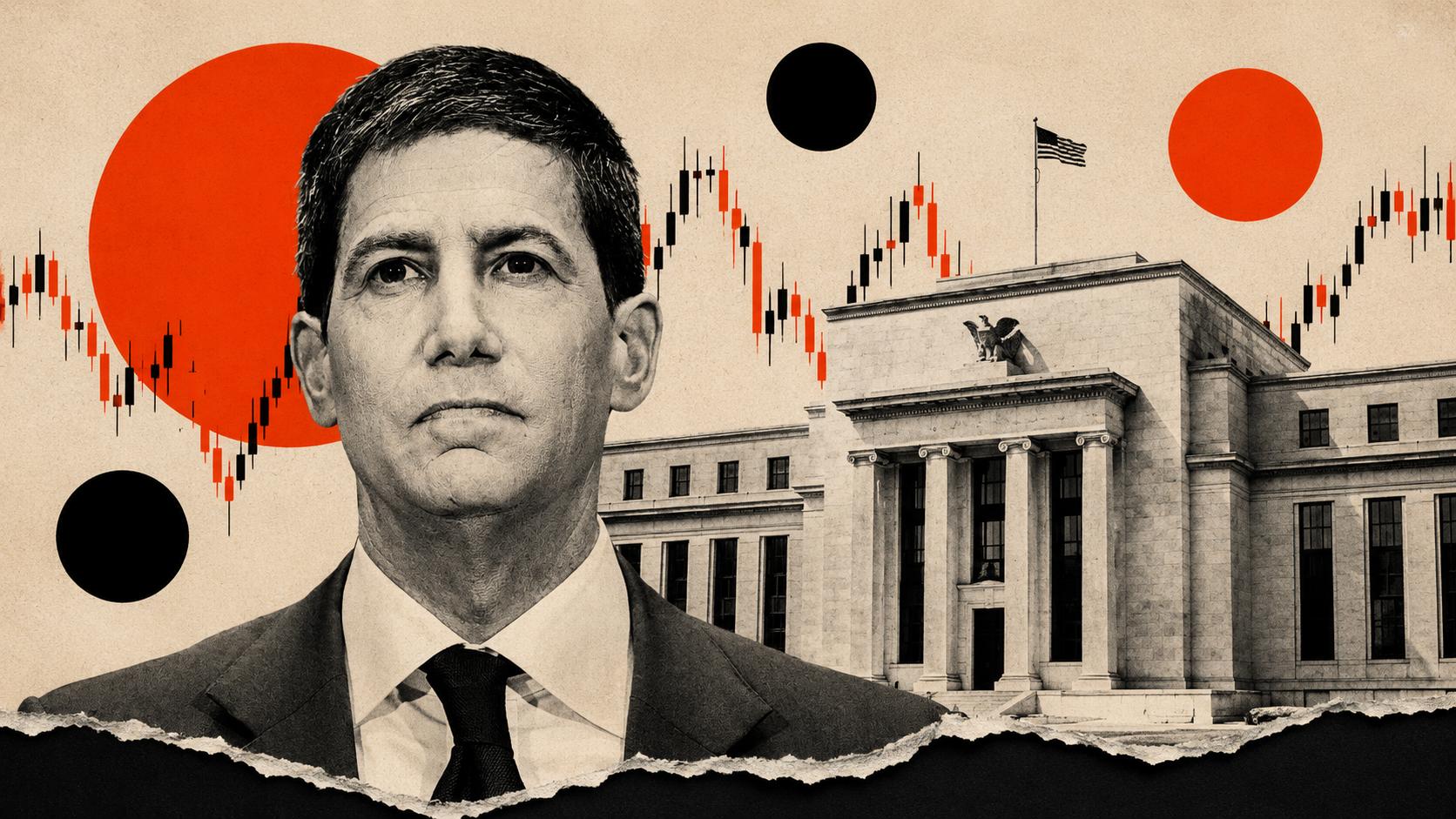
Christopher Waller pressed directly on that pressure point, warning that another hot core inflation reading could force the Federal Open Market Committee to consider tightening in the near term. Money markets responded by pushing the probability of a July rate hike toward 50%, a remarkable repricing for a market that had spent months leaning toward eventual easing.
The front end of the Treasury curve took the brunt of the damage as traders began pricing a less patient Fed.
The timing could hardly be more awkward. The June CPI report may show a monthly decline in headline inflation, helped by the earlier fall in gasoline prices, but that report is already looking backward. The market is now asking whether the next inflation impulse is arriving through oil, refined products, tariffs and still-strong AI demand before the previous one has fully faded.
That turns CPI into a referendum on the July meeting.
Given the latest move in oil, traders are unlikely to reward a downside CPI miss with anything like the enthusiasm they might have shown had Brent still been trading closer to $70 rather than $83. Tonight’s inflation report now looks less like a real-time test of the economy and more like a glance in the rear-view mirror: still important, but already overtaken by a fresh energy shock unfolding in front of the market.
A soft print could ease some pressure on front-end yields and the US dollar, but the response may prove shallow and short-lived. The market already knows that June inflation was helped by lower gasoline prices. What it does not know is how quickly the renewed surge in crude and refined products will bleed back into expectations, transport costs and the Fed’s reaction function.
A hot core number would still matter because it would validate Waller’s warning and strengthen the case for a July hike. But the asymmetry has changed. A downside surprise may now struggle to reverse the hawkish repricing, while an upside surprise would land directly on top of an oil shock that has already made the inflation outlook more difficult.
In that sense, CPI is no longer the whole story. It is the last clear photograph of the old backdrop, arriving just as the market begins trading a far less comfortable one amid a growing structural problem in bonds.
Governments are issuing aggressively across the US, Japan, Europe and the UK. Central-bank guidance can flatten curves for a time, but it cannot repeal fiscal arithmetic. The world continues to ask private markets to absorb an enormous duration burden.
Real yields are now sending the louder warning.
Ten-year US real rates have climbed from roughly 2.11% at the end of June toward 2.34%. The level is restrictive, but the speed of the move matters more. A swift push through 2.40% would begin to tighten financial conditions in a way equities could no longer shrug off.
That is where the oil shock, the Fed and the AI trade begin to intersect.
Semiconductors peaked on June 22. Since then, the S&P 500 has traded largely sideways as money rotated into other sectors. That broadening helped disguise the damage underneath the surface. Correlations fell, non-technology sectors held up and the index appeared more resilient than the leadership beneath it.
That cover is now thinning.
South Korean memory names fell 5% to 6%, batteries weakened sharply and the broader AI complex came under pressure. The KOSPI is now more than 27% below its highs. Japan’s automation, optical networking and AI-linked shares also weakened, while domestic and rate-sensitive sectors held up better.
By the time the selling reached New York, the Nasdaq had become the weakest of the major indices. It broke back below its 50-day moving average, semiconductors were slammed, and both the companies writing the AI investment cheques and the companies receiving them were sold.
That distinction is crucial.
This is no longer simply a debate about whether one chipmaker is too expensive. The market is beginning to question the entire AI capital cycle: who finances it, who earns the return, and whether the debt being raised to fund hyperscaler spending can continue to be absorbed without wider consequences.
Now, the AI bearish doom loop is expected to persist across Asia this morning.
The AI trade had been built around a Goldilocks combination of limitless demand, falling rates and forgiving credit markets.
Oil is now challenging the inflation assumption.
Rising real yields are challenging the valuation assumption.
The hyperscaler debt debate is challenging the financing assumption.
Apple was the striking exception, hitting another record as investors rotated toward a fortress balance sheet and lower-volatility mega-cap exposure. There are fundamental reasons for the strength, including the next iPhone cycle, pricing power and the prospect of an AI-led upgrade to Siri.
But there is also a defensive element. Apple is increasingly being treated as shelter within technology just as the broader complex becomes less dependable. That can continue, although the valuation leaves very little margin for error.
The equity market is still benefiting from positive dealer gamma, which has helped suppress volatility and cushion intraday declines. Yet that protection may be more fragile than it looks. Heavy zero-day options activity can dampen daily swings while longer-dated positions must be rolled after the July expiration.
The shock absorbers are still working. That does not mean the road is smooth.
Gold fell back toward the critical $4,000 area as oil, real yields and the dollar all moved against it. Bitcoin suffered from the same tightening impulse, dropping below $62,000. The selling across bonds, bullion, crypto and high-beta technology was not a collection of isolated trades.
It was one message delivered through different markets.
Liquidity was becoming more expensive.
From here, the cleaner outcome is continued rotation, with money leaving semiconductors and AI while moving into less crowded parts of the market. The more dangerous outcome is that the rotation fails, correlations rise, and the selling broadens into a genuine index-level correction.
The odds of that second scenario rose meaningfully.
For months, equities were able to treat higher oil prices, higher yields, and expensive technology as separate problems arriving on different days.
They have now started arriving together.
Author

Stephen Innes
SPI Asset Management
With more than 25 years of experience, Stephen has a deep-seated knowledge of G10 and Asian currency markets as well as precious metal and oil markets.