Oil crashes the stock market party

Geopolitics, politics and earnings risks are colliding this morning. It’s another volatile start for markets. The oil price has surged by 3% and Brent crude is now trading above $104. This is pressuring the bond market and causing stocks to sell off. The FTSE 100 is down 0.6% but is the most resilient of the European indices for now.
A psychological barrier is breached
As the oil price crosses the psychological barrier of $100 this has a deep effect across financial markets. The first effect is that it drives bond yields higher. Europe is leading the bond market sell off this morning, and this is impacting European stocks. The Cac is lower by 0.98% and Italy’s FTSE MIB is down by 1.05% so far on Thursday. However, all major global indices have registered a decline in the last 24 hours, the only index that is rising is volatility.
This is a stock pickers market, and there are some individual outperformers. Tesco is higher by more than 3% today as the supermarket giant gave an update on its forecast for annual profit, which is expected to be at the upper end of forecasts, at £3.15 - £3.3bn. Tesco is the top performer on the FTSE 100 today, suggesting that good earnings news will be rewarded by investors, even when volatility is elevated.
All bond markets at risk of a sell off
Over the past week, there has been a clear preference for Asian and US stock indices, over European indices. For example, the Eurostoxx 50 index is down more than 2%, compared to a 2% gain for the Nasdaq. However, the sell off in European bonds has slowed over the last 5 trading sessions. We do not view this as a sign that the pain in the European bond trade is over, instead, it suggests that in recent days US and UK bond yields have joined in the sell off, after last week’s period of relative outperformance.
When the oil price is above $100, it is very hard for any developed bond market to perform well, especially those that are highly indebted. The risk for markets is that the conflict in the Middle East will persist, after Donald Trump suggested that attacks on Iran could resume before next month’s MidTerm elections. With the prospect of an Iran peace deal on the backburner, it is natural that risk tolerance will fall.
Fed still expected to remain on hold this month
Bonds are set to remain volatile as we lead up to this month’s central bank meetings. The market is still paring back expectations for an Oct rate hike, they now stand at 21%. However, will the recent weakness in payrolls and moderation in the PCE growth rate be enough to keep the Fed on hold for the long term? The answer to this question is vital for markets, especially as AI companies continue to issue debt to fuel their expansion plans. The more it costs to do this, the more important the payoff and the impact on global stock markets.
Record highs for US indices in the rearview mirror
US stock futures are pointing to a lower open later today. This week’s record highs in the S&P 500 and in the Nasdaq now feel like a distant memory as the market focuses on the upcoming Q3 earnings season, which will be a major test for the AI trade. A strong set of earnings is necessary to keep the US stock market show on the road, which is why some nervousness ahead of the start of reporting season is to be expected.
The AI trade in numbers
Tech earnings are incredibly important at this stage. To visualise how important the AI trade is to the S&P 500, and how crucial this earnings season will be, 62% of the S&P 500’s market capitalisation is linked to AI through chip makers, cloud infrastructure, cyber security and power/ energy grid suppliers. Over 30% of S&P 500 members directly supply AI companies, so if hyperscalers slow their spending, the broader index could get hit.
The FX view: Euro under pressure for the long term
FX is also in view after the euro reached a 17 month low earlier this week. EUR/USD is steadying today just below $1.12,even though bond yields are rising. France is still on everyone’s radar, and it seems likely that bond yields will continue to rise and remain elevated as the country fails to grapple with its fiscal issues, and as the ECB seems unwilling to step in.
The head of the French central bank has said that the current spike in French bond yields is not a problem for the ECB, but is instead a domestic problem for France to solve. With Presidential elections scheduled for next April, the likelihood of fiscal reform before then is low, which should kepe downward pressure on the euro and European bonds.
Ahead today is a swath of central bank speakers, we shall have to see if this placates bond markets.
Brent Crude Oil
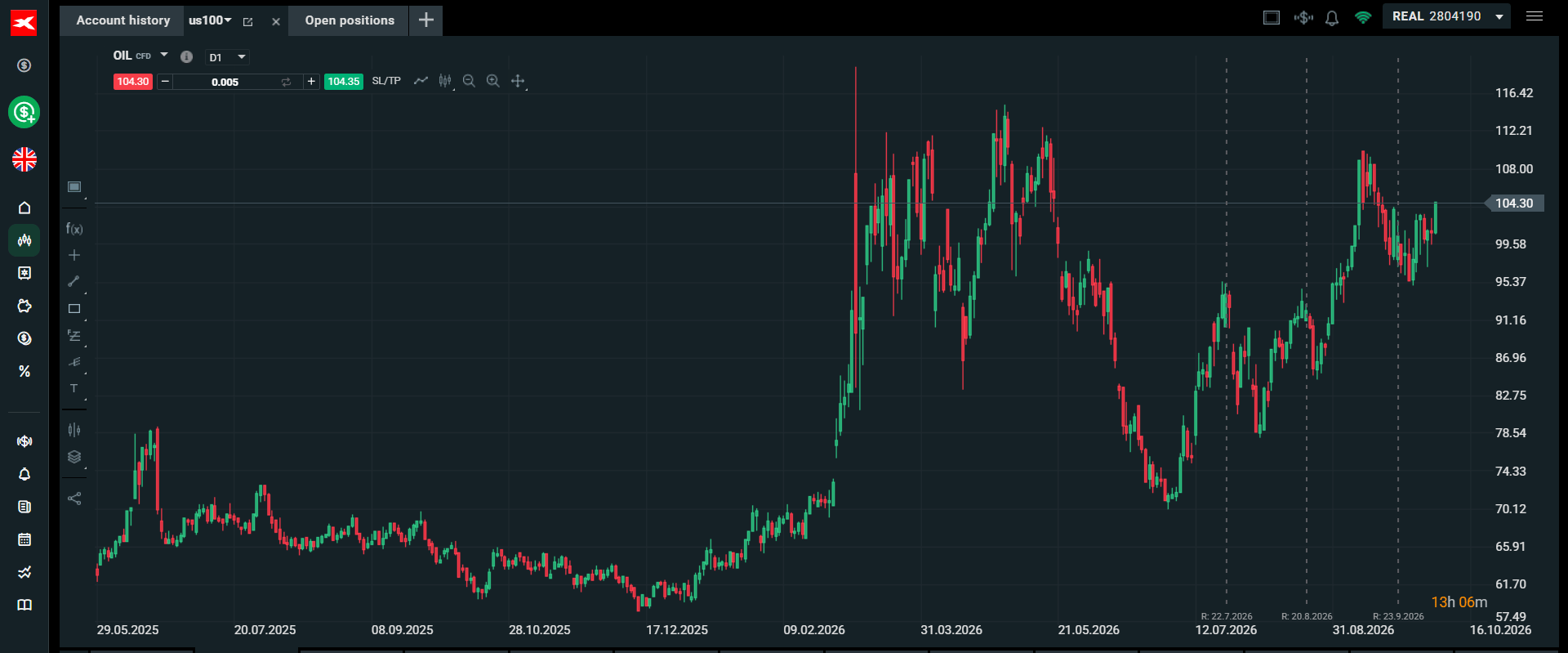
Source: XTB
Author

Kathleen Brooks
XTB UK
Kathleen has nearly 15 years’ experience working with some of the leading retail trading and investment companies in the City of London.