Oil back in the driver’s seat
The news is not brilliant: Middle East tensions are flaring up, US President Donald Trump declared the ceasefire over, and the US continued bombing Iran last night. Washington also revoked the recent easing of Iranian sanctions, meaning that Iran will not be able to sell the tens of millions of barrels currently at sea, while Tehran said it will launch a 'large-scale retaliatory' operation against US bases across the Gulf region. Meanwhile, Russia is limiting some energy exports to avoid domestic shortages amid Ukrainian attacks on Russian energy facilities.
What a wonderful world.
Oil rebounds
The latest turn of events in the Middle East has reversed the short-term bearish outlook for oil prices. US crude has risen as much as 13% since last week's dip and is now testing the $75pb level — and the 200-DMA — to the upside, with an increasing possibility of the barrel reaching and breaching the $80pb mark. Brent crude briefly traded above $80pb yesterday. Both are slightly lower today, but the short-term risks remain tilted to the upside.
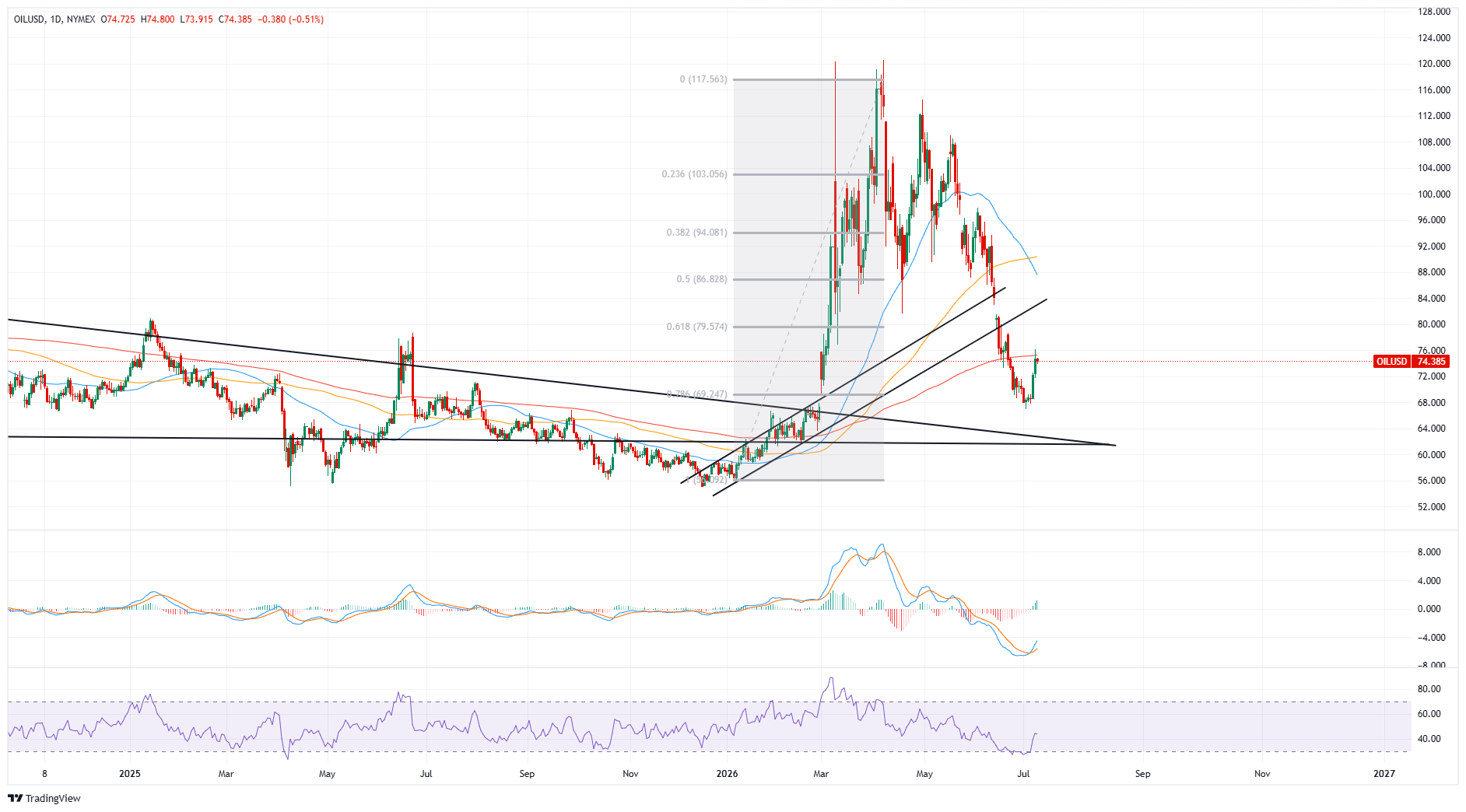
But the immediate upside pressure could be less severe than what we saw in the first weeks of the war. First, the market has become accustomed to the tensions and the disruptions in the Strait of Hormuz. The surprise factor is much smaller than it was at the beginning, and the market's overreaction is therefore more limited. Second, a number of ships have already transited through the Strait of Hormuz, delivering oil to key markets. A few days ago, Saudi Arabia significantly cut the price of its oil for Asian buyers to ensure that millions of barrels would be absorbed quickly. Third, we have seen the oil market swing from supply shortages to supply surpluses in the blink of an eye over the past three months, meaning that once tensions de-escalate and traffic through Hormuz is restored, oil will continue to flow. And finally, China seemingly has ample reserves and a relatively high pain threshold, as it waited weeks before beginning to replenish its strategic reserves; it is unlikely to rush in if prices rise again.
Read the full article here.
Author

Ipek Ozkardeskaya
ipekScope
Ipek Ozkardeskaya began her financial career in 2010 in the structured products desk of the Swiss Banque Cantonale Vaudoise. She worked in HSBC Private Bank in Geneva in relation to high and ultra-high-net-worth clients.