Middle East tensions weigh on Gold

Gold fell to 4,032 USD per ounce on Thursday, marking its second consecutive day of decline. Pressure on the market intensified amid fears that a new escalation of conflict in the Middle East could disrupt energy supplies and accelerate inflation.
The US military confirmed that it has been striking targets in Iran for the second consecutive day, seeking to limit Tehran's ability to threaten shipping through the Strait of Hormuz. In response, Iran has announced preparations for a large-scale operation against American military bases in the region.
US President Donald Trump stated that, in his view, the ceasefire has effectively come to an end. He also warned of the possibility of further strikes against Iran and the imposition of an additional naval blockade.
Additional investor attention has been drawn to the minutes from the Fed's June meeting. They showed that only a small proportion of the regulator's representatives advocated a rate hike as early as June, with most participants remaining concerned about inflation risks.
The market continues to price in at least one Fed interest rate increase before the end of 2026, which limits gold's upside potential despite ongoing demand for safe-haven assets.
Technical analysis
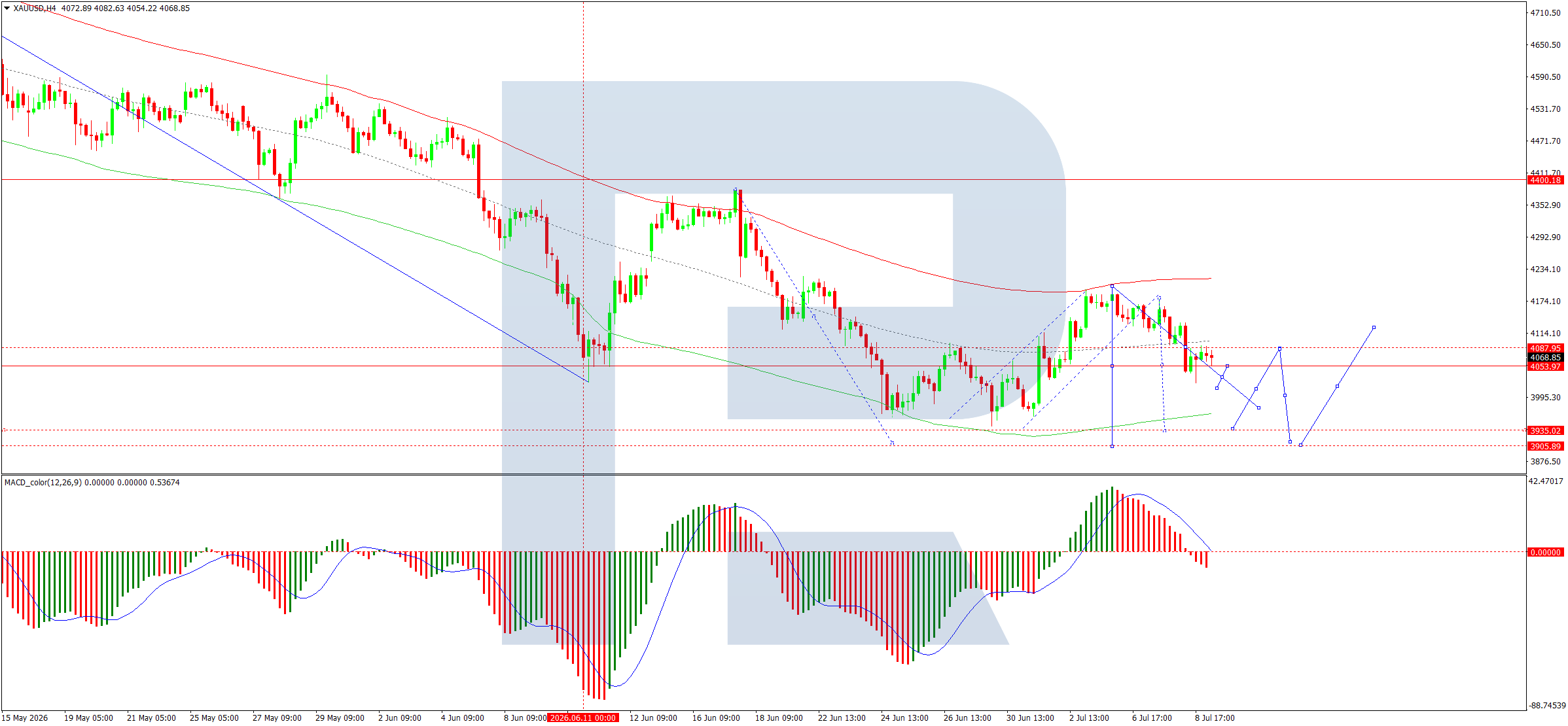
On the H4 XAU/USD chart, the market is trading within a consolidation range around the 4,090 USD level. A decline to 4,018 USD and a subsequent rise to 4,088 USD have been completed. A further move lower towards 3,930 USD is expected, followed by a potential rebound to 4,055 USD, with scope for an extension to 4,150 USD. The MACD indicator confirms the current downside momentum, with its signal line below the centre line and pointing firmly downwards.
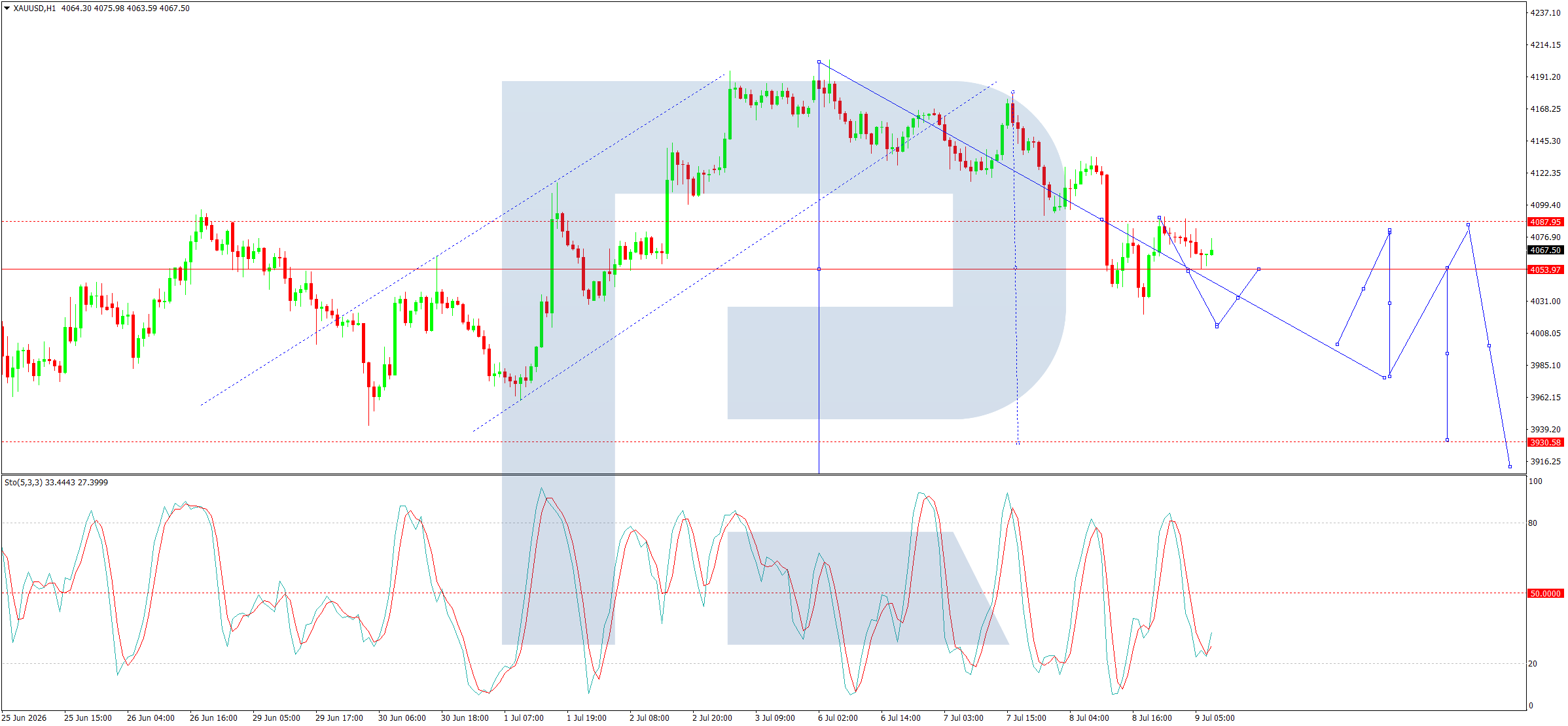
On the H1 chart, the market has broken below the 4,090 USD level and is moving lower towards 3,977 USD. A wide consolidation range is forming around 4,090 USD. The Stochastic oscillator confirms this scenario, with its signal line below the 50 level and pointing downwards towards 20, indicating continued downside pressure.
Conclusion
Gold continues to decline as renewed Middle East conflict intensifies fears of energy supply disruptions and rising inflation. US strikes on Iran and Tehran's threat of retaliation have escalated tensions, with President Trump declaring the ceasefire effectively over. Meanwhile, the Fed minutes revealed a cautious central bank, with only a minority advocating an immediate rate hike, while most members remain vigilant about inflation risks. Markets continue to price in at least one Fed rate hike before year-end, limiting gold's appeal despite safe-haven demand. Technically, further downside towards 3,930 USD appears likely, with any recovery likely to be capped by ongoing geopolitical and monetary policy headwinds.
Author

RoboForex Analysis Department
RoboForex
RoboForex Analysis Department provides timely market insights, expert technical analysis, and actionable forecasts across forex, commodities, indices, and equities.