New Zealand versus America – Who wins?


New Zealand has had no new Coronavirus cases in the past 13 days. America is about to top 105,000 cases. New Zealand went hard and fast. The United States Is barely squashing the curve. New Zealand is in the phase were politicians are arguing when to remove all restrictions. United States is reopening to save a dwindling election. A stark contrast in the environment between the two countries. However, one thing remained constant – the returns in the major indices between both countries.
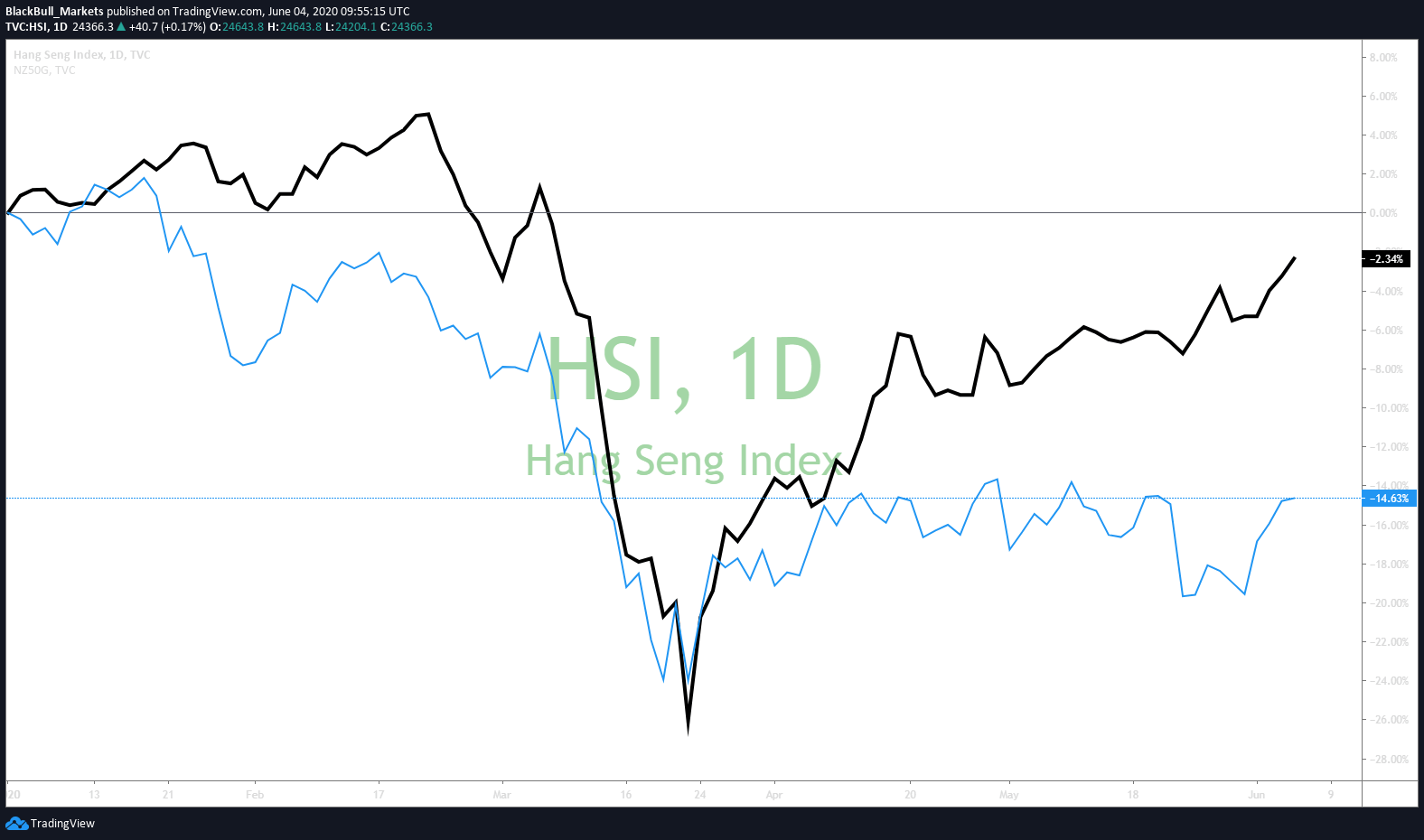
NZX in Black, SP500 in Blue, Dow Jones in Orange, NASDAQ in Teal
New Zealand’s market posts similar returns to US Indices
You can see its risk on between the NZX 50, New Zealand’s major indices and the Dow, S&P 500, and the NASDAQ. If equity markets are forward-thinking, the markets are indicating that major American companies will face a similar macroeconomic environment as companies in New Zealand. Granted, there are some fundamental differences. The SP500 is heavily weighted to major tech stocks such as Alphabet and Facebook, while the NZX 50 is primarily dominated by bank and bell-weather value stocks, with modest market caps. The better comparison would be the NZX 50 against the Russell 2000.
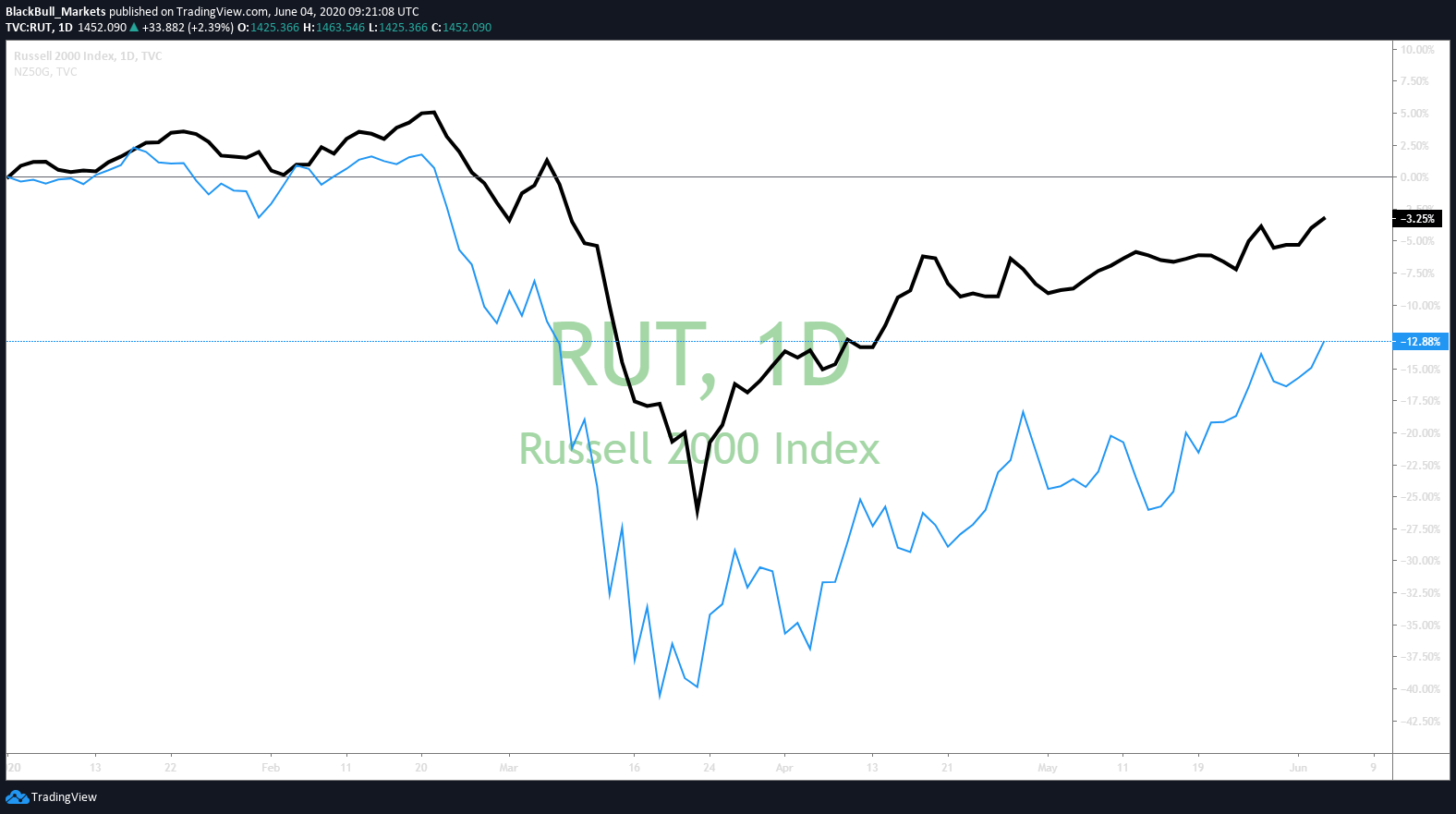
NZX in Black, Russell 2000 in Blue
We can see that although the shape for both indices are the same, the NZX 50 is doing far better than the Russel 2000. However this should be representative in all American indices.
When investors pick stocks, they believe these stock will do relatively better than the others. If we take the same logic with markets, can we rationally say that American companies will fair similar or better in a couple of months in comparison to companies in New Zealand? With America opening while being nowhere ready, social unrest at an all-time high with leadership in disarray, will there be a bifurcation between countries whos coronavirus response was effective versus countries who still has ways to go?
Is there an example where returns are more correlated with the Coronavirus response/macroeconomic environment?
The markets have been heavily influenced by risk on / risk off consensus. Therefore it is difficult to find something that has been directly pricing in the forward looking macroeconomic enivornment. However if we compare the NZX to the Hang Seng Index,
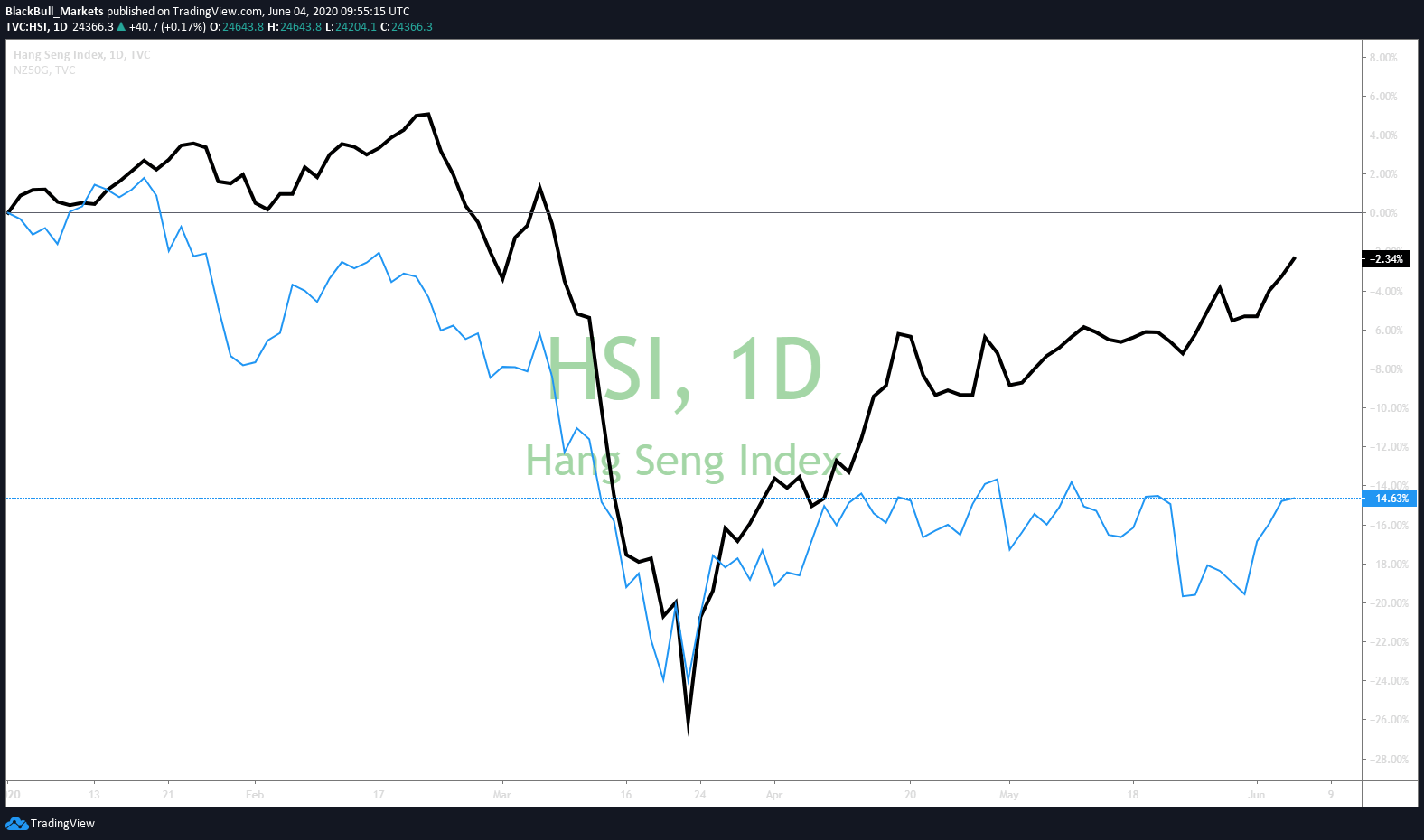
We can see the market is pricing in the macroeconomic environment in Hong Kong, with Hang Seng line (blue) consolidating within a range while the NZX posts constant gains. Will the major United States indices follow a similar pattern with Hong Kong?
There is a high likelihood that a second wave in America/second wave in other countries will see Investors rush to equity markets like New Zealand and Australia to park their hard earn dollars.
Author
Kyle Quindo
Blackbull Markets Limited
Kyle is a Research Analyst with BlackBull Markets in New Zealand. He writes articles on topical events and financial news, with a particular interest in commodities and long term investing.