My first losing week in months & 3 tips to adapt to trend changes


Hey Traders,
Yep, last week might have been my first losing week in months. I'll have to check, but its been since September or October last year since I had a losing week.
Last week was challenging for many traders, and I noticed many of my students trading less.
Why?
Markets were selling off more than usual, and it was the 3rd losing week for the Nasdaq, with many indices turning red for the year.
Most stock traders have a long only bias.
I generally trade more long than short, but from my experience, when stock traders trade less during bearish markets, its either because they are:
1) not sure how to trade bearish markets
or
2) are shell shocked from their long trades losing money
From my experience, traders lose more money during 'transitions' in the markets. These can be when:
1) bull markets become bearish
2) trending markets become ranging
3) bear markets become bullish
All of the above represent transitions in the market from one price action and order flow structure to another.
And it is during these times I find most traders losing money, and my students trading less.
The real key is adaptation - the ability to adapt to an ever changing markets.
To adapt, you have to be flexible in your mind and not hold steadfastly to the market being bullish, bearish or neutral.
It takes time, but you have to build the skill to read the changes in the price action and order flow.
The quicker you do this, the quicker you can adapt.
If you had trouble adapting to the markets last week, here are 3 tips to help you make more money when the markets change:
1) Sell Options On Your Long Positions
*have a long only stock portfolio and trades you don't want to close? sell covered calls, or get long puts (if they are cheap) on your long stock trades.
This will help you actually make a profit on your losing stock trades by selling covered calls.
If you're going to lose money on your stock trades, you might as well make some money with options.
2) Take Bearish Plays On The Most Bearish Stocks
*ARKK was already down two weeks in a row and had lost 5+ weeks of gains in the last two weeks.
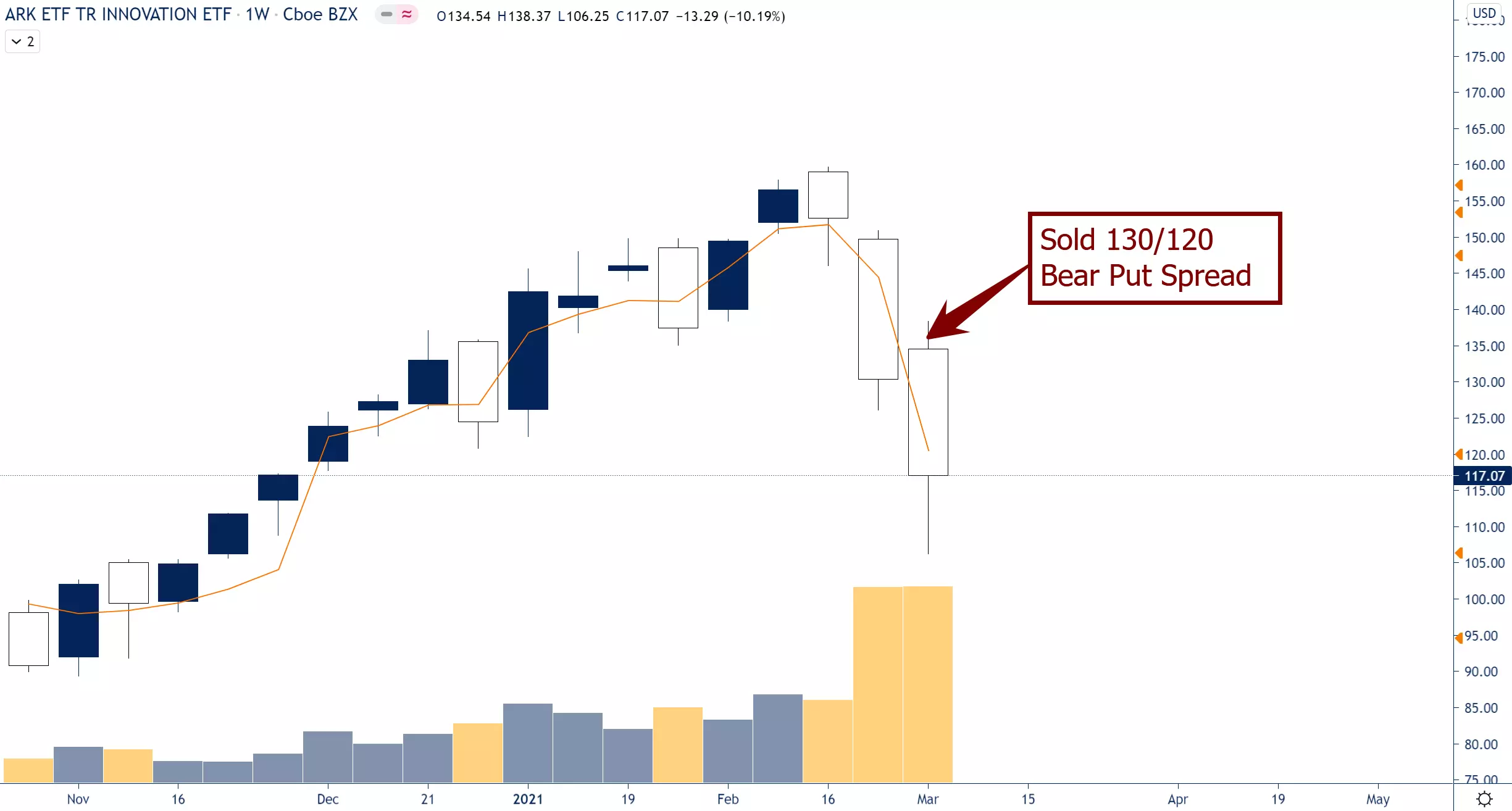
This was one of the most bearish ETF's out there, and many were speculating ARKK losing money was one of the main reasons the stock market was falling (since they had such large positions in tech).
So we sold a bear put spread (when it was at $133) with 130/120 strikes.
That meant if ARKK sold all the way from $133 down to $120, we'd hit max profit on that spread.
3 days later, we closed it for a $5.6 credit (paid $3.75).
If you generally trade long, but want to get in on the bear side, trade the most bearish plays out there.
3) Trade Longs, But Be Out Quick
*When the markets are bearish, most stocks are falling on the day.
However, for the pre-market, or early opening drive of a session, you'll often find a handful of stocks that are gaining on the day.
Look for the highest volume stocks on the day, ideally being one of the leading gappers, and take some quick long trades to make a quick profit.
Be out quick because when markets are bearish, all stocks (including the best ones) will be feeling bearish pressure all day.
The key is to look for base hits.
Those quick base hits can add up if you get enough of them, so grab a few, then get out.
Sometimes a few quick trades can make all the difference between winning and losing that day.
Final Thoughts
When bull markets become bearish, or during market 'transitions', is when most traders lose money (present company included).
The key is being able to 'adapt' to the new markets. The faster you can do that, the faster you'll get back into the win column.
But don't sweat having a losing week, or not adapting to a fast changing market.
Even the best of us can have a hard time changing, and get caught on the wrong side of the market.
No point in beating yourself up (which gets you nowhere).
Learn from your losing trades, then let them go.
Quarterbacks throw interceptions - the best come back and throw a touchdown.
In trading, you have to be the same.
Visit our website at 2ndSkies for more price action content, free trading lessons, strategies and videos. Find out how we can help you to change the way you think, trade and perform.
Visit our website at 2ndSkies for more price action content, free trading lessons, strategies and videos. Find out how we can help you to change the way you think, trade and perform.
Author
Chris Capre
2ndskiesforex
Chris Capre is a professional forex trader and mentor specialized in Price Action trading, and the Ichimoku Cloud.