Manufacturing set to subtract from UK GDP
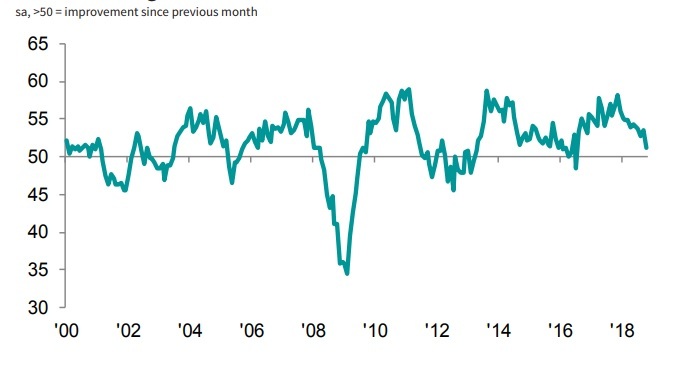
- The UK manufacturing PMI fell to 51.1 in October, down from a revised 53.6 in September.
- New orders and employment sub-indices of the PMI both declined for the first time in 27 months.
- The current slowdown in the economic activity in manufacturing indicates the fourth quarter subtraction of manufacturing from GDP growth.

The newswires are full of Brexit headlines of late and the way the news surface the public is chaotic and has a significant market influence on Sterling. Even greater influence than the economic fundamentals.
The news of the UK manufacturing PMI falling to 51.1 in October, down from a revised 53.6 reading in the previous months also had a little market effect amid news of the UK signing up the financial services deal with the European Union early on Thursday.
The macroeconomic consequences of such a sharp deceleration in the manufacturing activity in the UK are negative. While headline manufacturing PMI dropped 2.5 points and approached 50.0 line dividing economic contraction from the economic expansion territory, the sub-indices of new orders and employment also fell and the fall marked a 27-month low in October. The UK manufacturing PMI falls prey of Brexit uncertainties and Trump’s led trade wars.
The decline in the economic activity in manufacturing is now set to contribute negatively to the overall performance of the UK economy, subtracting some 0.2% off the fourth quarter GDP.
“At current levels, the survey indicates that factory output could contract in the fourth quarter, dropping by 0.2%. New orders and employment both fell for the first time since the Brexit vote as domestic and overseas demand was hit by a combination of Brexit uncertainties, rising global trade tensions and especially weak demand for autos,” Rob Dobson, the director at IHS/Markit compiling the PMI survey wrote in the report.
The outlook for the UK manufactures remains positive with some 48% of surveyed manages are forecasting expansion leaving the second half of this year taking the toll of rising Brexit uncertainties and escalating global trade tensions.
UK manufacturing PMI
Author

Mario Blascak, PhD
Independent Analyst
Dr. Mário Blaščák worked in professional finance and banking for 15 years before moving to journalism. While working for Austrian and German banks, he specialized in covering markets and macroeconomics.