Light economic calendar for the week ahead


Stepping into the first full week of November, the economic calendar is a little more on the quieter side this week.
RBA to increase the official cash rate?
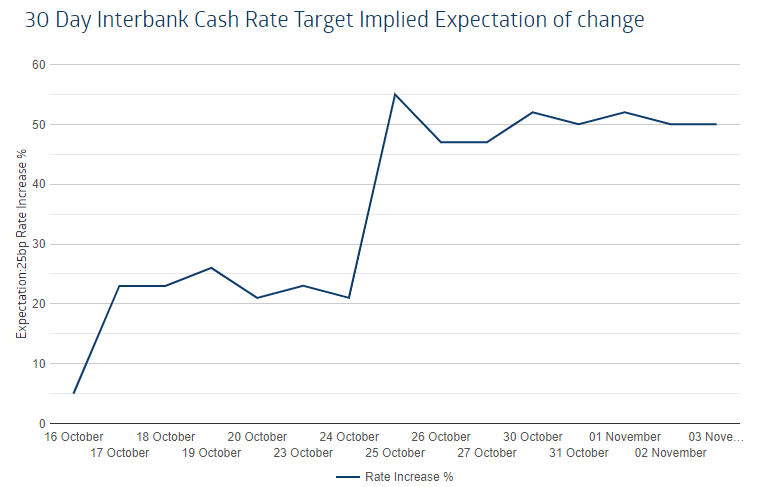
The Reserve Bank of Australia (RBA) is the highlight event on Tuesday at 3:30 am GMT. Amid stronger-than-expected CPI inflation and rising house prices, the ASX 30-Day Interbank Cash Rate Futures for the November contract imply that the market is about even ahead of this week’s rate decision. Ultimately, the recent upside surprise in Q3 inflation data is likely sufficient to tip the scales more in favour of a rate increase. The Official Cash Rate stands at 4.10% and has been on hold for four consecutive meetings.
What does this mean for the AUD/USD this week?
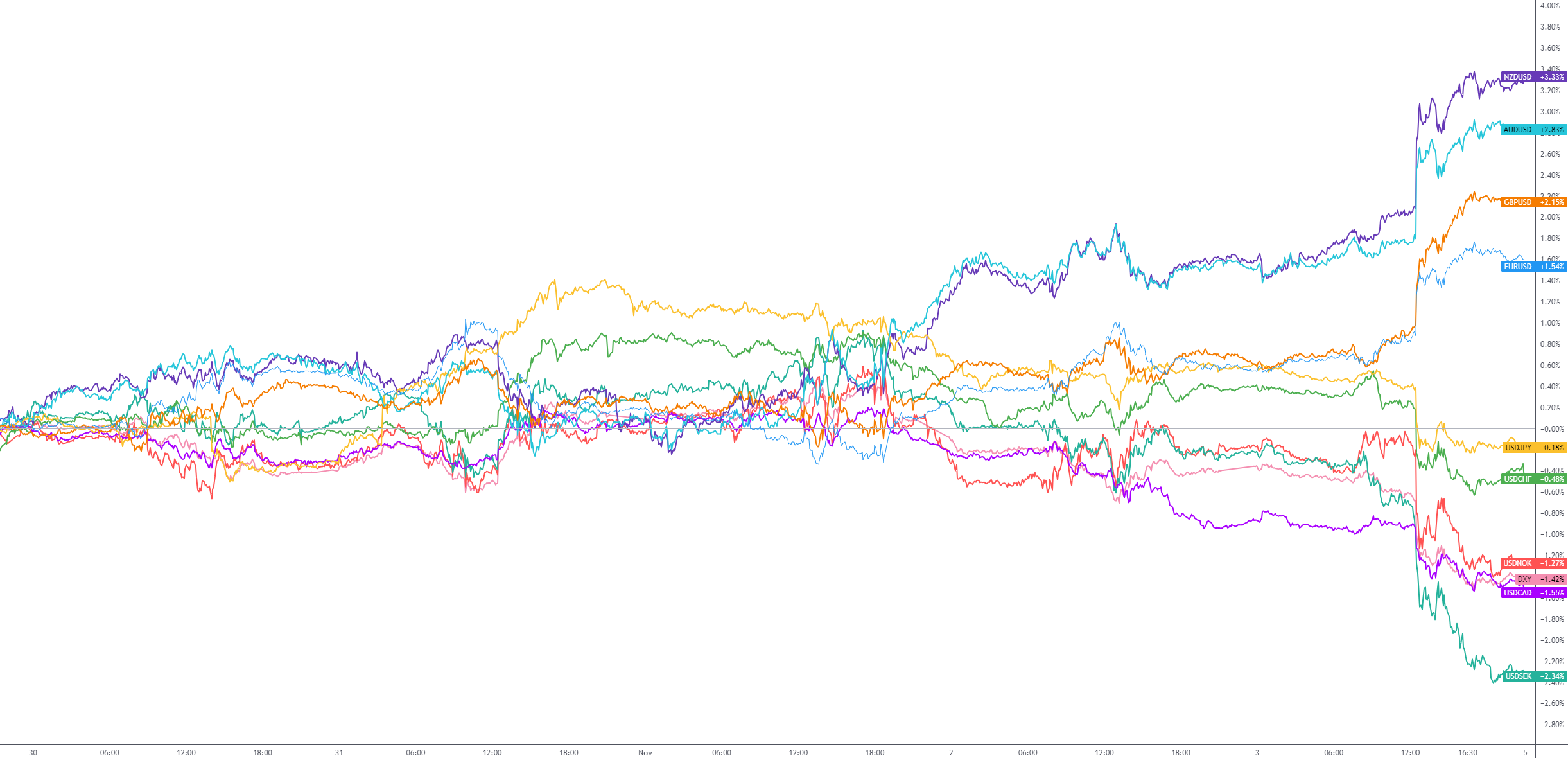
The AUD/USD found some legs last week, climbing +2.8% and recording its most significant one-week gain since November 2022. Should a rate increase come to fruition, further outperformance in the currency pair is possible.
Fed Chair Powell scheduled to speak
Several Fed officials are scheduled to speak on Thursday, including Fed Chair Jerome Powell at 7:00 pm GMT. Powell is expected to participate in a panel discussion titled Monetary Challenges in a Global Economy at the Jacques Polak Annual Research Conference in Washington DC. Fed officials speaking at the event could shed light on the recent FOMC decision/guidance and, consequently, elevate volatility across the financial markets.
Additional economic data this week
Preliminary Q3 UK growth numbers are a key release on Friday at 7:00 am GMT, followed by preliminary US UoM consumer sentiment data at 3:00 pm GMT.
UK growth numbers are expected to be soft for Q3. Growth declined -0.6% in July on a month-on-month basis, though rebounded to 0.2% in August. Therefore, aside from a significant recovery in economic activity (doubtful) in September, Q3 GDP might drop into negative territory and weigh on sterling (GBP).
US preliminary UoM consumer sentiment data is expected to fall slightly to 63.6 in November, down from 63.8 in October.
G10 FX (5-day change)
Author
Aaron Hill
FP Markets
After completing his Bachelor’s degree in English and Creative Writing in the UK, and subsequently spending a handful of years teaching English as a foreign language teacher around Asia, Aaron was introduced to financial trading,