Is the Fed playing with fire by tightening into a slowing economy?

Even the most optimistic of economists had to take a moment to ponder the weaker-than-expected Non-Farm Payrolls report at the start of the month. As it turned out, the NFP report was just one of a series of disappointing economic data releases from the world's largest economy.
Timely economic figures on Non-Manufacturing PMI, PPI, CPI, Retail Sales, Capacity Utilization, Industrial Production, Building Permits, Housing Starts, and yesterday's Durable Goods Orders all came in worse than last month, with most of those readings coming in below economists' expectations as well; in other words, there is widespread evidence that US economic growth unexpectedly slowed through May and into June.
After about half a decade of traders fearing that the Fed was falling "behind the curve," the pendulum has swung definitively in other direction. All of the sudden, some analysts fear that the Fed may be tightening into a slowing economy, an historically reliable signal of a looming recession.
Before we get ahead of ourselves, it's important to note that a single month's worth of poor data is not enough to shift the trend of slow-but-steady growth that has characterized the US (and global) economy since the Great Financial Crisis. There have been many months (and even quarters!) over the last seven years when the US economy has downshifted before reaccelerating back to its "new normal" 2.0-2.5% annualized growth rate.
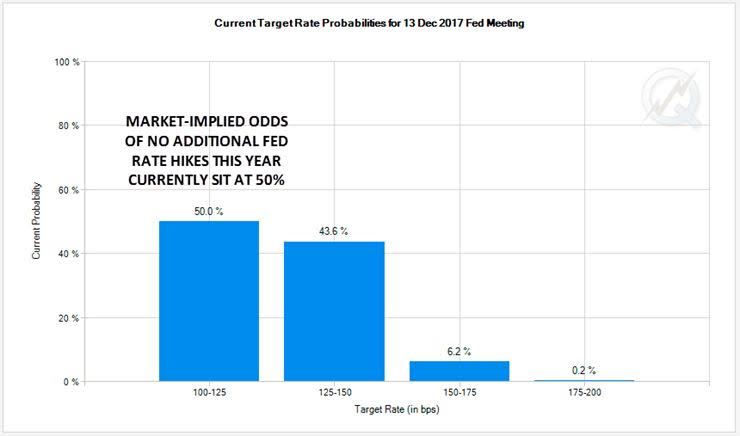
That said, the longer the streak of mediocre economic data extends, the more cautious the Fed will have to be about "normalizing" monetary policy. Already, market expectations for another rate hike this year, a development that was taken as a given as recently as a month ago, have faded to a 50/50 proposition based on the CME's FedWatch tool:
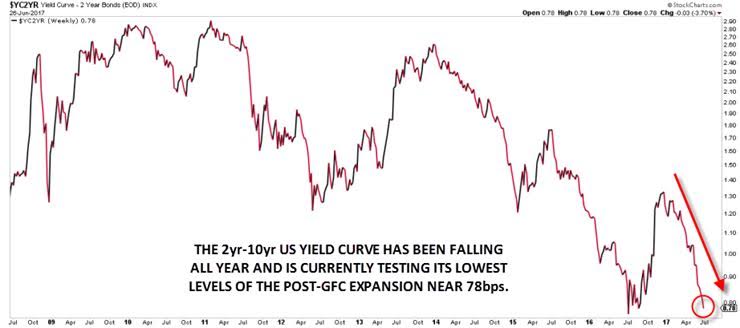
The other key development to watch on this front is the treasury yield curve. The 2yr-10yr yield curve, which measures the difference in yield between the 2-year US treasury bond and the 10-year US treasury bond, has been in freefall so far this year and is currently testing its lowest level in nearly a decade at just 78bps. While it's still a ways from "inverting" (when the 2-year treasury actually yields more than the 10-year bond, a development that has historically signaled an imminent recession), the flattening structure could still prompt the Fed to hold fire on further interest rate increases this year.
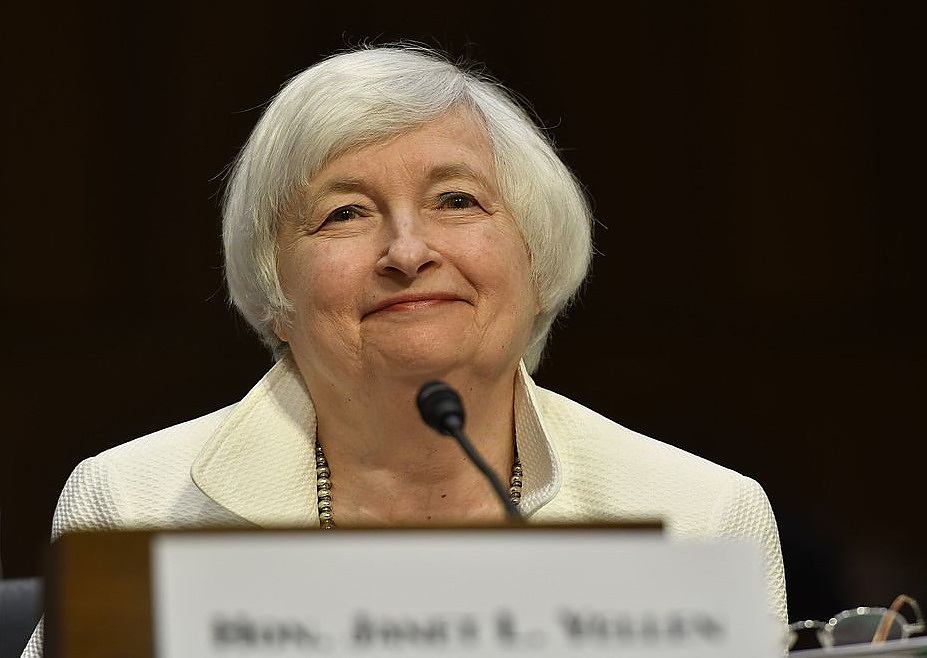
To that end, traders will closely watch both the incoming economic data and today's (and future) comments from Fed Chair Janet Yellen. If US economic data remains in the dumps and Dr. Yellen and company continue to focus on normalizing policy, the risk of a recession rises, with potentially bearish implications for the US dollar and US stocks.
Author
Matt Weller, CFA, CMT
Faraday Research
Matthew is a former Senior Market Analyst at Forex.com whose research is regularly quoted in The Wall Street Journal, Bloomberg and Reuters. Based in the US, Matthew provides live trading recommendations during US market hours, c