Inflation heats up as energy and shelter costs rise

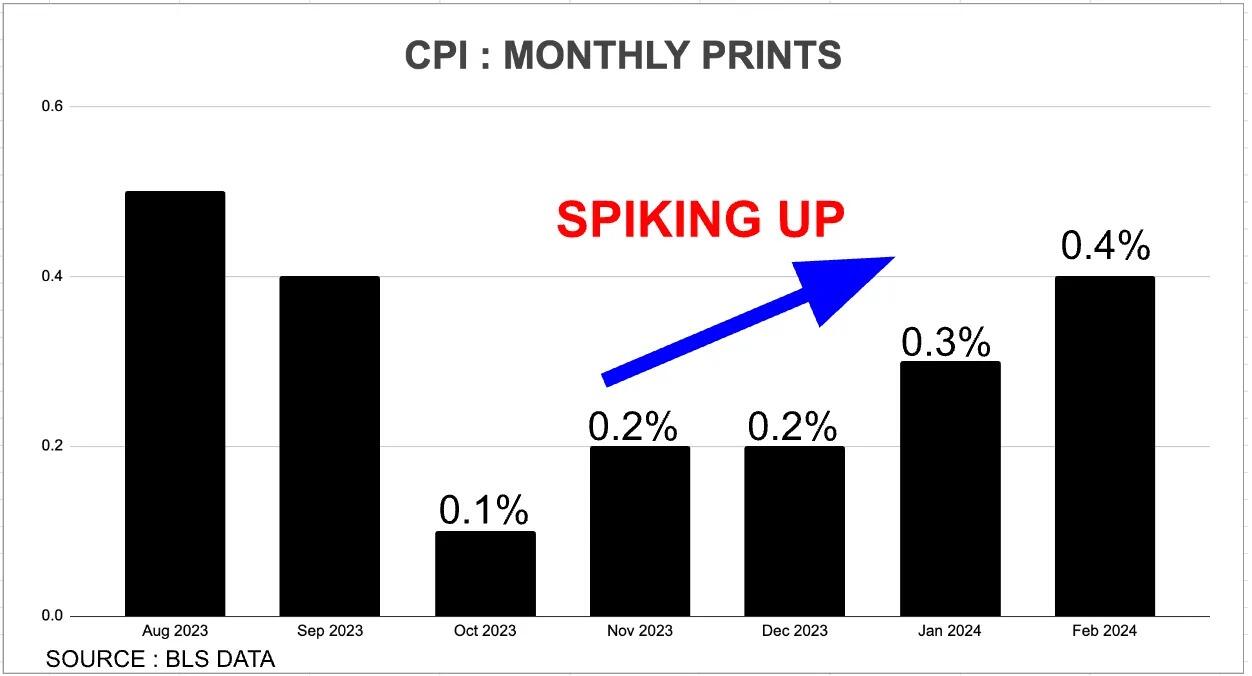
US yields are up about 5 basis points after the release of today’s CPI report for February which came in at +0.4% on the month for both the Core and Headline numbers. The first quarter inflation spike is truly under way.
Core inflation in the US is now hovering just below 4% and I suspect Core PCE annual rates could be heading back towards 3%.
Gasoline and energy prices
The stronger then expected print in today’s CPI release was primarily driven by a sharp rebound in the energy components of CPI and ongoing strength in shelter costs. Put together, these components are jointly responsible for over 60% of price rises experienced in the month of February. For some time now, we have been highlighting the sharp rebound in Gasoline prices and the impact that could have on headline numbers.
Gasoline prices are are up about 30% in the last 3 months.
The gains are now starting to meaningfully show up in headline energy components and can also start to bias transportation costs higher as we progress through the quarter.
-638458855715653885.jpg)
-638458856180893180.jpg)
Shelter and apparel
Monthly inflation in Shelter came in at +0.4% on the month, slightly softer than last month but still annualizing at around 5%/annum when looking at the average gains of the last 6 months.
Some of the disinflationary trends in apparel which were present the last 3 months have also started to dissipate as apparel prices rose +0.6% after 3 months of declines. It’s possible that the move up in apparel prices can partially be explained by the cessation of January sales but it could also be reflecting elevated global shipping costs. The US is one of the world’s largest importers of apparel, importing roughly 1/3rd of its $368B domestic market for clothing from beyond its shores. It would be reasonable to expect that some of these items being imported are now facing upward price pressures from supply disruptions.
All in all, it is another uncomfortable inflation print which the market remarkably has taken in its stride. This partially is due to the surprisingly benign wages number in Friday’s Job report and partially due to Chairman Powell’s dovish messaging to Congress last week. As my readers know, while I am currently at odds with the Fed’s inflation outlook, years of experience have also taught me not to fight the Fed.
Author
Mohammad H. Ali, CFA
Independent Analyst
A former Global Head of Currency Trading at TD Bank with over 20 years of institutional trading experience in FX and Fixed Income Markets.