How will higher import taxes impact Indian Gold and Silver markets?

Earlier this month, the Indian government hiked the import duty on precious metals from 6 percent to 15 percent in an attempt to moderate the country's trade deficit and support the rupee.
How will this tax increase likely impact the gold market in India?
Not as much as you might expect.
Historically, higher import duties have had a limited influence on official import volumes but have significantly increased inflows of “unofficial gold.”
Unsurprisingly, domestic gold prices immediately increased with the implementation of the new import duty, but not as much as the 9 percent hike. Spot prices rose between 4 and 6 percent.
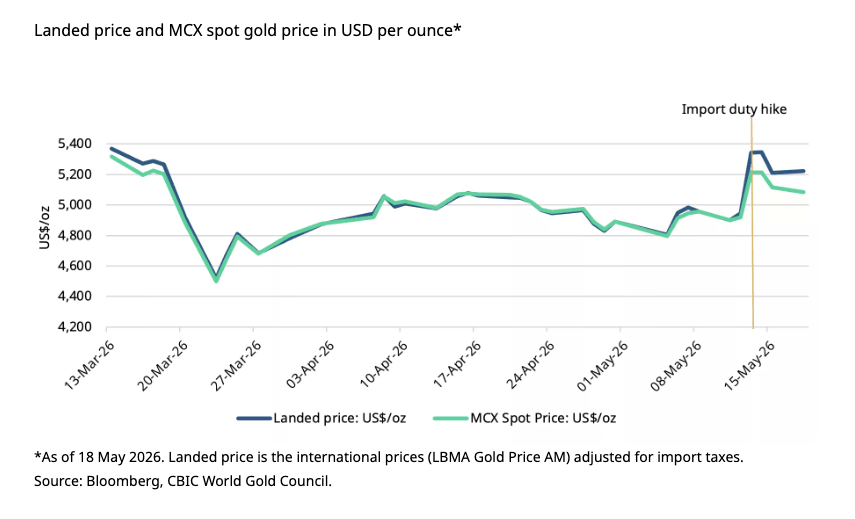
As the World Gold Council explained, tax increases tend to impact the market with a lag.
“Moreover, the increase came at a time of seasonally weak demand – summer wedding purchases are largely over, and the period from mid-May to mid-June is considered inauspicious for buying gold – thus limiting the full pass-through of the duty hike. Market feedback indicates that there is ample supply from the exchange of old gold jewelry for new, and the likely front-loading of imports, further limiting the rise in price.”
The duty increase also incentivized profit-taking by investors. Selling boosted supply as physical buying weakened. Meanwhile, dealers offloaded inventory imported at the lower duty rates. This led to some significant price discounts in local markets.
Long-term impact of Indian Gold import tax
According to analysis by the World Gold Council, changes in import duties have historically had a “limited influence” on official import volumes over the last 13 years.
“Across duty regimes ranging from 6 percent to 15 percent, official imports remained relatively resilient, between 175 tonnes and 236 tonnes per quarter in most periods, excluding the COVID period in 2020.”
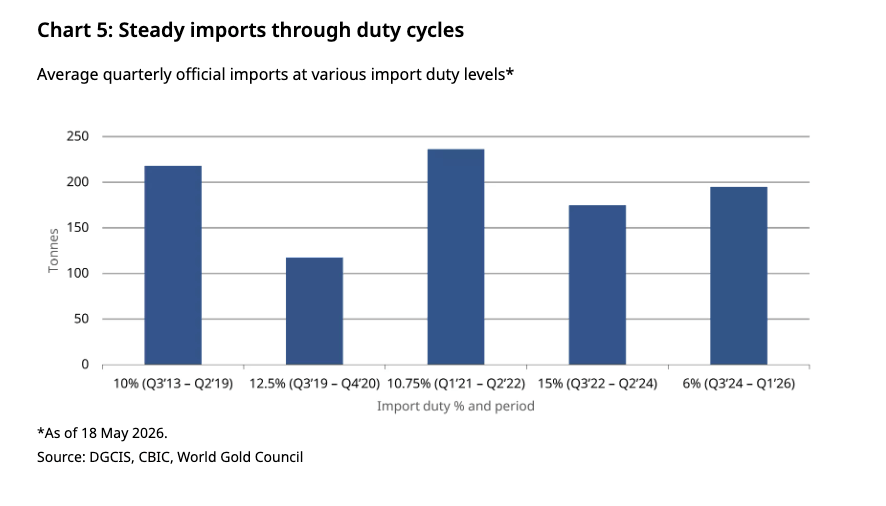
The overall correlation between duty rates and official imports comes in at - 0.17, indicating a weak relationship between the two. According to the World Gold Council, “This suggests that duty changes are not a key driver of imports; rather, broader demand conditions play a greater role.”
And Indian gold and silver demand have historically remained resilient in a higher tax environment.
This reflects the fact that Indians have a deep cultural connection to precious metals, and they value them highly as a store of wealth. As the rupee depreciates, gold will become increasingly attractive.
Analyst Ross Norman pointed out that there is actually a bullish aspect to the higher import tax.
“The move signals that conditions are so severe the Prime Minister felt compelled to ask people not to buy gold one day and impose punitive taxes the next — and in doing so reinforces the fundamental reason for owning gold.”
Meanwhile, while import duties appear to have a limited impact on imports, they do incentivize smuggling. According to World Gold Council analysts, “Between 2013 and 2026, increases in import duty were mostly followed by higher levels of unofficial or smuggled gold, while duty reductions coincided with sharp declines in such inflows.”
For instance, when the government hiked the duty by 4 percent in 2013, “unofficial imports” surged from 10 tonnes in Q1 to 70 tonnes in Q1 the following year.
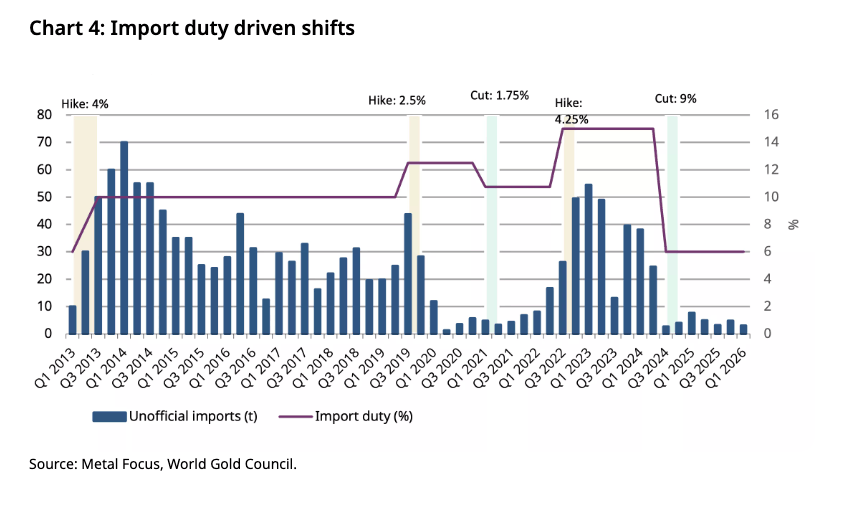
Even with a stable duty, smuggling remained elevated, averaging 34 tonnes a quarter until 2019.
“This suggests that once smuggling networks are established, they are difficult to unravel.”
Looking at the big picture, if the Indian market follows historical trends, the higher tax will likely become background noise after a short-term adjustment period.
To receive free commentary and analysis on the gold and silver markets, click here to be added to the Money Metals news service.
Author

Mike Maharrey
Money Metals Exchange
Mike Maharrey is a journalist and market analyst for MoneyMetals.com with over a decade of experience in precious metals. He holds a BS in accounting from the University of Kentucky and a BA in journalism from the University of South Florida.
















