How a 36 year bet hints at Britain’s quiet turmoil

A Gilt, set to pay out in 2061, has been hemorrhaging value for much of this year, partly because its payout is dependent on the equivalent of Armageddon in the UK. This is important, partly because of the popularity of the bond, with top UK trading platform Hargreaves Lansdown identifying it as the number one sold Gilt on the platform and the number two bought.
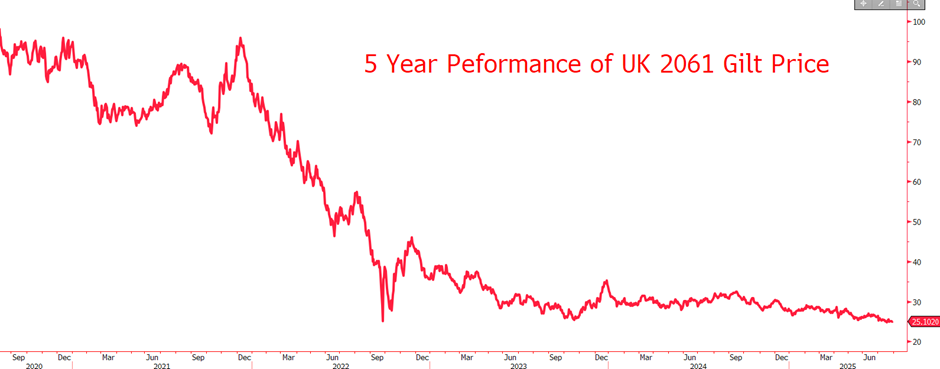
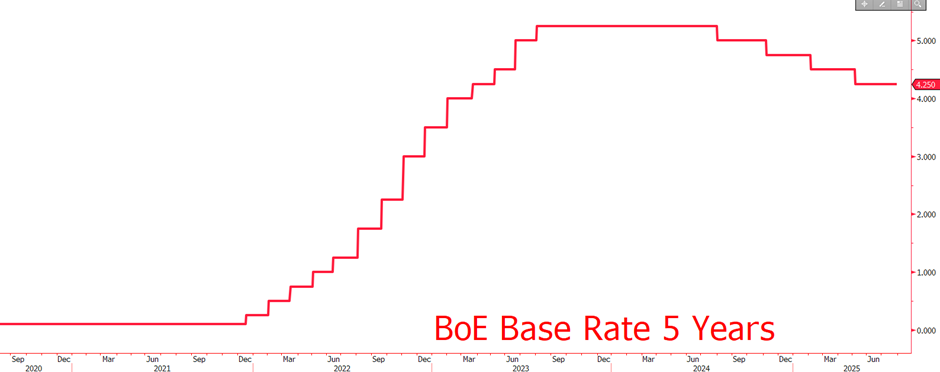
The second reason is the larger point I want to make, the Gilt has a very low coupon rate, just 0.5%, in a time when the Bank of England maintains a base rate of 4.25% (soon 4.00%). The only scenario where traders could earn a serious return on 2061’s is if the second to worst case scenario takes place in the UK, that being a near depression wherein which the BoE aggressively cuts rates to try and save a floundering economy (the worst case being Sovereign bankruptcy).
Yet the sinking price of the bond suggests that this catastrophe scenario is becoming more remote a possibility, despite all the issues in the UK.
The Bank of England looks set to lower rates come its August 7th meeting, largely in response to the serious upwards slide in unemployment over the past 3 months, with the jobless rate climbing from 4.4% in February to 4.7% now. That may not sound alarming, but when you pile on the fact that we have lost just shy of 200,000 jobs since last November (ONS) and that job vacancies are now at their lowest for four years, it becomes undeniable that the UK has a significant employment problem.
Moreover, growth has turned a corner, only to fall down the stairs, showing contraction over the past two months. The Government is offering little help on the employment front, where they slapped employers twice with an increase in National Insurance contributions and then a 12.5% hike to the minimum wage.
Nor is the Government proving helpful with regards to growth, hiking the UK tax burden to an eyewatering average of 37.5% by 2028, with more tax raids looking likely after the Labour party successfully defeated itself in its latest spending bill, leaving a £5bln black hole in the public purse. A black hole I would point out, that seems destined to be filled in by yet more tax hikes.
Yet despite these issues, the 2061 continues to trundle downwards, suggesting that things are bad in Britain, but not quite bad enough. Within my own field of FX, it suggests a worsening outlook for the Pound, GBP may be some 1.11% stronger YTD, but most of these gains came as the Dollar disintegrated, rather than as the picture in the UK improved.
The Bank of England understands that rate cuts only feed through to consumer behaviour months after the practical cut has taken place, suggesting a sudden uplift in growth promoted by low rates will not occur soon. The government has seemingly drawn a blank with regards to arresting the climbing unemployment rate and seems likely to be raising taxes even higher come the November budget, at a time when consumers are squeezed on all sides.
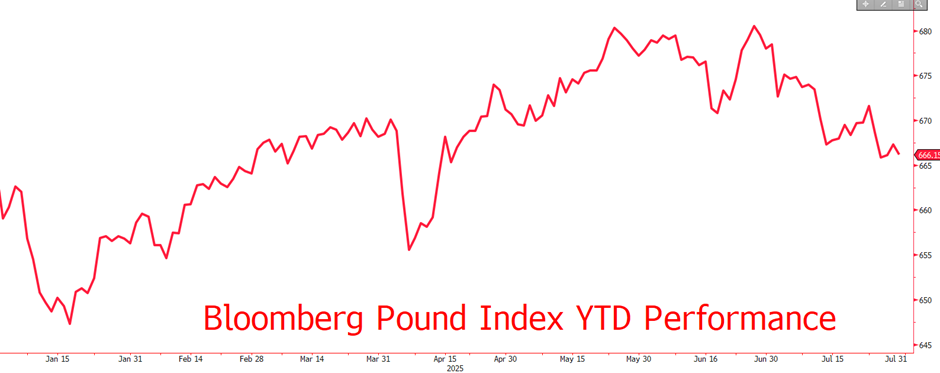
With this in mind, it’s tough to see where GBP’s positive macro factors could lay, instead, the most likely scenario seems to be a gradual depreciation, at least up to the end of the year. Like the 2061 Gilt, I don’t foresee catastrophe, just a steady fade.
Author
David Stritch
Caxton
Working as an FX Analyst at London-based payments provider Caxton since 2022, David has deftly guided clients through the immediate post-Liz Truss volatility, the 2020 and 2024 US elections and innumerable other crises and events.