Hanging on the telephone: The Trump-Xi phone summit

Tik Tok
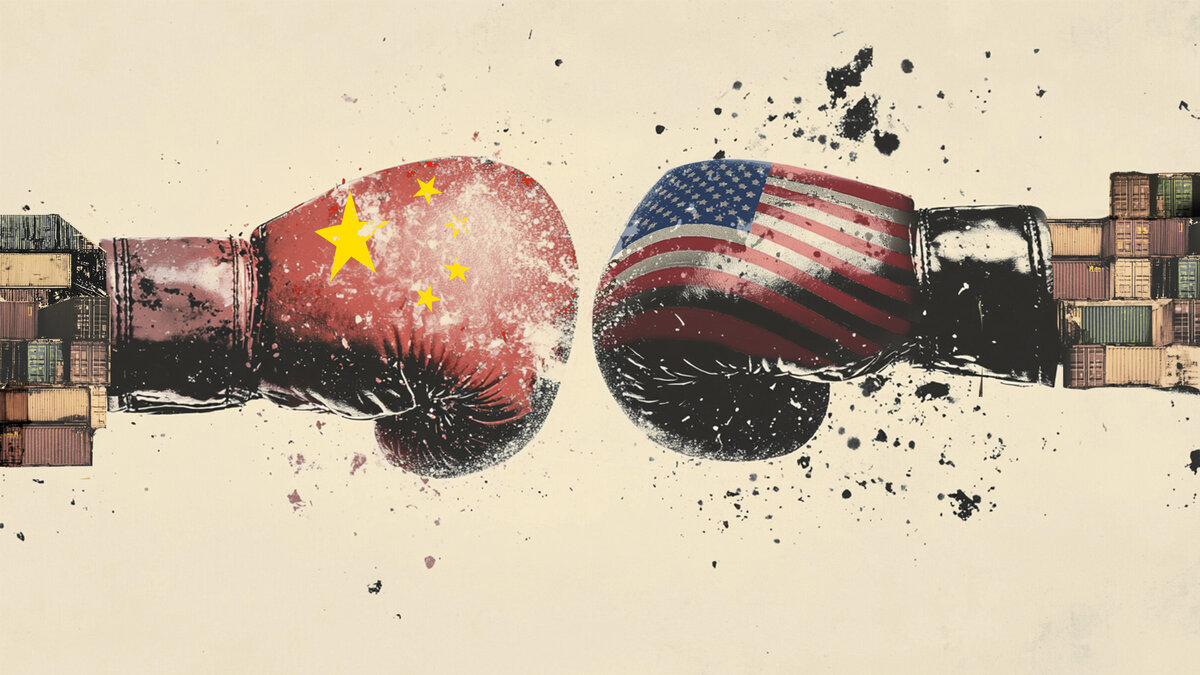
Markets often feel like they’re waiting on a phone call that never quite comes — but today’s line runs straight between Washington and Beijing. Trump and Xi are set to speak, and the wires are already humming with the usual mix of theatre, posturing, and selective leaks. Traders know the pattern: pre-call signalling to stir the pot, media breadcrumbs to shape expectations, and then a carefully choreographed conversation where neither side truly gives away the store.
But this is not just another round of polite diplomatic banter. Hanging in the balance is TikTok’s American survival, the tariff “truce,” and the broader chessboard of technology dominance. Markets are treating it like waiting for a risk event release — not because the call itself will deliver hard outcomes, but because the tone may shape how algorithms and asset allocators lean into the weekend.
Trump’s sudden enthusiasm for TikTok is the kind of narrative twist that traders love. Once an enemy of the app, he’s now hailing it as an asset too valuable to discard, especially when it doubles as a pipeline to young voters. A U.S. consortium snapping up the local business with China’s nod and a “fee plus” kicker? It sounds more like a structured product than a social media deal — and the market hears it the same way. This is not just about a video app; it’s a proxy for who controls algorithms that shape consumer behavior. In markets, we call that order flow. Trump wants it domesticated, securitized, and presented as “owned by America.” Beijing, for its part, wants to make sure no crown jewel is stripped without some kind of ongoing claim. Both sides are maneuvering as though the option premium is worth more than the underlying asset.
Huawei’s re-emergence with a blueprint for its chips signals Beijing is no longer playing quiet defence. Pair that with its order that domestic firms stop buying Nvidia’s AI products, and you’ve got a clear message: China is willing to shift the demand curve, even at a short-term cost, to gain long-term independence. The U.S., meanwhile, is striking a side deal with Nvidia — shipments can go through, but Washington collects a 15% skim. That is classic rent-extraction dressed up as national security. For markets, it’s a reminder that semis are not just cyclical plays but geopolitical pawns. Each announcement ricochets into valuations, not because supply-demand curves changed overnight, but because the regulatory ceiling keeps lowering above the sector.
The current 90-day tariff pause is a holding pattern, like a market in range trade waiting for a breakout. The longer it holds, the more compressed the energy — and the more violent the move when the breakout finally comes. Traders remember what happened when tit-for-tat escalations got out of hand earlier this year; volatility bled from FX into equities into credit in a perfect feedback loop. Bessent’s comments on the yuan underscore the subtler game. Against the dollar, the RMB has been steady; against the euro, it’s collapsed. That tells us Beijing is more concerned with preserving relative competitiveness against Europe than pushing against the U.S. For U.S. traders, it’s a sideshow. For Europe, it’s a slow-burning pressure cooker. Either way, currency shifts are just another leg in the tripod of leverage — tariffs, tech, and FX.
Wall Street has learned that these Trump-Xi moments rarely deliver the fireworks promised. They’re more like a poker hand where both players show a card or two, smile for the cameras, and leave the real bets for later. What markets care about is not the communique but the direction of travel. A thaw, however incremental, keeps equities buoyant and risk spreads contained. A stumble — say, Xi balking on TikTok or Trump reviving tariff threats — and you’ll see an immediate repricing in FX, with USD/CNH the first responder. Tech stocks remain the high-beta play here; Nvidia, Oracle, and anyone linked to AI supply chains will feel the tremors most acutely.
So, we sit hanging on the telephone, waiting for the leaders to lift the receiver and speak in tones markets can decode. It’s not about whether TikTok survives or tariffs extend another 90 days. It’s about whether investors can keep pretending the ice is melting, or whether the frost is still deep enough to crack. In trading, you don’t always need the deal — you just need the story. And today, the story is that Washington and Beijing still need each other enough to keep talking. That alone may be enough to keep risk assets bubbly into the weekend.
Author
Stephen Innes
SPI Asset Management
With more than 25 years of experience, Stephen has a deep-seated knowledge of G10 and Asian currency markets as well as precious metal and oil markets.