H1 ETF Gold inflows rise to levels not seen since the pandemic


Through the first half of 2025, gold-backed funds globally reported the highest semi-annual inflows of metal since H1 2020 in the early months of the pandemic.
After modest outflows of gold in May, flows flipped positive in June with ETFs globally adding 74.6 tonnes of gold to their holdings.
Every region reported positive flows last month.
Through the first half of 2025, gold-backed funds globally increased their holdings by 397.1 tonnes.
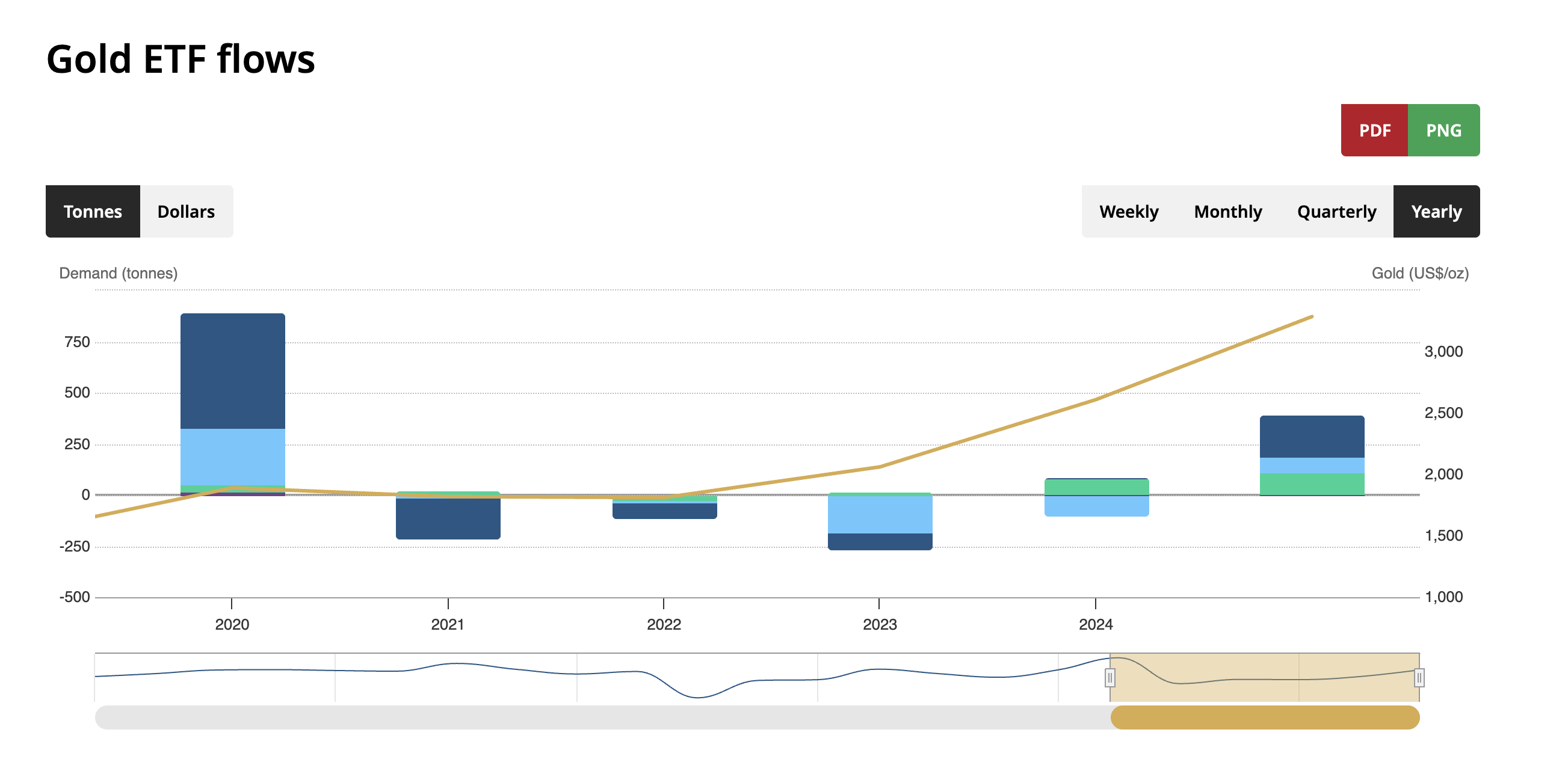
Gold inflows totaled $38 billion through the first half of the year. That drove total assets under management (AUM) higher by 41 percent to $383 billion. That broke a month-end record and hit the highest level in 34 months.
North American funds led the way, increasing their gold holdings by 206.8 tonnes. Total H1 inflows totaled $21 billion. It was the strongest H1 for North American gold ETFs in five years.
A World Gold Council analyst said the current dynamics should continue to support North American gold ETFs.
“Persistent policy uncertainty and ongoing fiscal concerns are likely to remain an overhang on the market, which in turn could help support gold ETF demand in the near to medium term.”
European funds increased their gold holdings by 78.9 tonnes, totaling $6 billion through the first half of 2025. According to the World Gold Council, “The eighth cut from the European Central Bank, uncertainties surrounding growth, and rising geopolitical risks generally, contributed to gold ETF demand in several major markets.”
Asian ETFs increased their gold reserves by a record 104.3 tonnes in H1, totaling $ 11 billion. Asian investors bought a record amount of gold ETFs during H1, making up 28 percent of net global flows with only 9 percent of the total AUM.
China’s inflows of 85 tonnes totaling $8.8 were unprecedented, driven by spiking trade risks with the U.S., growth concerns, and the surging gold price.
Funds listed in other regions, including Australia and Africa, added 7.2 tonnes of gold to their holdings. ETFs based in Australia and South Africa were the main contributors.
ETFs are a convenient way for investors to play the gold market, but owning ETF shares is not the same as holding physical gold.
ETFs are relatively liquid. You can buy or sell an ETF with a couple of mouse clicks. You don’t have to worry about transporting or storing metal. In a nutshell, it allows investors to play the gold market without buying full ounces of metal at the spot price.
Since you are just buying a number in a computer, you can easily trade your ETF shares for another stock or cash whenever you want, even multiple times on the same day. Many speculative investors take advantage of this liquidity.
But while a gold ETF is a convenient way to play the price of gold on the market, you don’t actually possess any gold. You have paper. And you don’t know for sure that the fund has all the gold either, especially when the fund sees inflows. In such a scenario, there have been difficulties or delays in obtaining physical metal.
Gold trading volumes
Gold market trading volumes averaged $329 billion per day through the first half of the year. That was the highest semi-annual average on record.
Over-the-counter trading increased to an average of $165 billion per day in H1, well above the 2024 average of $128 billion/day.
Exchange-traded volumes also saw a significant increase through H1, averaging $159 billion per day. Increased activity on COMEX and the Shanghai Futures Exchange helped drive this momentum.
Money managers reduced their long gold positions by 28 percent over the first six months. However, there was a notable shift in June, with longs increasing by 11 percent. According to the World Gold Council, “This was likely supported by consolidation in the gold price, providing investors with a window of opportunity to begin rebuilding positions.”
To receive free commentary and analysis on the gold and silver markets, click here to be added to the Money Metals news service.
To receive free commentary and analysis on the gold and silver markets, click here to be added to the Money Metals news service.
Author
Mike Maharrey
Money Metals Exchange
Mike Maharrey is a journalist and market analyst for MoneyMetals.com with over a decade of experience in precious metals. He holds a BS in accounting from the University of Kentucky and a BA in journalism from the University of South Florida.