Gold's bounce off $3,870 isn't a bottom yet
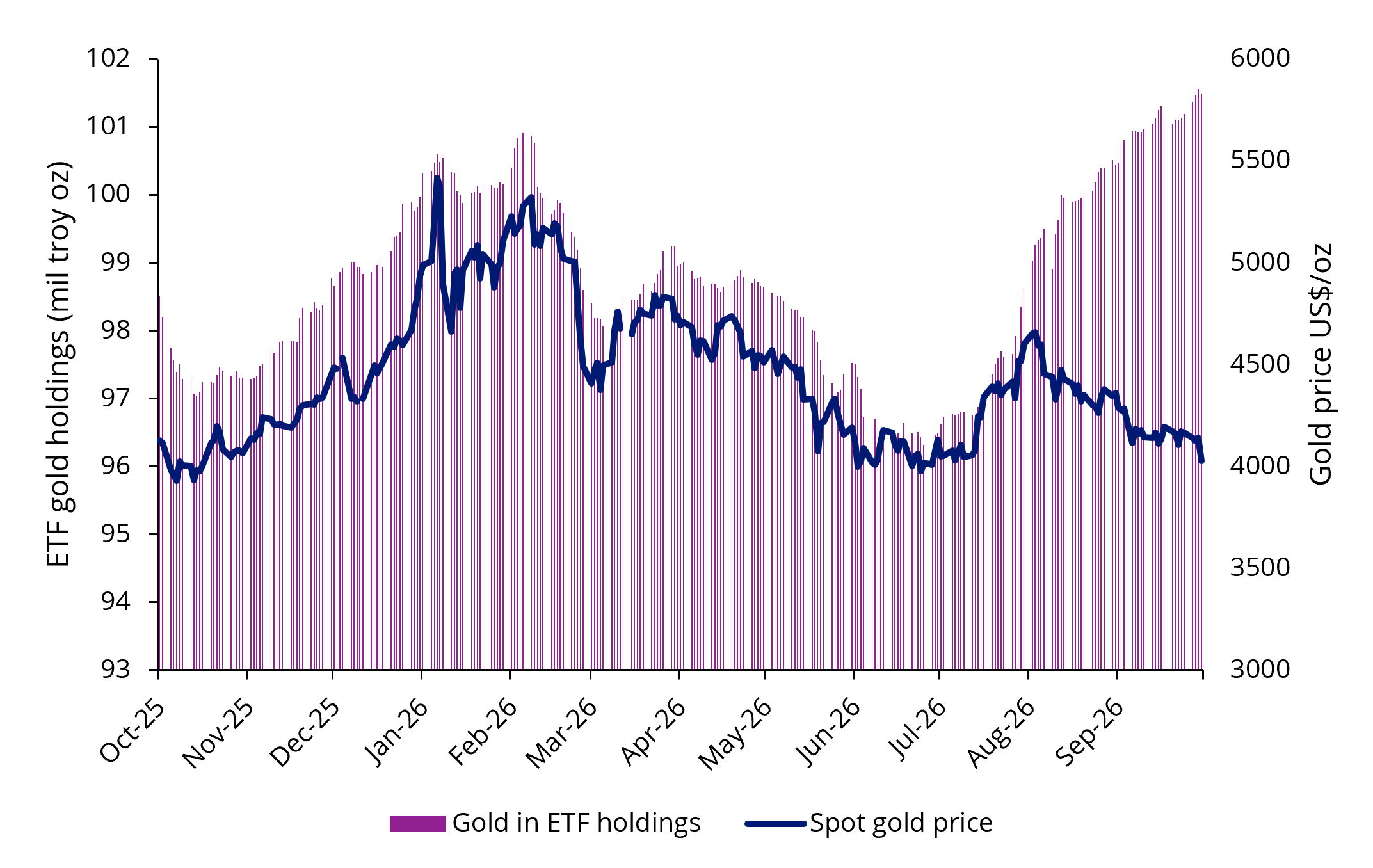
Gold’s (XAU/USD) rebound from over a one-year low near $3,870 is losing momentum, and the recovery may be running out of steam. The yellow metal trades lower on Tuesday, retreating after Monday's rebound toward $3,970. The recovery initially offered some relief following a sharp sell-off, but the precious metal is struggling to sustain its gains as the macroeconomic environment remains unfavorable.
The rebound appears driven more by easing inflation fears and bargain hunting than by a meaningful shift in market fundamentals. With expectations of another Federal Reserve (Fed) interest rate hike in December still firmly in place, Gold's recovery remains vulnerable to renewed selling pressure.
Why falling Oil prices offered Gold temporary relief
Monday's rebound followed a sharp decline in Oil prices as signs of diplomatic progress between the United States (US) and Iran reduced concerns about prolonged disruptions to energy supplies.
The prospect of negotiations helped ease inflation expectations, temporarily reducing pressure on Gold. Higher energy prices have become a significant obstacle for the precious metal because they threaten to keep US inflation elevated and encourage the Fed to maintain restrictive monetary policy.
ING explained the recovery: "Gold rebounded on Monday after last week’s sharp sell-off, helped by the pullback in oil prices and bargain hunting at lower levels." However, the relief proved short-lived. Oil prices are edging higher again on Tuesday amid renewed Middle East tensions, reviving concerns about inflation and the outlook for US interest rates.
This leaves Gold in an unusual position: geopolitical uncertainty would traditionally support demand for safe-haven assets, but the inflationary consequences of higher Oil prices are currently outweighing that benefit.
The Federal Reserve remains Gold's biggest obstacle
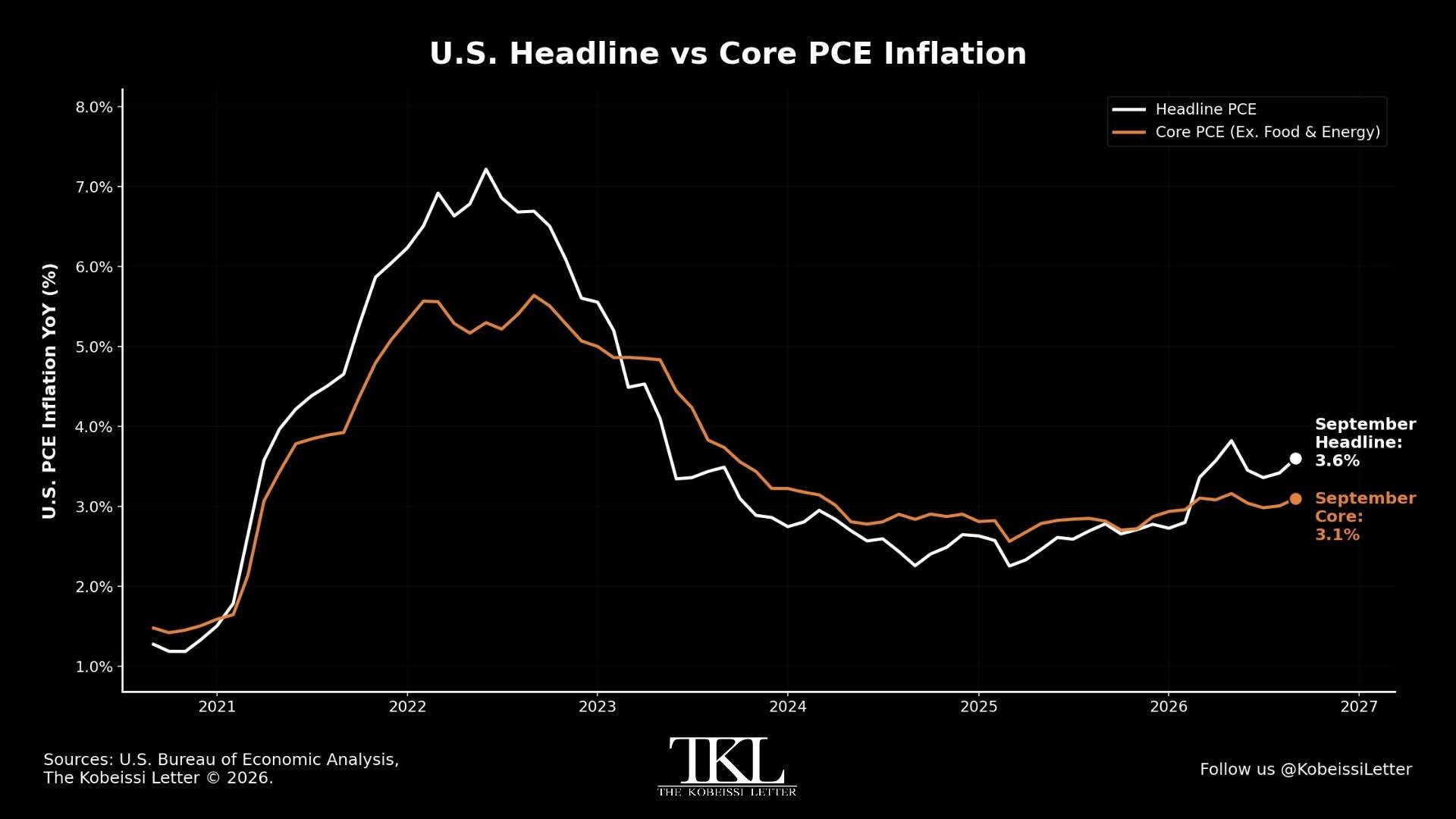
The Fed's increasingly restrictive outlook continues to dominate Gold's price action. After deciding to leave interest rates unchanged in October, the US central bank faces persistent inflationary pressures and a resilient domestic economy. September's core Personal Consumption Expenditures (PCE) Price Index rose 3.1% YoY, remaining well above the Fed's 2% inflation target.
Meanwhile, US economic activity continues to show strength. The Institute for Supply Management (ISM) Manufacturing Purchasing Managers Index (PMI) increased to 55.5 in October from 54.5, exceeding expectations and reinforcing the argument for additional monetary tightening.
According to the CME FedWatch Tool, markets assign approximately a 77% chance to another Fed rate hike in December. Higher interest rates increase the opportunity cost of holding Gold, which generates no yield. They can also support the US Dollar (USD) and Treasury yields, creating additional obstacles for the precious metal.
ING remains cautious about the sustainability of the recovery: "We expect gold to regain some ground following its recent correction. But the near-term outlook remains challenging amid expectations for higher rates and a stronger dollar, limiting the scope for a more sustained recovery."
Without a meaningful reassessment of Fed policy expectations, a sustained bullish reversal appears difficult.
Why Gold is struggling despite market uncertainty
Gold's recent weakness is particularly notable because it has coincided with increased risk aversion across financial markets. Concerns about Artificial Intelligence (AI) investment spending have triggered selling in technology stocks, traditionally a development that could encourage investors to seek refuge in Gold.
Instead, the precious metal has experienced additional liquidation pressure. Investors facing losses elsewhere may be forced to sell profitable or liquid positions to raise cash, reduce leverage or meet margin requirements. This can temporarily weaken Gold's safe-haven characteristics, even when broader uncertainty remains elevated.
TD Securities suggests the recent decline reflects liquidity pressures rather than a complete deterioration in Gold's longer-term investment outlook: "Our model's measure of systematic risk-parity fund leverage has also started to decline in recent days, further supporting the view that this selloff was more of a de-leveraging event as opposed to a fundamental shift." This distinction matters. A liquidation-driven sell-off can eventually create opportunities for recovery, but it does not necessarily mean selling pressure has ended.
Meanwhile, OCBC maintains a constructive medium-term outlook, supported by central-bank purchases and Exchange-Traded Fund (ETF) inflows. Nevertheless, they have lowered their Gold forecasts to $4,250 by the end of 2026 and $4,710 by the end of 2027, acknowledging persistent near-term challenges.
Gold's broken support leaves the downside exposed
Gold (XAU/USD) daily chart. Source: FXStreet
The technical picture reinforces the cautious fundamental outlook. Gold's decline below the former $4,100-$3,940 support zone marks a significant deterioration in its daily structure. Monday's rebound failed to reclaim this area, suggesting that the recovery remains corrective rather than the beginning of a sustained bullish reversal.
The precious metal also trades below its 100-day and 200-day Simple Moving Averages (SMAs), currently near $4,206 and $4,480, respectively, highlighting the broader bearish trend. The daily Relative Strength Index (RSI) stands around 35, indicating persistent negative momentum without yet confirming deeply oversold conditions.
A renewed decline toward $3,870 would therefore expose the recent over one-year low to another test. A decisive break below that level could accelerate selling pressure. Conversely, Gold would need to recover above $3,940 and eventually reclaim $4,100 to meaningfully challenge the current bearish structure.
What could change Gold's outlook?
The next catalysts include Tuesday's US midterm elections, incoming US employment indicators and developments in US-Iran negotiations. Friday's Nonfarm Payrolls (NFP) report could prove particularly important. Weaker employment figures might reduce expectations of further Fed tightening, offering Gold some support. Conversely, resilient labor-market data could reinforce the case for higher interest rates.
For now, Monday's recovery demonstrates that buyers remain active near depressed price levels. However, with inflation risks unresolved and monetary policy expectations restrictive, the bounce from $3,870 looks more like temporary relief than a confirmed bottom.
Gold FAQs
Gold has played a key role in human’s history as it has been widely used as a store of value and medium of exchange. Currently, apart from its shine and usage for jewelry, the precious metal is widely seen as a safe-haven asset, meaning that it is considered a good investment during turbulent times. Gold is also widely seen as a hedge against inflation and against depreciating currencies as it doesn’t rely on any specific issuer or government.
Central banks are the biggest Gold holders. In their aim to support their currencies in turbulent times, central banks tend to diversify their reserves and buy Gold to improve the perceived strength of the economy and the currency. High Gold reserves can be a source of trust for a country’s solvency. Central banks added 1,136 tonnes of Gold worth around $70 billion to their reserves in 2022, according to data from the World Gold Council. This is the highest yearly purchase since records began. Central banks from emerging economies such as China, India and Turkey are quickly increasing their Gold reserves.
Gold has an inverse correlation with the US Dollar and US Treasuries, which are both major reserve and safe-haven assets. When the Dollar depreciates, Gold tends to rise, enabling investors and central banks to diversify their assets in turbulent times. Gold is also inversely correlated with risk assets. A rally in the stock market tends to weaken Gold price, while sell-offs in riskier markets tend to favor the precious metal.
The price can move due to a wide range of factors. Geopolitical instability or fears of a deep recession can quickly make Gold price escalate due to its safe-haven status. As a yield-less asset, Gold tends to rise with lower interest rates, while higher cost of money usually weighs down on the yellow metal. Still, most moves depend on how the US Dollar (USD) behaves as the asset is priced in dollars (XAU/USD). A strong Dollar tends to keep the price of Gold controlled, whereas a weaker Dollar is likely to push Gold prices up.
Author

Ghiles Guezout
FXStreet
Ghiles Guezout is a Market Analyst with a strong background in stock market investments, trading, and cryptocurrencies. He combines fundamental and technical analysis skills to identify market opportunities.