Gold rises as Dollar weakens ahead of US jobs data

Gold (XAU/USD) maintained its upward move as the dollar declined and bond yields fell. Markets now await Friday’s US jobs report. Slower hiring could ease expectations for another Fed rate increase and support gold. The price is approaching the top of a descending channel near $4,060. A close above that level could give gold more room to rise.
Gold price rises as markets await US employment data
Gold extended its gains as the US dollar weakened and Treasury yields fell. Election projections pointed to Democratic control of both the House and the Senate. A weaker dollar can make gold more affordable for people using other currencies. Lower Treasury yields can also support gold by narrowing the income gap between holding gold and holding government bonds.
ING argued that Democratic control of Congress could complicate negotiations with the White House over government funding and the debt ceiling. That prospect could keep the dollar under pressure this week. The Federal Reserve faces a different set of pressures. It held its policy rate at 3.75% to 4.00% in October and said inflation remained elevated. Two officials favored a quarter point increase. If incoming data point to firm demand and persistent inflation, Treasury yields could rise again and limit further gains in gold.
US job openings rose to 7.52 million in September, above forecasts. The next focus is the US payrolls report on Friday, November 6. If hiring falls short of forecasts, markets may see less chance of another Fed rate increase. That could support gold. Stronger hiring could lift the dollar and Treasury yields, limiting gains in gold.
Gold technical analysis: XAU/USD approaches descending channel resistance
The gold chart below shows the price approaching the top of the descending channel. Since September, most rallies have ended below the previous peak. The latest rise took gold from about $3,875 to $4,045 and pushed it above the middle line of the channel. Most of that gain came in the last two candles.
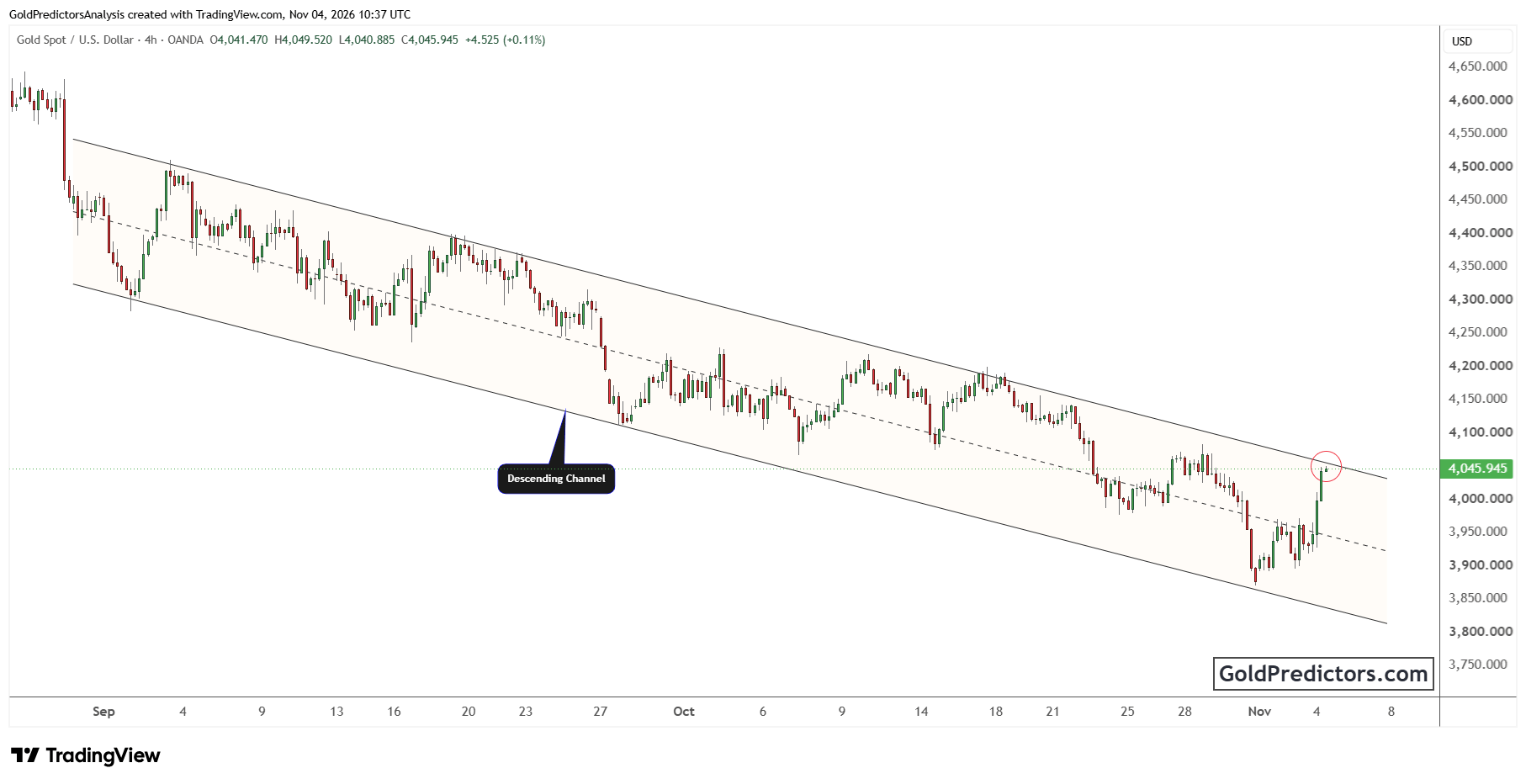
The top of the channel near $4,060 is the first area of resistance. A close above this line would ease the pressure. If gold stays above $4,060 after the break, that level could become support. The next resistance level is the late October high near $4,080.
If gold fails to break above $4,060, it could fall back toward $4,000. A move below $4,000 could take gold back to the middle of the channel near $3,950. If gold finds support at the middle of the channel, it could move back toward the upper boundary.
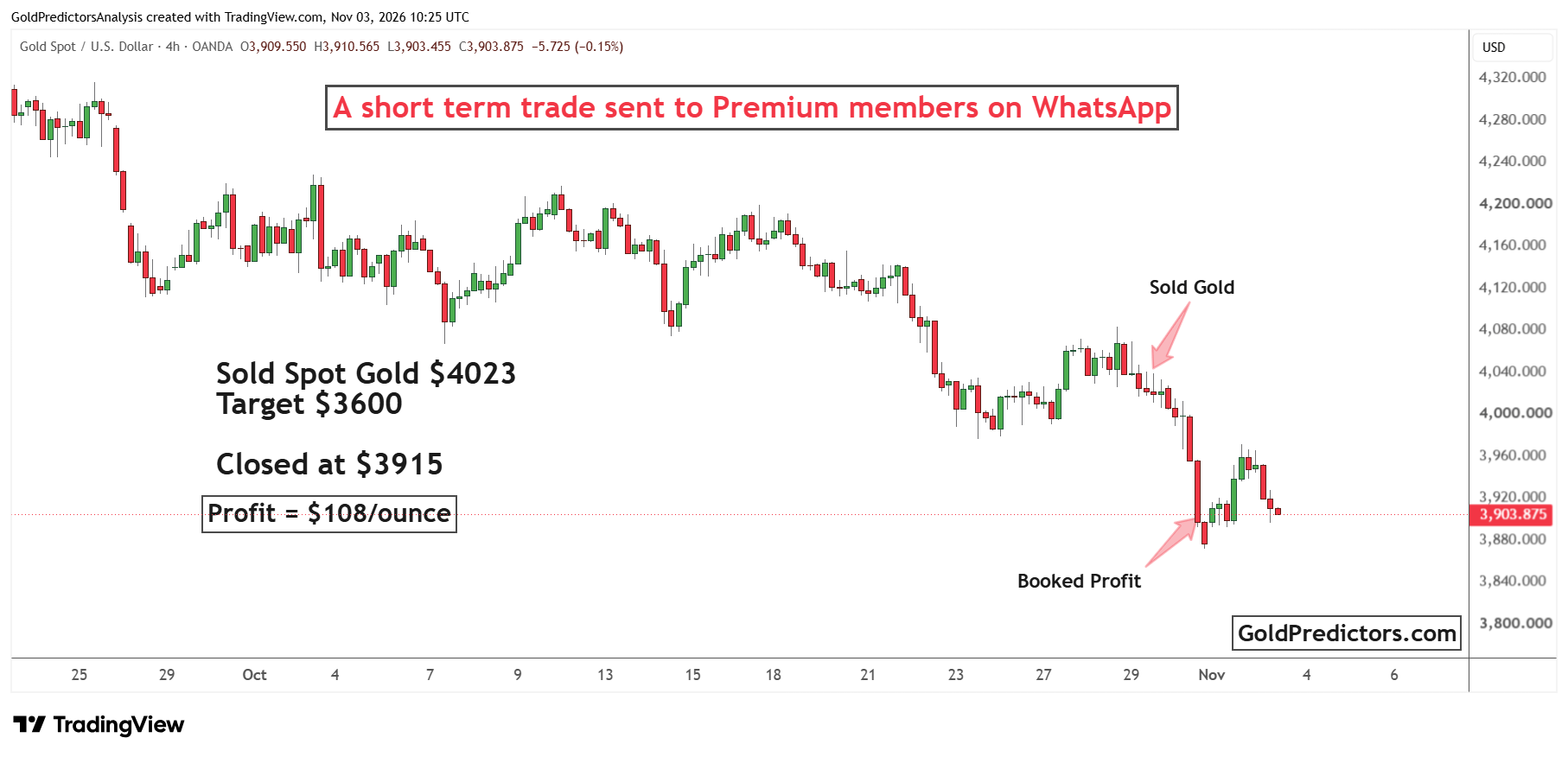
The recent decline in gold offered a clear short term trading opportunity. GoldPredictors shared a short trade at $4,023 with Premium members on WhatsApp. The trade closed early at $3,915 for a reported gain of $108 per ounce, while gold was still well above the $3,600 target.
Gold price outlook: Fed rate expectations and NFP data in focus
Gold has recovered some of its recent losses. If the US jobs report on Friday shows weaker hiring than expected, markets may see less chance of another Fed rate increase. That could help gold extend its gains. Stronger hiring could lift the dollar and yields again, putting pressure on gold. A close above the descending channel could give gold more room to rise. If the upper boundary holds as resistance, the price could slip back toward $4,000.
Unlock exclusive gold and silver trading signals and updates that most investors don’t see. Join our free newsletter now!
Author

Muhammad Umair, PhD
Gold Predictors
Muhammad Umair is a financial markets analyst and investor who focuses on the forex and precious metals markets.