Gold remains on its pedestal: All eyes on PCE

Gold traded around 4,650 USD per ounce on Wednesday, remaining near three-month highs. Investors are awaiting the latest PCE data – the Federal Reserve’s preferred measure of inflation.
Attention is also gradually shifting to Fed Chair Kevin Warsh’s speech at the annual Jackson Hole Symposium on Friday. However, markets do not expect him to provide a direct signal on the Fed’s September decision.
Gold continues to be supported by the US Treasury’s decision to double the size of its long-term bond buybacks in an effort to support market liquidity. Last week, the move helped push the dollar to its lowest level in more than three months.
Further support for gold has come from oil prices falling for a third consecutive session, somewhat easing inflation risks. In China, net gold imports through Hong Kong rose approximately 11% month-on-month in July, driven by growing investment demand.
Technical analysis
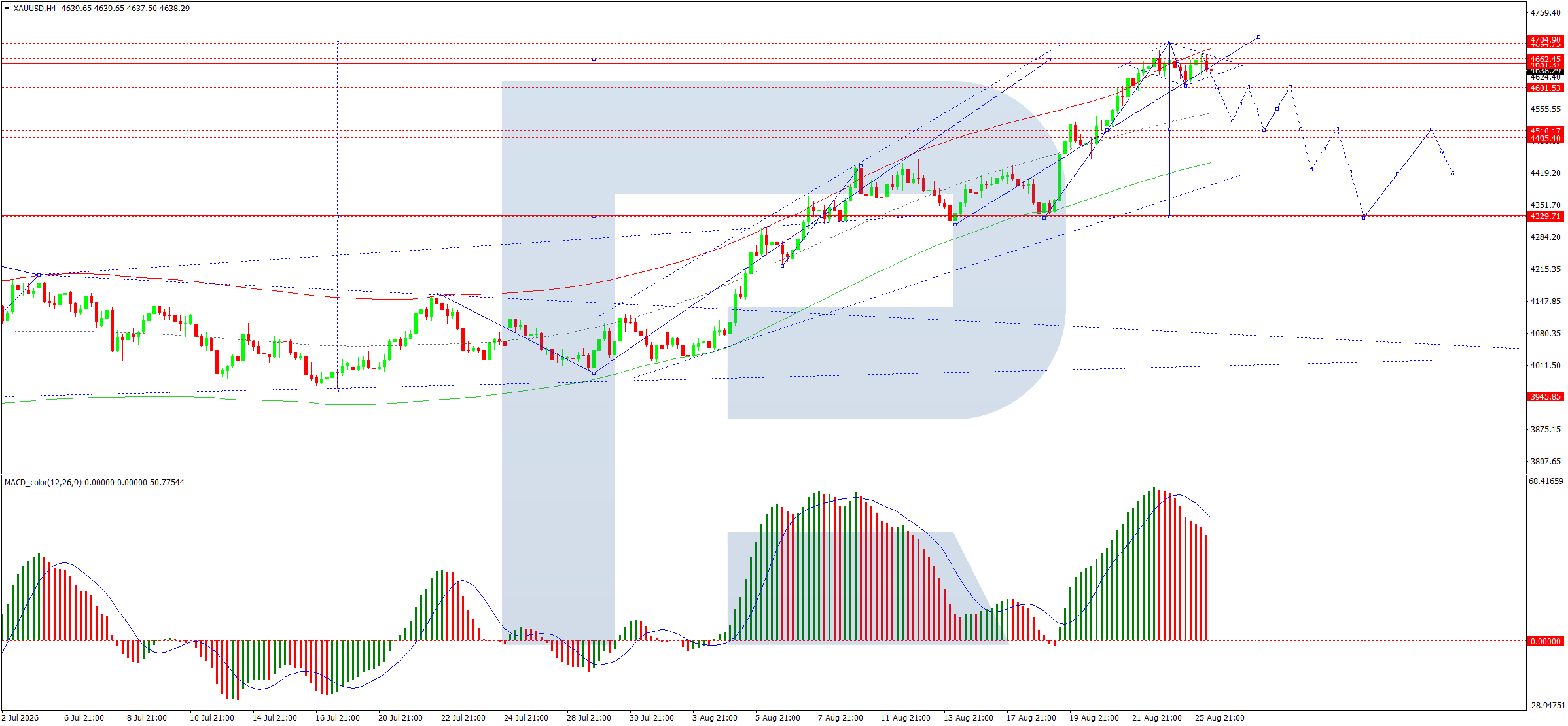
On the H4 XAU/USD chart, the market has formed a consolidation range around the 4,651 USD level. A move lower towards 4,530 USD is expected today, followed by a rebound to 4,600 USD and then a further decline to 4,500 USD. The MACD indicator supports this scenario, with its signal line above the centre line and trending downward, indicating short-term downside momentum.
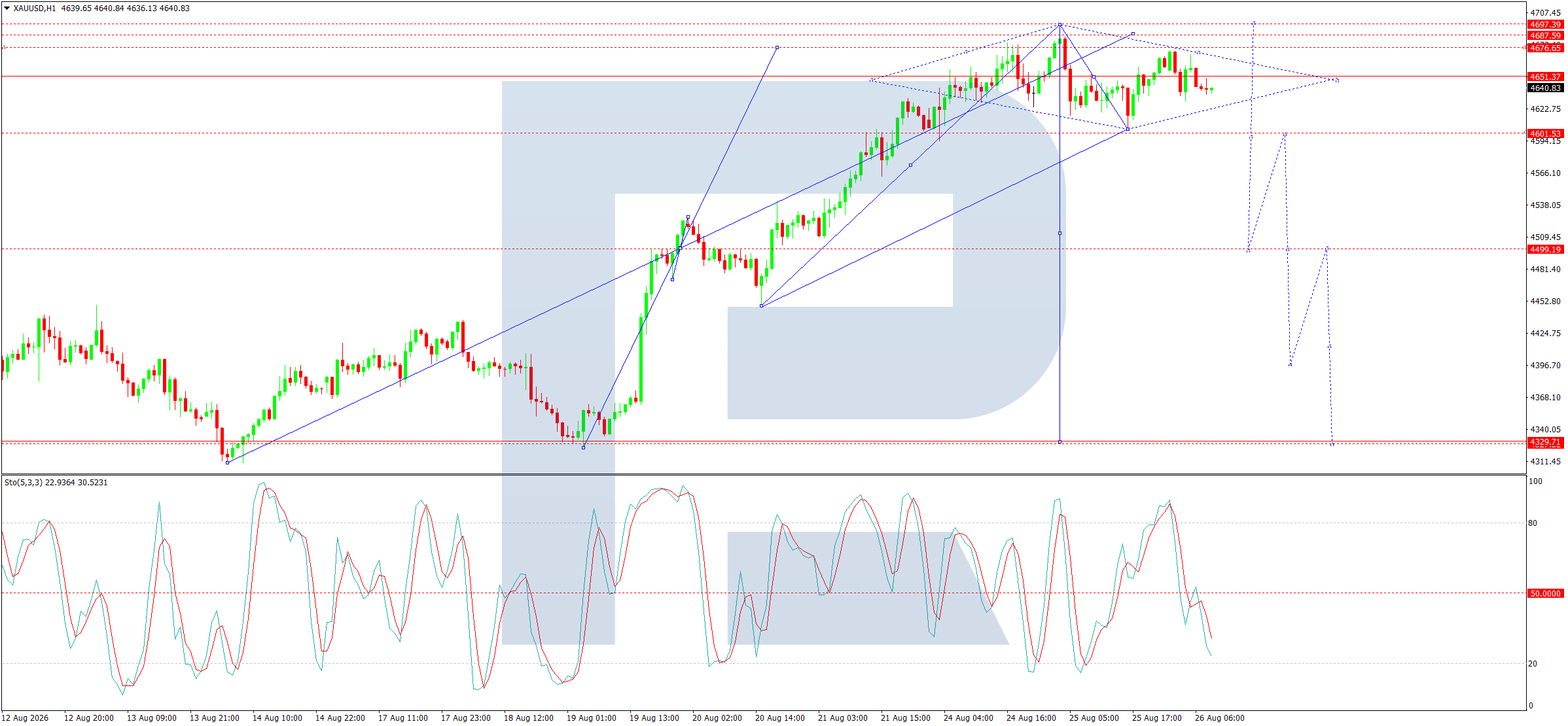
On the H1 chart, the market has completed a downward move to 4,605 USD, followed by a correction to 4,670 USD. A wide consolidation range is forming above 4,605 USD. A downside breakout would open the way for a move towards 4,530 USD, with a subsequent rebound to 4,600 USD possible. The Stochastic oscillator confirms this scenario, with its signal line below 50 and trending downward, indicating short-term downside pressure.
Conclusion
Gold remains near three-month highs, supported by dollar weakness following the US Treasury’s bond buyback announcement, falling oil prices, and strong Chinese investment demand. Markets are now focused on upcoming US PCE data and Fed Chair Warsh’s Jackson Hole speech, which could shape expectations for the path of monetary policy. Technically, the metal may see a short-term decline towards 4,530 USD, followed by a rebound to 4,600 USD and potentially a further decline towards 4,500 USD. The near-term direction will depend on US inflation data and any signals from the Federal Reserve regarding the pace of policy easing or tightening.
Author

RoboForex Analysis Department
RoboForex
RoboForex Analysis Department provides timely market insights, expert technical analysis, and actionable forecasts across forex, commodities, indices, and equities.
















