Gold price under pressure as inflation risks keep Fed cautious

Gold (XAU/USD) remains under pressure as markets adjust to a firmer policy outlook and shifting risk sentiment. Price is struggling to build on its recent recovery and continues to trade below recent highs. Reduced expectations for rate cuts and rising inflation projections are limiting upside momentum. At the same time, improving global growth signals and easing geopolitical concerns are reducing demand for safe-haven assets. This combination is keeping gold supported while slowing the pace of further gains.
Gold struggles to extend gains as risk sentiment improves
Gold is struggling to extend its recovery and remains capped below recent highs as expectations of tighter monetary policy persist. Markets have reduced bets on rate cuts this year. Rising inflation projections, driven by higher energy costs, have pushed central banks toward a cautious stance. This environment raises the opportunity cost of holding gold and limits sustained upside.
At the same time, improving risk sentiment has reduced safe-haven demand. Reports suggesting a possible de-escalation in the Middle East conflict have eased market fears. A Wall Street Journal report indicated that US leadership may consider ending military actions despite ongoing tensions. This shift has supported risk assets and reduced demand for safe-haven assets.
Meanwhile, additional macro signals have added complexity. Strong Chinese PMI data improved the global growth outlook, supporting risk appetite and reducing demand for safe-haven assets. Comments from Federal Reserve Chair Jerome Powell also helped stabilize sentiment, as he indicated that long-term inflation expectations remain contained. This mix has allowed gold to stabilize in the short term, though broader policy constraints continue to limit upside.
Gold holds key trendline support as uptrend remains intact
The gold chart below shows a sustained uptrend, supported by a well-defined rising trendline. Price consistently respected this trendline, with multiple touches confirming its validity. Each pullback found support along this line, indicating steady demand at higher levels. This pattern reflects a strong underlying trend.
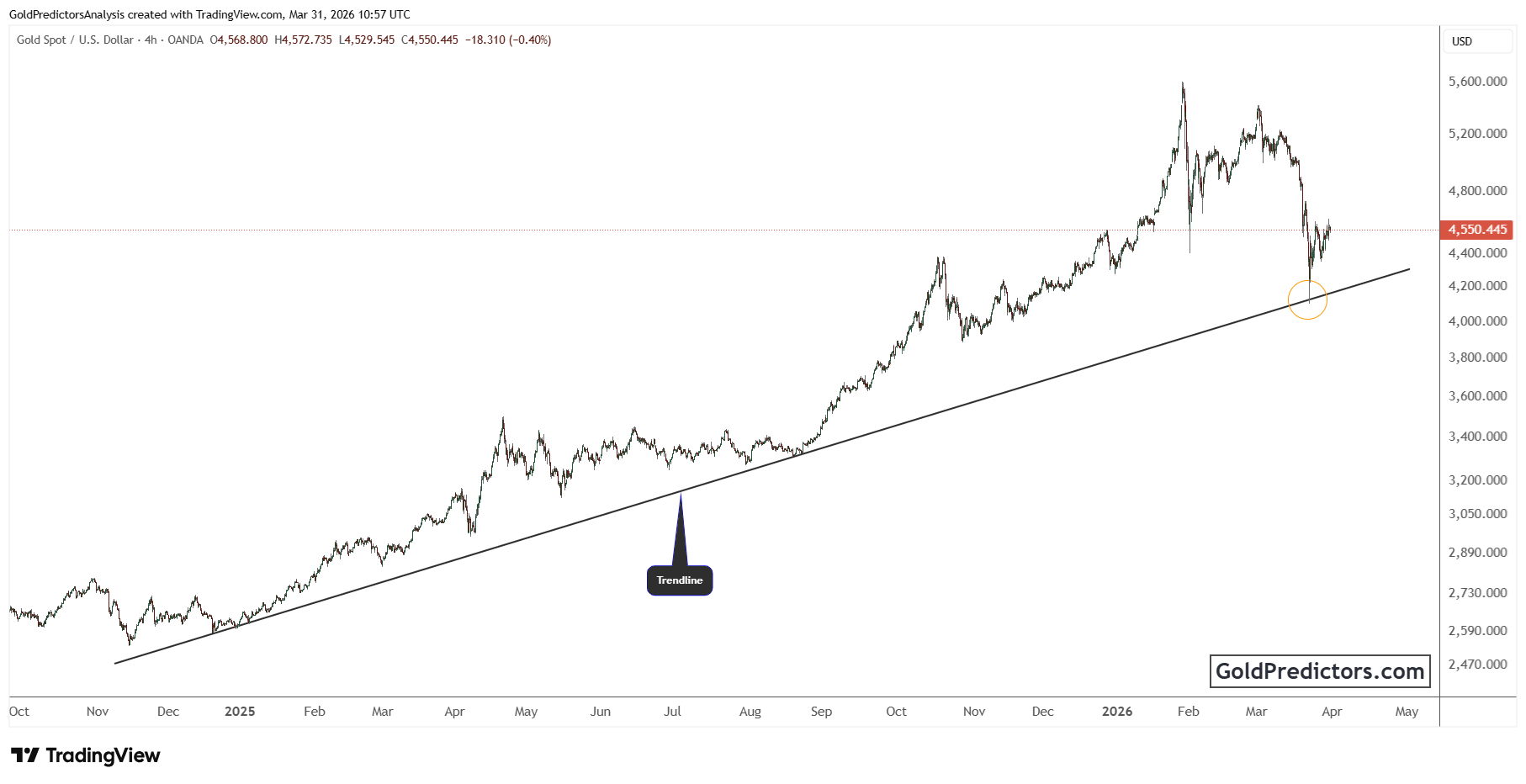
Recently, gold pulled back sharply from its peak and tested the rising support zone. The marked area highlights a key interaction between price and the trendline. Buyers stepped in near this level, preventing a deeper decline. This reaction suggests that the trendline continues to act as a critical support zone in the current structure.
After holding support, price rebounded and returned to a higher range. Recent price action reflects rising volatility near the highs. Sharp swings point to uncertainty and ongoing repositioning. The broader structure still trends upward, yet the market is now assessing whether higher levels can hold or if a consolidation phase will develop.
Gold forecast: Key support holds as market awaits direction
Gold continues to hold above key support but shows limited follow-through on the upside. Firm policy expectations and reduced rate-cut bets continue to cap gains. At the same time, improving risk sentiment is reducing safe-haven demand. Price structure still holds above key support, keeping the broader uptrend intact. Short-term fluctuations may continue as the market reassesses direction. However, as long as support levels remain intact, the overall framework still favors gradual continuation rather than a sustained decline.
Unlock exclusive gold and silver trading signals and updates that most investors don’t see. Join our free newsletter now!
Author

Muhammad Umair, PhD
Gold Predictors
Muhammad Umair is a financial markets analyst and investor who focuses on the forex and precious metals markets.