Gold Price Forecast: XAU/USD bulls have the upper hand, $1,810 confluence holds the key
- A combination of supporting factors pushed gold to over a one-week high on Monday.
- A softer risk tone, inflation worries continued acting as a tailwind for the commodity.
- Bets for an aggressive Fed held back bulls from placing fresh bets and capped gains.

Gold kicked off the new week on a positive note and built on Friday's bounce from the post-NFP swing low, around the $1,792 region. The momentum pushed the XAU/USD to over a one-week high and was sponsored by a combination of factors. Against the backdrop of lingering geopolitical risks, a generally softer tone around the equity markets acted as a tailwind for the safe-haven precious metal. This, along with concerns about persistently high inflationary pressures, further benefitted the commodity's status as a hedge against inflation. Hence, the market focus will remain glued to the release of the US CPI report on Thursday, which would determine the Fed's policy outlook and provide a fresh directional impetus to the non-yielding metal.
In fact, the markets have been pricing in the possibility of a full 50 bps rate hike at the March FOMC meeting. The bets were boosted by the latest US employment report, which showed that the economy added 467K jobs in January. Adding to this, a sharp rise in wage growth pointed to the underlying strength in the labour market that should support the economic growth. The prospects for a more aggressive Fed policy response pushed the yield on the 2-year and 5-year US government bonds – which are sensitive to rate hike expectations – to the highest level since February 2020 and July 2019, respectively. This, in turn, was seen as the only factor that held back traders from placing fresh bullish bets and kept a lid on any further gains for gold.
Nevertheless, the XAU/USD finally settled near the daily high and posted its biggest one-day gains in almost 3 weeks. Bulls, however, struggled to capitalize on the move amid the emergence of some US dollar buying during the Asian session on Tuesday. A stronger greenback tends to undermine the dollar-denominated commodity. In the absence of any major market-moving economic releases from the US, investors might prefer to move on the sidelines ahead of this week's key data risk. In the meantime, the US bond yields will influence the USD and provide some impetus to the metal. Traders will further take cues from the broader market risk sentiment to grab some short-term opportunities.
Technical outlook
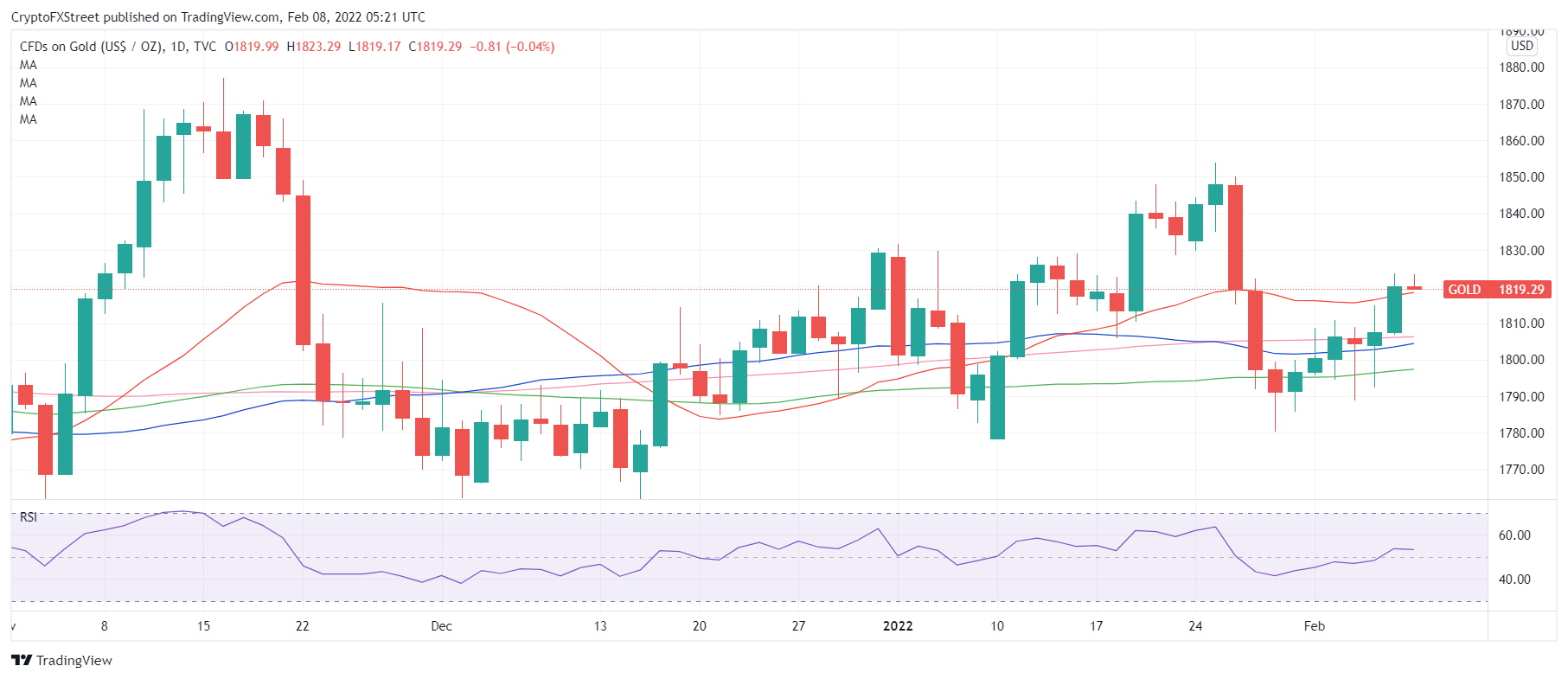
From a technical perspective, the recent bounce from the $1,780 area, or the lowest level since December 16, stalled just ahead of the 61.8% Fibonacci level of the fall. The mentioned barrier, around the $1,825 region, is followed by the $1,830-$1832 supply zone, which if cleared decisively would be seen as a fresh trigger for bullish traders. The XAU/USD might then accelerate the momentum back towards testing the January swing high, around the $1,853 area.
On the flip side, any meaningful slide is likely to find decent support near the $1,810-$1,809 confluence. The mentioned region comprises the 38.2% Fibo. level and the very important 200-day SMA, which should now act as a pivotal point for short-term traders. A convincing break below would make gold vulnerable to slide further below the $1,800 mark, towards testing the 23.6% Fibo. level, around the $1,796-$1,795 region, and the $1,790 support. Some follow-through selling will set the stage for a further near-term depreciating move.
Author

Haresh Menghani
FXStreet
Haresh Menghani is a detail-oriented professional with 10+ years of extensive experience in analysing the global financial markets.














