Gold maintains recovery as weaker US data supports gains

Gold (XAU/USD) is holding its recovery as weaker US economic signals support the current outlook. Softer retail sales, weaker consumer confidence, and easing inflation signals have reduced expectations for tighter Federal Reserve policy and limited support for the US Dollar. At the same time, tensions in the Middle East are supporting demand for defensive assets. These factors are helping gold maintain its strength and could support further gains.
Gold holds momentum as weaker US data supports recovery
Gold is holding near the $4,400 area after extending its recovery from lower levels. The precious metal continues to find support from weaker US economic signals and lower expectations for a Federal Reserve rate hike. US retail sales fell 0.6% in July, marking the first decline in nine months. Core retail sales also declined. The data pointed to softer consumer spending and reduced expectations that the Fed will tighten policy in September. Recent inflation data also showed some moderation. These developments have reduced support for the US Dollar and helped gold maintain its recovery.
Consumer confidence added another sign of weakness. The University of Michigan preliminary Consumer Sentiment Index fell to 51.0 in August from 55.2 in July. Markets had expected a reading of 54.5. The decline suggests that households have become more cautious about economic conditions. The Fed kept its target range at 3.50%–3.75% at its July meeting, although three policymakers preferred a quarter-point increase. Markets will now focus on the July meeting minutes, scheduled for release on August 19, for more information about the policy debate.
Middle East developments remain another important factor for gold. US-Iran peace efforts have made little progress, while traffic through the Strait of Hormuz remains severely restricted. The situation became more uncertain after attacks on vessels and fresh US warnings of additional economic pressure on Iran. These developments keep geopolitical risks elevated and support demand for defensive assets.
Gold maintains strength after breaking key horizontal resistance
The gold chart below shows multiple rounded bases developing beneath horizontal resistance. These formations reflect repeated periods of stabilization following earlier declines. As the bases developed, gold gradually built strength beneath resistance before eventually breaking above the dashed line. This move completed the pattern and opened the way for further gains.
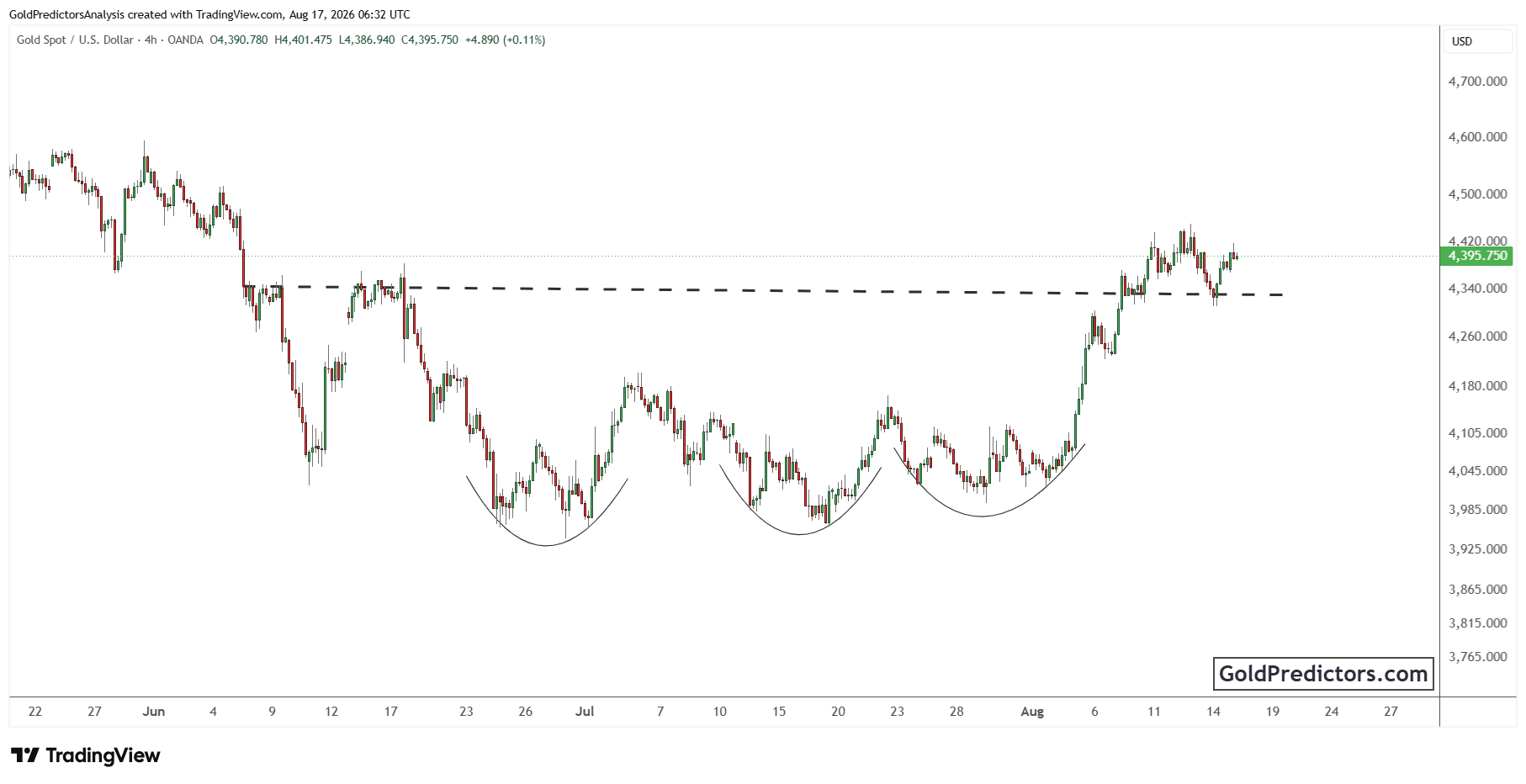
Price has remained above the former resistance since the breakout. The latest decline brought gold back toward this area before it turned upward again. This reaction suggests that the former resistance is now providing support and remains an important part of the current setup.
Gold is now trading near $4,390 and continues to hold comfortably above the dashed line. Continued strength from the current area could support further gains, while a move below the former resistance would weaken the setup and increase the risk of another decline. For now, the reaction from support keeps the outlook positive.
Gold outlook: Weak US data and Fed expectations support gains
Gold continues to hold its recovery as weaker US economic data reduces expectations for tighter Federal Reserve policy. Middle East tensions are also supporting demand for defensive assets. At the same time, gold remains above the former resistance after reacting positively from this key level. Continued strength above this area could support further gains. A move below support would weaken the current outlook and increase the risk of another decline.
Unlock exclusive gold and silver trading signals and updates that most investors don’t see. Join our free newsletter now!
Author

Muhammad Umair, PhD
Gold Predictors
Muhammad Umair is a financial markets analyst and investor who focuses on the forex and precious metals markets.