Gold is back at $4,000. Don't celebrate yet

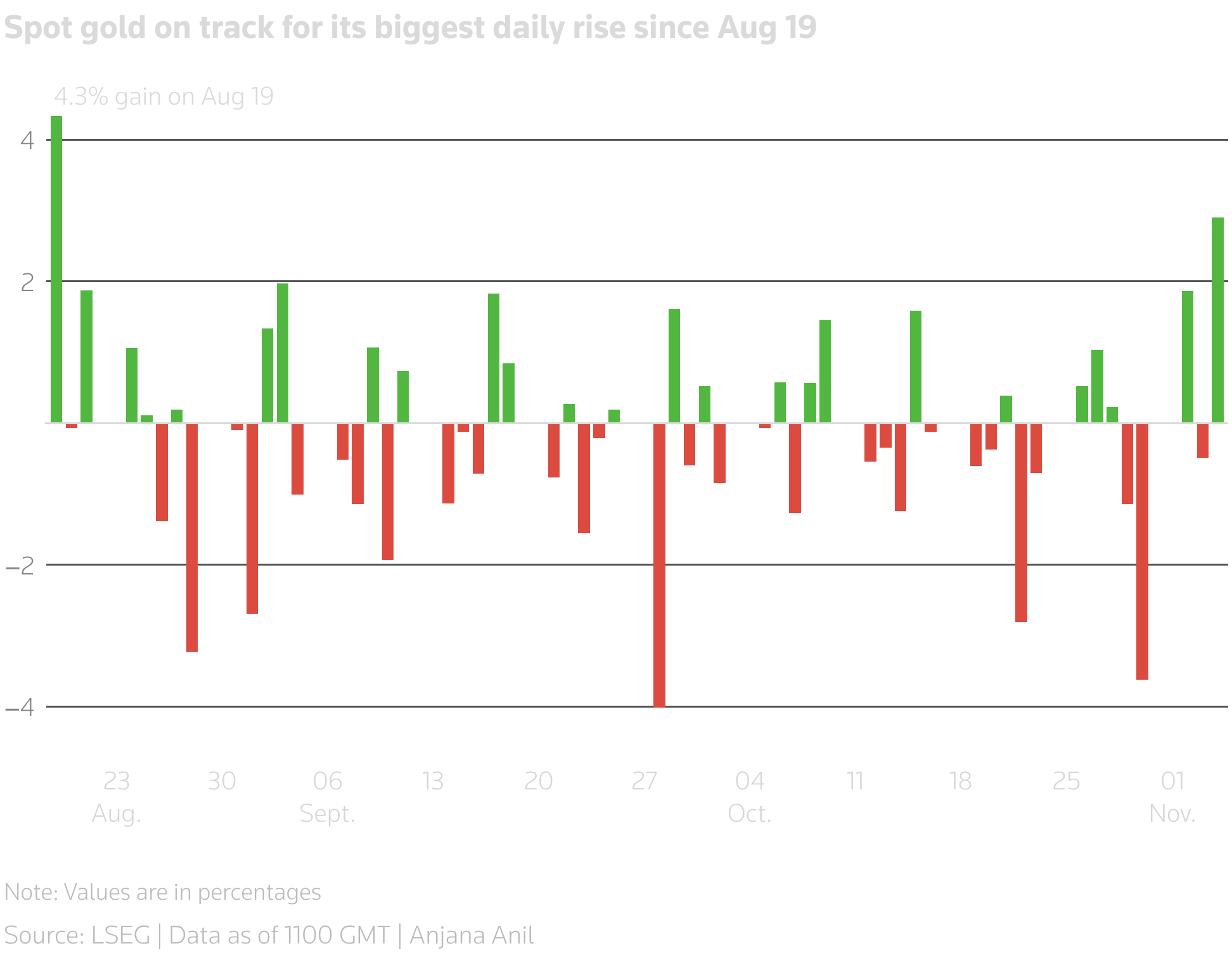
Gold (XAU/USD) stages an impressive recovery on Wednesday, climbing around 3% to trade above $4,000 after the United States (US) midterm elections. The recovery offers some relief after months of selling pressure, but it does not necessarily signal the end of Gold's bearish trend. Despite improving market sentiment, restrictive monetary policy expectations and significant technical resistance levels continue to threaten the sustainability of the rebound.
Why the US midterm elections are giving Gold a boost
Gold's recovery accelerated after Democrats secured control of both chambers of the US Congress, raising expectations of political gridlock in Washington and potential constraints on US President Donald Trump's fiscal agenda. Investors anticipate that a divided government could limit additional fiscal stimulus and government borrowing, potentially reducing inflationary pressures and supporting lower Treasury yields.
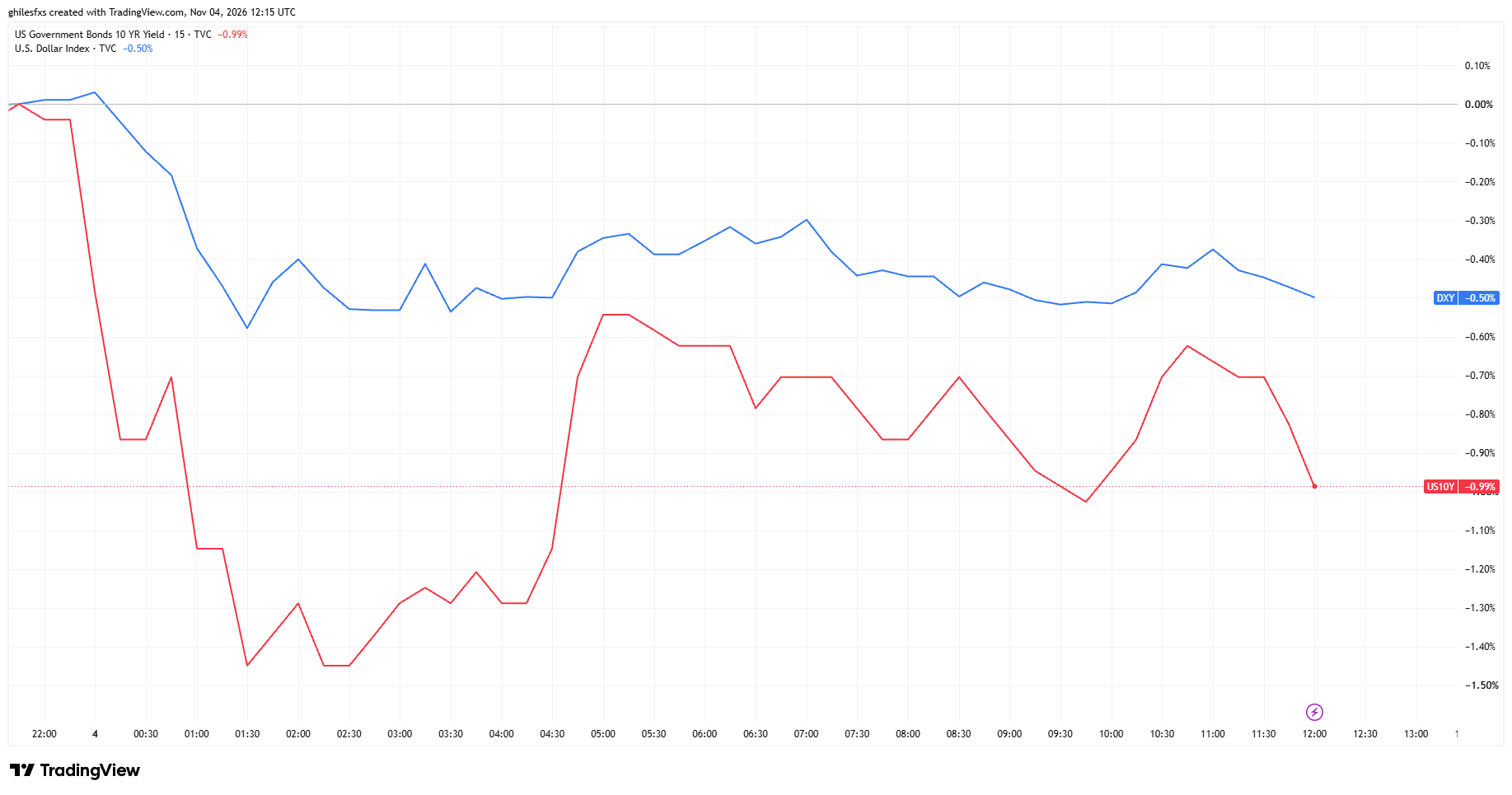
The US Dollar Index (DXY) fell around 0.50% following the election results, while US Treasury yields declined, creating favorable conditions for Gold. Lower yields reduce the opportunity cost of holding the non-yielding precious metal, while a weaker US Dollar (USD) makes Gold more affordable for international investors.
Saxo Bank explains the market reaction: "Gold rallied amid expectations that a Democrat-controlled Congress could constrain Trump’s fiscal agenda and limit further, increasingly unaffordable fiscal expansion," according to the Wall Street Journal.
However, the election results are not entirely positive for Gold. Reduced fiscal spending could also diminish concerns about excessive government debt, which previously supported demand for the precious metal as a hedge against fiscal instability.
For now, the immediate benefits of lower yields and a weaker US Dollar outweigh these longer-term considerations.
The Federal Reserve remains a major obstacle
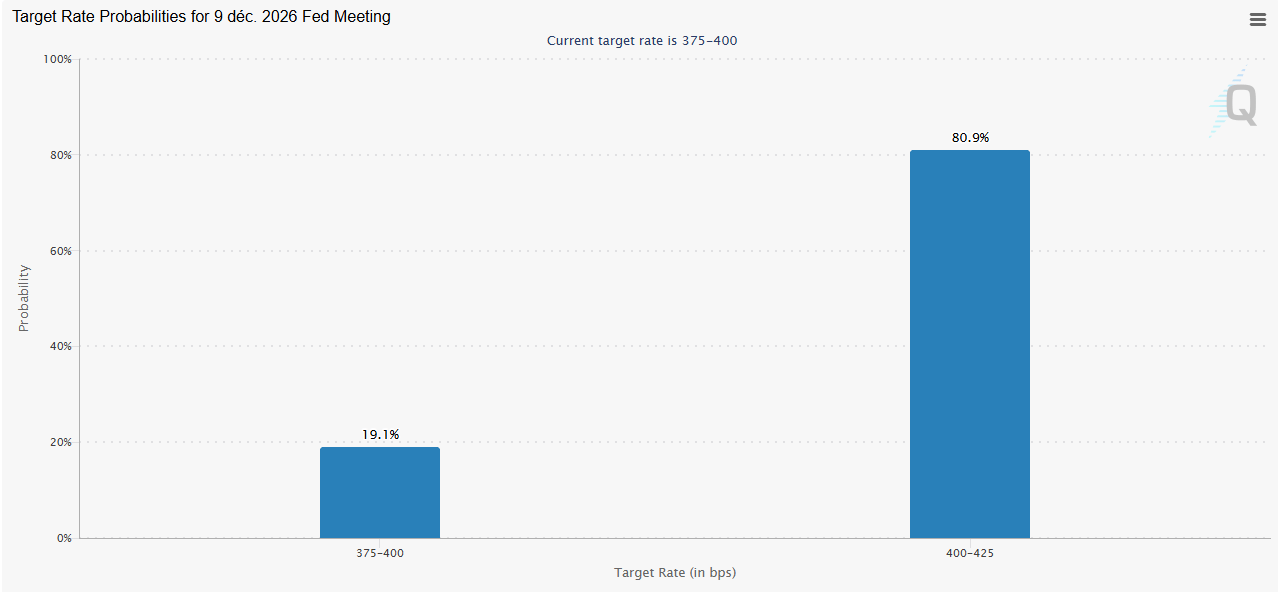
Despite Wednesday's rally, Gold continues to face a challenging monetary environment. Markets are pricing in about an 81% chance of another interest rate hike by the Federal Reserve (Fed) in December, according to the CME FedWatch Tool.
Persistent inflation, partly driven by higher energy prices following the US-Iran conflict, continues to support expectations of additional monetary tightening. Higher interest rates generally weigh on Gold by increasing the attractiveness of interest-bearing assets and potentially strengthening the US Dollar.
Capital Economics Senior Climate and Commodities Economist Hamad Hussain warned that the recovery could remain limited: "That said, the fact that the Fed is likely to remain hawkish due to the inflationary backdrop means that the scope for further gains in Gold prices is limited. Meanwhile, given that Gold has increasingly become positively correlated with equities, continued weakness in tech stocks could also weigh on Gold prices," Hussain told Reuters.
Nevertheless, the monetary outlook could become more supportive in 2027 if inflation moderates and the Fed adopts a less restrictive policy stance. Such a shift would reduce pressure on Gold and potentially encourage a more sustainable recovery.
ING also sees room for improvement beyond the immediate challenges: "We expect Gold to regain some ground following its recent correction. But the near-term outlook remains challenging amid expectations for higher rates and a stronger dollar, limiting the scope for a more sustained recovery."
Friday's Nonfarm Payrolls (NFP) report could provide an important test. Strong employment figures would reinforce expectations of further monetary tightening, while weaker data could encourage investors to reconsider the Fed's interest rate trajectory.
Gold's recovery faces a series of technical hurdles
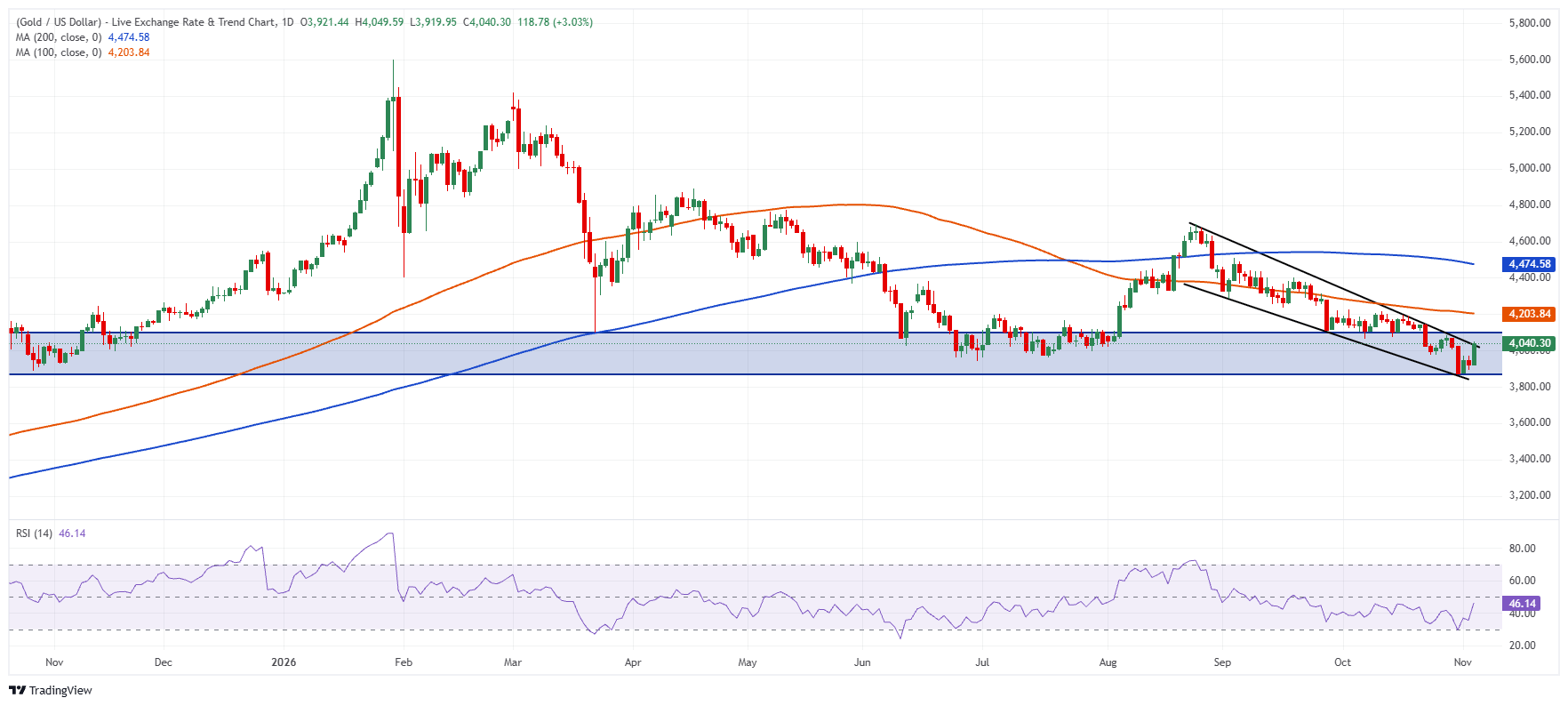
Gold's daily chart shows the market trying to stabilize after a prolonged decline, but the broader technical structure remains bearish. The rebound from the $3,870 support area is encouraging, particularly as buyers have defended this region following several months of downward pressure. However, Gold continues to trade below its 100-day and 200-day Simple Moving Averages (SMAs), currently near $4,204 and $4,475, respectively.
The first immediate obstacle is the descending resistance line around $4,030, which has contained several recovery attempts since late August. A decisive daily close above this trendline would strengthen the case for a short-term recovery.
Nevertheless, the $4,100 region represents another important resistance level. Reclaiming it would suggest that buying pressure is becoming more convincing, potentially opening the door to a test of the $4,200-$4,250 area, where the 100-day moving average reinforces resistance. Beyond this zone, Gold would still need to overcome the $4,380 region before a more significant bullish reversal could be considered.
The daily Relative Strength Index (RSI) has recovered toward 46, indicating that bearish momentum is easing. However, the indicator remains below its neutral 50 threshold, suggesting that buyers have yet to establish clear control.
On the downside, a failure to sustain the recovery above $4,000 could expose the $3,940 area, followed by the crucial $3,870 support zone. A decisive break below this region would undermine the stabilization scenario and revive the risk of further losses.
Is Gold finally finding a bottom?
Gold's return above $4,000 marks a meaningful improvement in short-term sentiment, but the recovery remains vulnerable to renewed selling pressure. The US election results provide immediate support through falling bond yields and a weaker US Dollar, while the possibility of a less hawkish Fed in 2027 offers a potential medium-term catalyst.
However, neither factor is sufficient to confirm a lasting bullish reversal. For now, the precious metal appears to be transitioning from aggressive selling pressure toward a possible stabilization phase.
A sustained recovery above $4,100, followed by a move through $4,250 and $4,380, would provide stronger evidence that the bearish trend is losing control. Until then, Gold's comeback deserves attention, but not yet celebration.
Author

Ghiles Guezout
FXStreet
Ghiles Guezout is a Market Analyst with a strong background in stock market investments, trading, and cryptocurrencies. He combines fundamental and technical analysis skills to identify market opportunities.