Gold declines as labor market strength keeps Fed policy restrictive

Gold (XAU/USD) remains under pressure as strong U.S. economic data reduces expectations for near-term Federal Reserve easing. A stronger labor market has pushed Treasury yields and the U.S. Dollar higher, creating headwinds for precious metals. At the same time, rising tensions in the Middle East have lifted oil prices and added to inflation concerns. This combination has weakened gold's near-term outlook and increased focus on key technical support levels.
Gold faces headwinds from strong labor market and persistent inflation risks
Gold came under renewed pressure after the latest U.S. employment data highlighted continued strength in the labor market. The May Nonfarm Payrolls report showed the economy added 172,000 jobs, exceeding market forecasts. In addition, payroll figures for previous months were revised higher, while the unemployment rate held steady at 4.3%. The data highlighted continued strength in the labor market and reduced expectations that the Federal Reserve will ease policy in the near term.
As a result, market expectations shifted toward a more hawkish Fed outlook. Interest rate expectations moved higher as investors increased the probability of another rate hike before the end of the year. Higher interest rates typically increase the opportunity cost of holding non-yielding assets like gold. Furthermore, gains in Treasury yields and the U.S. Dollar created additional headwinds for precious metals.
Meanwhile, tensions in the Middle East have intensified again. Israel launched strikes near Beirut, while Iran responded with attacks on Israeli targets. Additional reports suggest missile activity involving regional allies has increased concerns about a broader conflict. The renewed hostilities have pushed oil prices higher and raised inflation concerns. However, instead of supporting gold, rising energy prices have strengthened expectations that inflation could remain elevated, keeping the Federal Reserve on a restrictive path. This combination continues to favor the Dollar and limits gold's recovery attempts.
Gold trades within descending channel as downtrend remains intact
The gold chart below shows a clear descending channel that has guided price action lower since the peak near $5,600. Price has consistently respected both the upper and lower boundaries of the channel, confirming a sustained bearish trend over recent months. Each recovery attempt has stalled below descending resistance, keeping the broader downward trend intact.
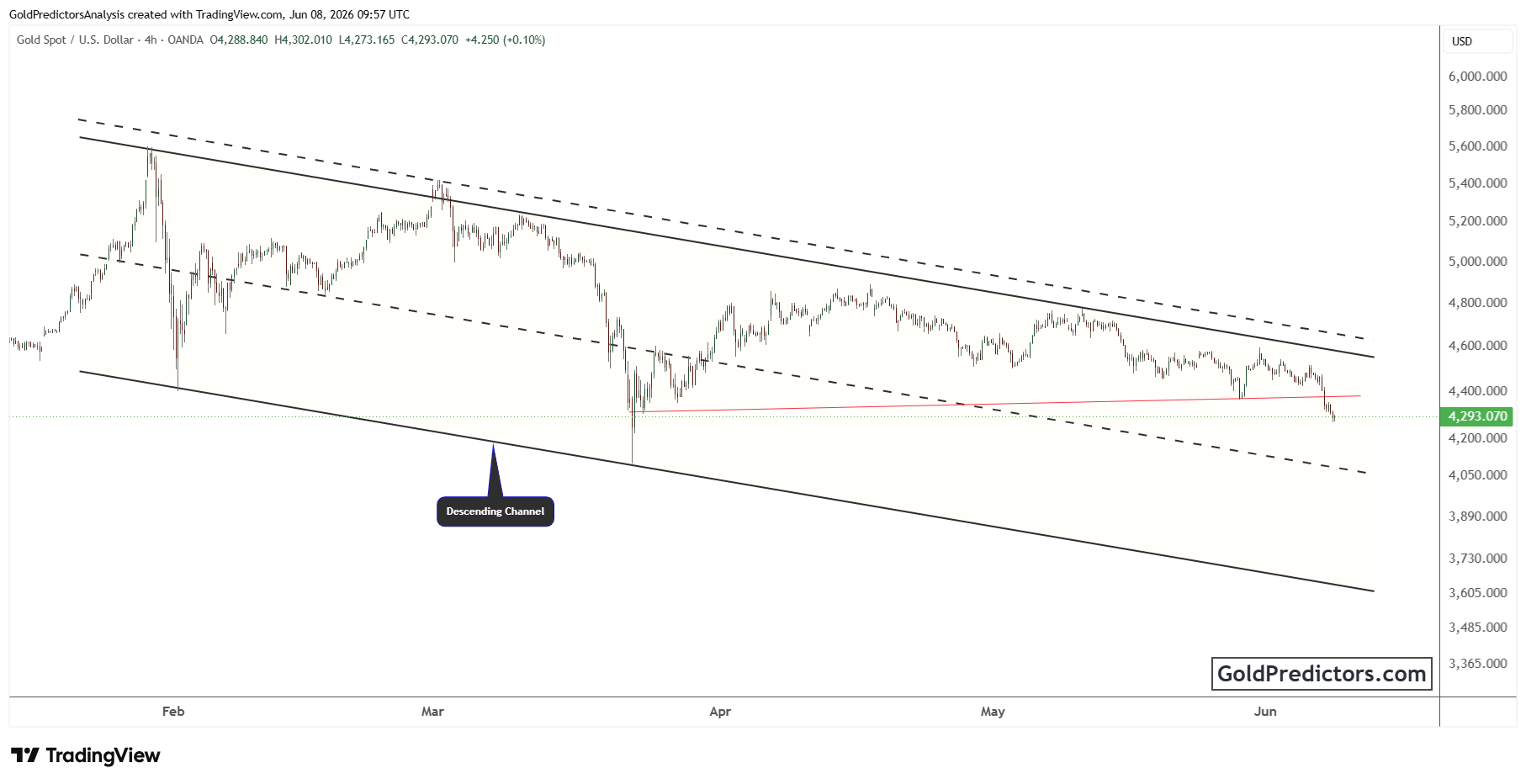
More recently, gold broke below a rising support trendline that had provided stability since late March. Following that breakdown, price accelerated lower and moved back toward the $4,300 region. The inability to reclaim the broken trendline suggests that downside momentum remains intact. The decline places gold near a key support zone, where market participants will be watching for signs of stabilization.
At the same time, the descending channel midpoint continues to act as an important technical level. Gold remains above the channel midpoint, keeping price within the upper half of the declining structure. A sustained move below the midpoint could expose the lower channel boundary. Conversely, a move back above the broken trendline would help ease immediate downside pressure and improve the short-term outlook.
Gold outlook: Labor market strength and rising yields challenge recovery efforts
Gold faces continued downside pressure as strong labor market data, higher Treasury yields, and a stronger U.S. Dollar weigh on sentiment. Rising oil prices and inflation concerns have increased expectations that the Federal Reserve could maintain a restrictive policy stance for longer. From a technical perspective, gold continues to trade within a descending channel after breaking below key trendline support. A move below the channel midpoint could increase downside pressure, while a recovery above the broken trendline would be needed to improve the short-term outlook.
Unlock exclusive gold and silver trading signals and updates that most investors don’t see. Join our free newsletter now!
Author

Muhammad Umair, PhD
Gold Predictors
Muhammad Umair is a financial markets analyst and investor who focuses on the forex and precious metals markets.