GBP/USD Outlook: Now seems vulnerable to slide further below 1.3600 mark
- A modest pickup in the USD demand kept GBP/USD depressed through the Asian session.
- Worries about the AstraZeneca vaccine and unrest in N. Ireland further weighed on the GBP.
- The set-up favours bearish traders and supports prospects for a further near-term decline.

The GBP/USD pair dropped to over two-month lows on Friday and was pressured by a combination of factors. A possible link between the AstraZeneca coronavirus vaccine and a rare blood clotting disorder forced the UK's medical regulator to issue a temporary ban on the jab for the below 30 age group. The development could delay the UK government's plan to reopen the economy, which, in turn, acted as a headwind for the British pound. Another factor that weighed on the sterling was the latest unrest in Northern Ireland. Unionist politicians strongly object to how the Brexit deal’s Northern Ireland protocol treats their region differently from the rest of the UK.
Apart from this, a modest pickup in the US dollar exerted some additional downward pressure on the major, though bulls, managed to defend the 100-day SMA support, at least for the time being. The USD remained well supported following the release of the hotter-than-expected US Producer Price Index, which recorded the largest annual gains in 9-1/2 years in March. This added to the market speculations about a possible uptick in US inflation amid the impressive pace of coronavirus vaccinations and US President Joe Biden's over $2 trillion infrastructure spending plan. This, in turn, raised doubts that the Fed will retain ultra-low interest rates for a longer period.
The USD got an additional lift from the Fed Chair Jerome Powell's upbeat comments over the weekend and seemed rather unaffected by a softer tone surrounding the US Treasury bond yields. During an interview with 60 Minutes, Powell said that the US economy is set to make a turnaround and increased growth should provide more jobs. This reinforced the optimism about a relatively faster US economic recovery from the pandemic. Powell further added that the Fed wants inflation moderately above 2% for some time but does not want it to go materially above 2%. Hence, the market focus will remain glued to the latest US consumer inflation figures, scheduled for release on Tuesday.
Meanwhile, a slight deterioration in the global risk sentiment further drove some haven flows towards the safe-haven USD. Israeli study released on Saturday indicated that South African COVID-19 mutant may beat the Pfizer vaccine. This, along with news that one of Iran's nuclear facilities was hit by a terrorist act, further dented investor’s appetite for riskier assets and benefitted perceived safe-haven currencies. The pair was last seen trading just below the 1.3700 mark and remains at the mercy of the USD price dynamics amid absent relevant market-moving economic releases, either from the UK or the US.
Short-term technical outlook
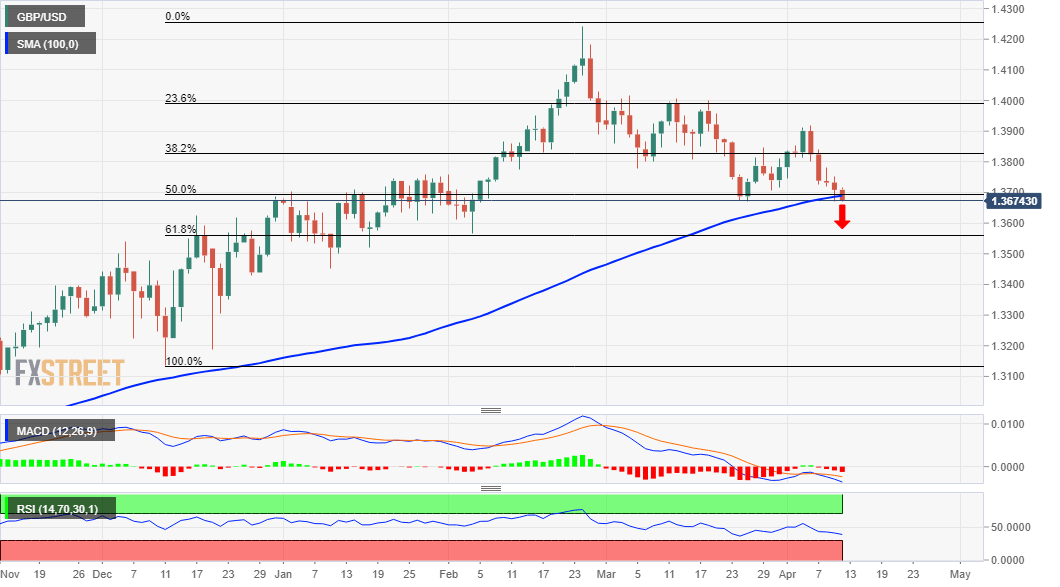
From a technical perspective, the pair has now found acceptance below the 50% Fibonacci level of the 1.3135-1.4243 move up. A subsequent slide below the 100-day SMA favours bearish traders and supports prospects for an extension of the recent downward trajectory. Hence, some follow-through weakness towards the 1.3635-25 intermediate support, en-route the 1.3600 mark, looks a distinct possibility. The downfall could further get extended towards the 61.8% Fibo. level, around the 1.3560-55 region.
On the flip side, any meaningful bounce back above the 1.3700 mark is likely to confront stiff resistance near the 1.3735 supply zone. A sustained strength beyond might prompt some short-covering move and assist the pair to reclaim the 1.3800 mark. This is followed by the 38.2% Fibo. level, around the 1.3825-30 region, which if cleared decisively will negate the near-term negative bias. Thep air might then accelerate the momentum back towards the 1.3900 mark before eventually climbing to monthly tops, around the 1.3920 area.
Author

Haresh Menghani
FXStreet
Haresh Menghani is a detail-oriented professional with 10+ years of extensive experience in analysing the global financial markets.