GBP/USD – Bears may regain control as BOE no longer faces policy dilemma

Cable clocked a high of 1.3268 on Aug 3 before falling to a low of 1.2842 this week. The decline has been fuelled by weak UK data, falling BOE rate hike odds and positive US data surprise [upbeat retail sales].
The UK data released this week failed to impress the GBP bulls -
- UK CPI inflation unexpectedly held steady at 2.6% in July. Falling motor fuel prices were offset by higher prices for clothes, utilities and food.
- The UK Unemployment rate fell to 4.4%, the lowest level since 1975
- UK wage growth topped analysts' estimates at 2.1%, but still lagged inflation
- UK retail sales increased in July as stronger spending on food offset a fall in the purchase of other goods
Except the inflation number, all three data sets printed slightly upbeat. However, labor market tightening is old news… what BOE wants to see is a sustained rise in the wage growth, which according to the bank’s forecast is unlikely to happen any time soon. Thus, the Pound remained flat lined around 100-DMA level of 1.2869 levels this week.
BOE no longer faces policy dilemma
The rally in the GBP/USD from the January low of 1.1968 has been widely blamed on the broad based USD weakness. This is true to a greater extent, although I believe the strength in the GBP/USD was also fuelled by heightened odds of the BOE rate hike.
Moreover, the BOE faced policy dilemma up until the second quarter of this year. The central bank was facing stagflationary winds - declining growth and rising inflation. There was widespread belief that the BOE would prioritize inflation and thus hike rates… Carney and Co did talk up rate hike bets in January, leading to a broad based GBP rally.
However, the situation has changed over the last one month or so. The economic data aren’t beating forecasts the way it did immediately after last year’s Brexit referendum and the inflation appears to have topped out at 2.9%.
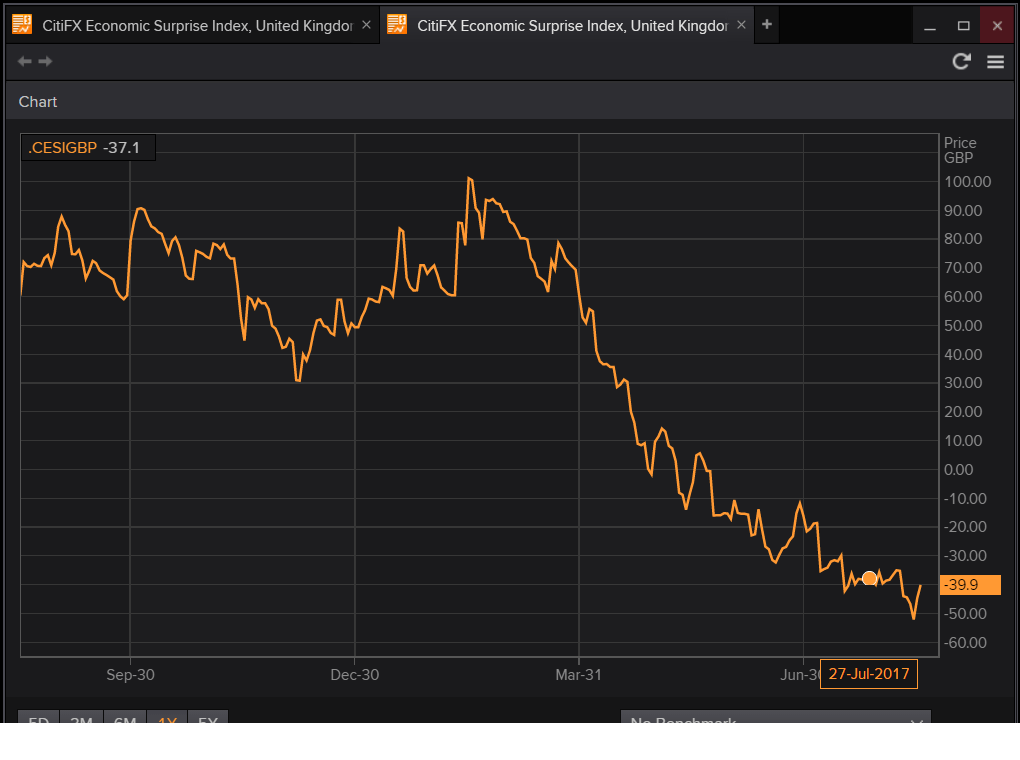
Citi UK economic surprise index
Source: Reuters
The Citi Economic Surprise Index measures how data releases have generally compared to expectations. When the data beats estimates, the index rises and vice versa.
The chart above shows, the index has been steadily losing altitude from the first quarter and currently hovers in the negative territory. It means the UK economic data releases are missing estimates. A negative number indicates economic slowdown…
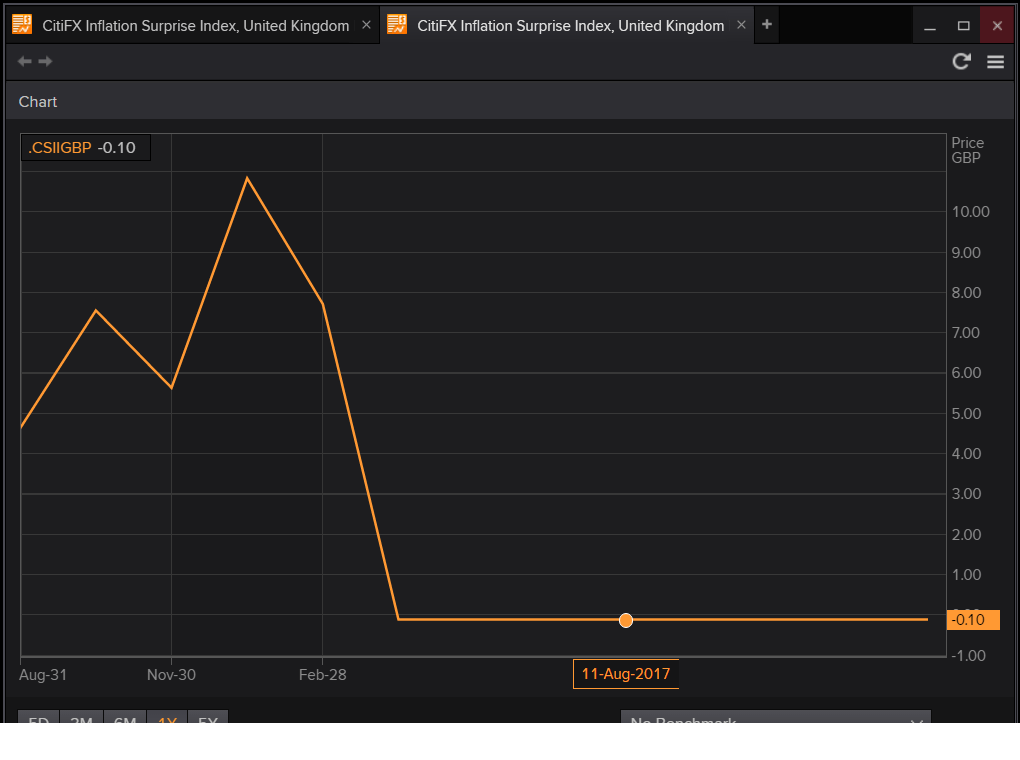
Citi UK inflation surprise index
Source: Reuters
The index measures Citi price surprises relative to market expectations. A negative reading seen above shows price pressures is missing estimates. This adds credence to the pullback in the official CPI number from 2.9% to 2.6%.
BOE has enough room to keep rates at record lows
The fact that the UK economic data are missing estimates and inflation is cooling indicates the BOE is no longer stuck between the rock and the hard place… it has enough room to keep rates at record lows as opposed to the situation existed a couple of months before when the official CPI number was beating estimates. The growth figures were missing estimates back then too.
Hence, GBP/USD could explore the downside towards 200-DMA level of 1.2673 over the next week or two.
Technicals - Watch out for a break below rising trend line support
Daily chart
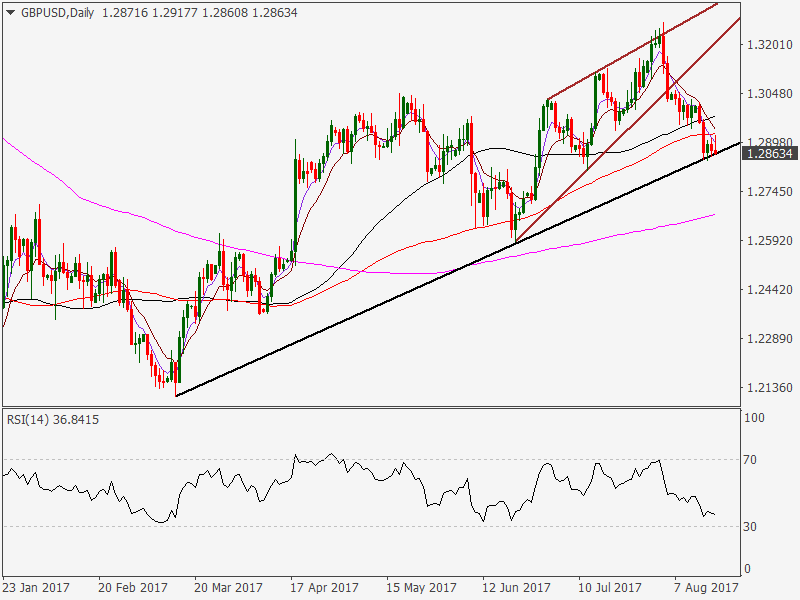
- Downside break of a rising wedge pattern seen earlier this month if followed by an end of the day close below the rising trend line would open doors for a drop to 1.2673 [200-DMA].
- The 14-day RSI is bearish and yet to hit the oversold territory, indicating scope for further sell-off.
Rate differential still favors USD
Despite Trump’s failure to get things done and all the geopolitical uncertainty, the Fed is still seen raising rates in December. The bank is also expected to start its balance sheet reduction program in September.
Author

Omkar Godbole
FXStreet Contributor
Omkar Godbole, editor and analyst, joined FXStreet after four years as a research analyst at several Indian brokerage companies.