|

GBP/USD analysis: Brexit outcome will have the final saying

GBP/USD Current price: 1.3041

  • UK Manufacturing PMI beat expectations, Construction growth up next.
  • Positive Brexit-related headlines were not enough to make Sterling gain ground.
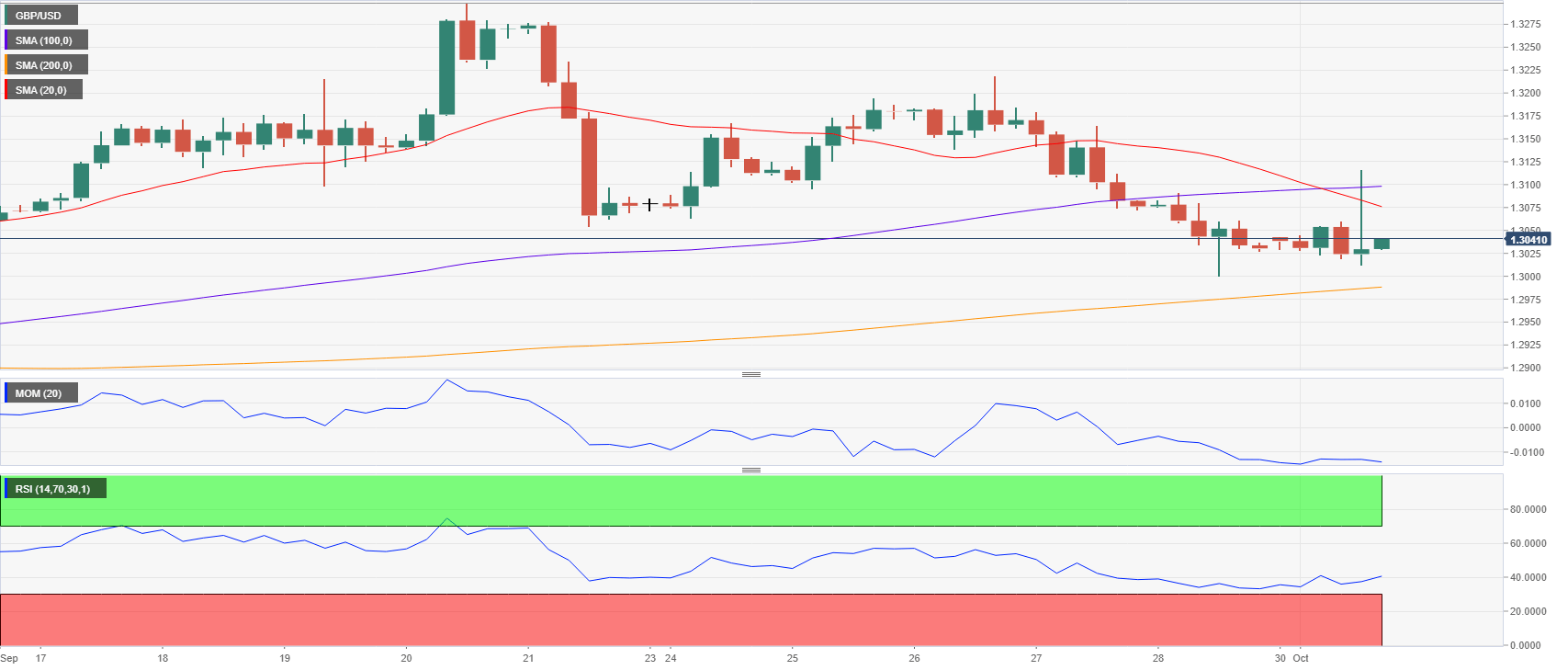
The GBP/USD pair hit a daily high of 1.3115 backed by headlines indicating that the UK is willing to accept some checks in the Irish sea, a way to solve the Irish border issue and get a Brexit deal, with Sterling also supported by an upbeat UK Markit Manufacturing PMI up in September to 53.8, above the market's forecast of 52.5 and the previous 53.0, this last upwardly revised from a previous estimate of 52.8. The Pound, however, was unable to hold on to gains, having spent most of the day trading a handful of pips above Friday's close of 1.3028.  The UK will release this Tuesday the Nationwide Housing Price Index for September, ad more relevant the Construction PMI, this last expected at 52.5 from the previous 52.9.

The 4 hours chart shows that dismissing the intraday spike, the pair spent the day confined to a tight 20 pips' range,  unable to regain ground above a flat 200 EMA and while the 20 SMA gains bearish strength above the larger one. Technical indicators in the mentioned chart have recovered modestly but remain in negative territory, with the RSI already turning south at currently at 34, which leans the scale toward the downside. Anyway, the absence of a relevant directional breakout is directly linked to uncertainty surrounding Brexit, as, despite the positive headlines, the market would need now an official announcement from authorities to actually rush to price it in.

Support levels: 1.3000 1.2970 1.2945                                                

Resistance levels: 1.3065 1.3100 1.3140

View Live Chart for the GBP/USD

Author

Valeria Bednarik

Valeria Bednarik was born and lives in Buenos Aires, Argentina. Her passion for math and numbers pushed her into studying economics in her younger years.


More from Valeria Bednarik
Share:

Editor's Picks

AUD/USD slides as US yields jump before pivotal CPI

The Australian Dollar ended Thursday’s session with a 0.80% loss against the US Dollar after US producer inflation exceeded estimates, triggering pricing for a more hawkish Federal Reserve. The AUD/USD trades at 0.7159 after reaching a peak of 0.7223.

USD/JPY consolidates around 153.50 as bears turn cautious ahead of US inflation

USD/JPY stabilizes above 153.50 during the Asian session on Thursday, but remains near a seven-month low set earlier this week as hawkish BoJ repricing continues to underpin the Japanese Yen. Meanwhile, rising September Fed rate-hike bets and escalating US-Iran tensions help ease US Dollar selling pressure, offering some support to the currency pair ahead of US inflation figures.

Gold remains weak, retargets $4,350

Gold keeps the choppy price action on Thursday, now slipping back toward the $4,350 region per troy ounce amid the robust bounce in the US Dollar as well as rising US Treasury yields across the curve, particularly following US Producer Prices and ahead of Friday’s more relevant US CPI data.

Bitcoin holds steady on positive ETF flows despite short-term holders cashing in

Bitcoin's exchange-traded funds (ETF) demand regime has notably shifted, with 30-day net inflows reaching $21.9 billion, according to a Thursday post by CryptoQuant. The data suggests that the average Bitcoin held through spot ETFs is now in profit, with the realized price of the ETF cohort standing at roughly $72,000 to $73,000.

ECB recap: A hawkish hike despite downside growth risks
The European Central Bank (ECB) increased the Deposit Facility Rate to 2.50%, the Refinancing Rate to 2.65% and the Marginal Lending Facility to 2.90%, effective from September 16. The decision was accompanied by a clear warning that the outlook remains highly uncertain, with risks tilted to the upside for inflation and to the downside for growth.
Venezuela’s 65-billion-barrel Oil deal could reshape America’s inflation fight
The United States (US) has secured unprecedented access to part of Venezuela’s vast Oil reserves. The timing is particularly significant as the war with Iran is disrupting Middle Eastern supplies, keeping energy prices elevated and reviving concerns about inflation.