FX next week: Interest rates and trade levels
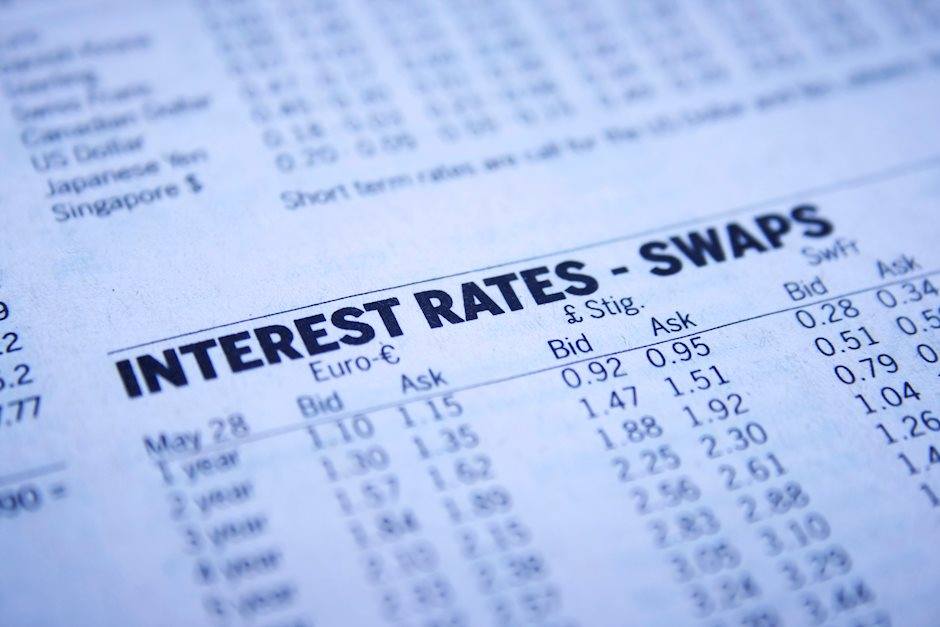

Markets are complete opposites and divided as EUR/USD and DXY. On the EUR side is located Stock indices, all metals to include Gold, Silver and Copper as the big 3 then Commodities. DXY trades opposite but trades along side the bond price. The categories break down further to yields, bonds and interest rates.
All market prices trade from the interest rate curve as parity or 1.0000. AUD and NZD are 0 point currencies and trade from parity. JPY and BOJ contain negative interest rates yet trade from parity. All market prices then rise from parity as parity at 1.0000 is the interest rate floor. Only on fleeting instances would a market price trade below parity. This is the central bank design of markets, prices and movements.
The current EUR/USD and ECB interest rate floor trades 1.0344 and quite high yet EUR/USD trades 1.0700's or 400 pips above 1.0344. No terrible at all. At the 2008 crash, EUR/USD traded at 1.6000's when the ECB curve traded 1.0500 and 1.0600's or 5400 pips.
The eyeball view alone says screaming overbought by light years. The EUR/USD dropped but the interest rate curve had to drop in order for EUR/USD to trade miles lower. The market price is always secondary to the interest rate as the interest rate is the prime mover and dictator.
The Fed and DXY curve trades 1.0007 and DXY trades 270 pips above or 101 pips from 102.77.
The curve floor in relation to exchange rates informs a range market as market prices are fairly low in relation to floors at 1.00 parity. At parity or an interest rate floor is an average so any change to central bank interest rates barely moves the 1.00 needle as all interest rates move in a symphonic harmony to each other.
Daily interest rates change barely 0.02 which does nothing to the overall curve but holds markets to trade in smaller and smaller ranges. If interest rates traded freely as was the case for the past 40 years of market trading then market prices would see wider ranges and much more profit opportunities.
A 25 and 50 point change to interest rates barely experiences a 50 pip move and the cause is the interest rate curves. If markets traded freely, market prices would trade 100's of pips on a central bank change.
The laugh to 1.0344 and 1.0007 is EUR/USD as both numbers are the exact same for trade purposes but the eyeball view appears a wide difference. Despite the difference in numbers, FED and ECB curves forecast any market price on the planet.
For daily trade purposes for 7 and 24 hour trades, interest rates is the only requirement and Statistics becomes a far distant second.
Today's EUR/USD: 1.0704 1.0717 and 1.0731 Vs 1.0764, 1.0771, 1.0778, 1.0785, 1.0798, 1.0805, 1.0812.
EUR/USD trades every 6 and 7 pips. Pre 2016, EUR/USD traded every 12 and 14 pips and a giant difference from today's standards.
Next week
Currency prices remain loccked inside 200 ish pip ranges and trade at highs near vital MA's. AUD/USD for example trades 0.6742 to 0.6963, NZD/USD 0.6228 to 0.6454, EUR/CAD 1.4253 to 1.4476, 1.4487, 1.4493.
EUR/JPY requires break at 141.68 to target lower while CAD/JPY trades fairly normal at 97.91. Short below and long above becomes the only CAD/JPY strategy.
GBP/JPY trades from 156.18 to 162.14. At 159.85 trades fairly normal and the same situation as CAD/JPY. GBP/JPY for next week, we're long below 159.86 and short at 160.99.
EUR/USD trades 1.0457 to 1.0847 or 400 pips and a 33 pip drop to ranges since last week.
EUR/USD vital points are located every 50 pips from 1.0457 as 1.0507, 1.0557, 1.0607, 1.0657, 1.0707, 1.0757, 1.0807, 1.0657.
GBP/USD trades the same range from 1.1966, 1.2010 to 1.2534. Shorts next week are located from low 1.2200's.
USD/JPY remains locked inside 125.00's to 135.00's. Shorts next week at 133.98 targets 132.00's and 131.00's.
EUR/NZD broke above 1.6905 and traded to 1.6974. Remember January range 1.6267 – 1.7075.
Gold vital: 1877.29 and 1846.57. Gold at 1889.00's trades at the highs alongside EUR/USD. Gold and EUR/USD offers double trades.
Overall trade next week, well see more of the same 200 pip ranges.
Author
Brian Twomey
Brian's Investment
Brian Twomey is an independent trader and a prolific writer on trading, having authored over sixty articles in Technical Analysis of Stocks & Commodities and Investopedia.