Friday forex follies: The tariff bombshell that shook global markets
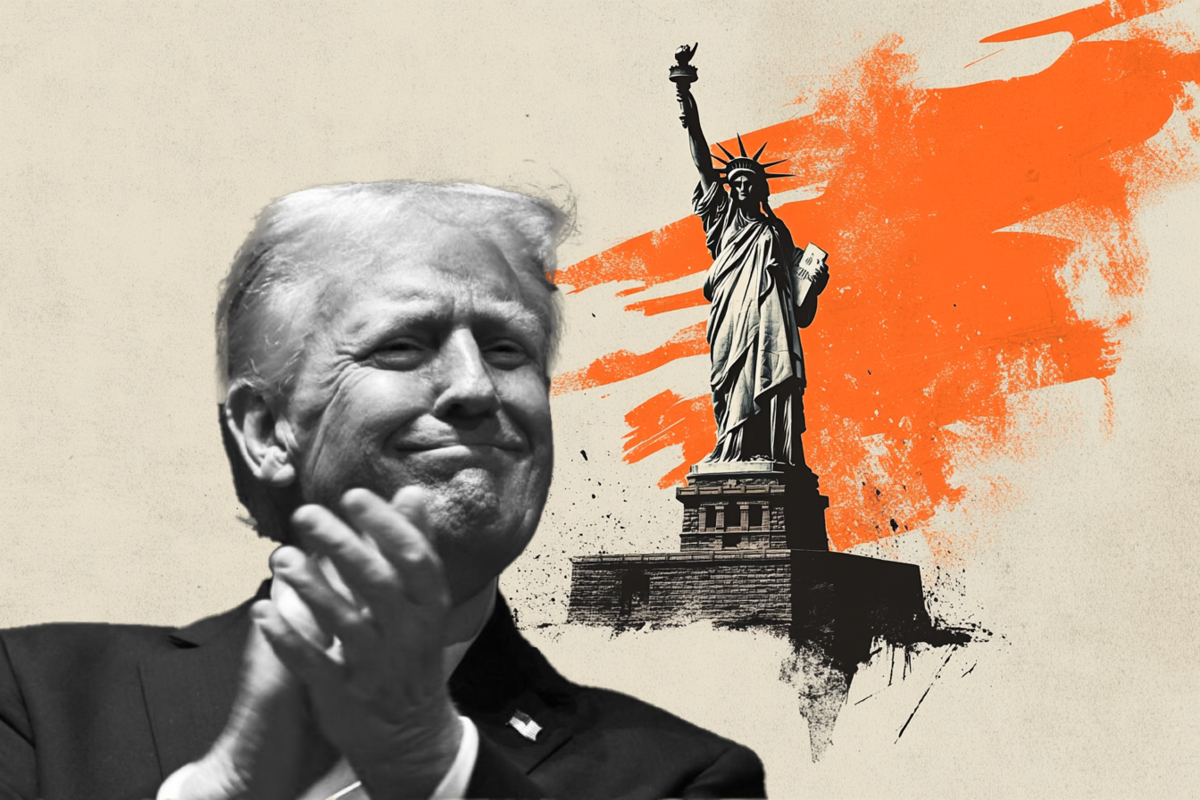

The tariff bombshell detonated across global trading floors as President Trump doubled down on his hardline trade stance. He confirmed that 25% tariffs on Canada and Mexico are locked in for March 4 while announcing an additional 10% levy on Chinese imports—presumably stacking on top of the 10% tariff already imposed in February. In a social media post, Trump linked these trade actions to drug trafficking and illegal immigration, pointing to Canada and Mexico’s role in drug imports and China’s involvement in the fentanyl trade.
Despite the market turmoil, there’s still a glimmer of hope that a deal could be reached before the March 4 deadline—assuming Trump’s demands are met. But that’s a big assumption. Markets don’t trade on hope, and last night’s reaction was swift on the currency markets and brutal for stocks.
The dollar ripped 0.85% higher as traders piled into safe-haven dollar plays, while risk assets took a bruising across the board. U.S. 10-year yields plunged to 4.25%, reinforcing the growing sense that trade tensions are morphing into a growth risk rather than an inflation driver.
In other words, the market walked straight into our "Wile E. Coyote" setup from yesterday—stocks ran right off the cliff, only to realize mid-air that there’s no Acme parachute in sight. The once-resilient risk rally crumbled between the tariff storm, weak consumer sentiment, and collapsing growth expectations.
Asian currency markets weren’t spared either, as higher-beta, export-heavy currencies like the KRW, THB, MYR, and SGD were hammered.
Whether this parabolic risk unwinds is a short-term positioning squeeze—or the start of a much deeper market reckoning as traders come to grips with the real economic damage lurking beneath the surface has yet to be seen.
However, with multiple tariff threats still looming, market whiplash may only increase unless this turns into another high-stakes Trump concession tactic. Either way, traders are preparing for more volatility ahead.
View
The tariff lightning rod trades—EUR, CNH, and CAD—saw relatively mild reactions considering the sheer Trumpian bombast behind the announcements. And on my yen cross trades, I closed them all at the Tokyo fix as the yen unexpectedly rallied, defying my dovish read on Ueda’s G20 remarks.
The move was primarily safe-haven driven into the dollar as yield fell driven by “ reals.” Still, it also underscores a more significant shift in market psychology: the dollar market is reacting less aggressively to tariff headlines for two key reasons.
First, traders aren’t convinced this will spiral into a long, drawn-out trade war. There’s an underlying belief that compromises will be made, whether behind closed doors or in public-facing negotiations. Second, yields are flashing recessionary warning signs, opening the door for a more aggressive rate-cut regime. If the market starts pricing in deeper Fed cuts it will mute the dollar’s aggresions
At this point, we’re left with just one small EUR/USD trade war position, as I’ve concluded that the euro remains the dirtiest shirt in the laundry basket—a trade that still offers the best asymmetric downside risk. In contrast, CNH could attract inflows and benefit from China's AI-driven economic efficiency surge and, of course, the PBoC’s counter-cyclical fixing regime. Moreover, Trump may favour Xi as an ally when negotiating a Ukraine-Russia peace deal, so we may not see the 40% tariff nuclear option crashing down on China.
On the yen, we flipped long intraday, spotting what I saw as mispricing in the low 149s. If we tick above 150.40 in NY, we may add to the position, but I have a stop at 149.60 to keep risk in check.
And then there’s this weird gut feeling—after the tariff onslaught, Trump could pivot hard with market-friendly measures, potentially rolling out tax cuts or other pro-business incentives to keep the economy humming into mid-term election season. If that’s the case, we could be in for some severe whiplash in positioning as traders scramble to adjust the inflationary impact.
We’re smack in the middle of the Wild West in currency trading as the market braces for the next tariff headline roulette out of Washington.
Author
Stephen Innes
SPI Asset Management
With more than 25 years of experience, Stephen has a deep-seated knowledge of G10 and Asian currency markets as well as precious metal and oil markets.