FOMC: Inflation is not a monetary problem
Federal Reserve interest rate decisions are, or should be, about economic and monetary policy. They are not about politics, not concerned with government spending, and not for seeking an election year advantage.
The Fed was set up as an independent body, insulated, though not immune to the operating methods in Washington. Independence is intended to help the governors fulfill their economic responsibilities, defined by Congress to “effectively promote the goals of maximum employment, stable prices, and moderate long-term interest rates”.
Monetary policy targets long term inflation trends. It is neither precise nor reactive enough to have an appreciable effect on event driven prices changes, particularly those of the volatile energy market, many of whose major producers are in the politically unstable Persian Gulf.
These basic and well known premises have been ignored in the market rush to declare a 25 basis point cut on Wednesday a foregone conclusion. The CME Fed Funds Futures have the likelihood of a rate increase at over 90% and by June of next year a better than 80% chance of at least two or more 0.25% increases.
Do economic conditions in the United States, specifically inflation and employment, justify a potential rate cycle stretching to a year and more than 100 basis points in increases? Is there an economic case for rate hikes given the Fed’s two mandates of stable prices and employment?
Inflation is certainly higher. The Consumer Price Index (CPI), the older and narrower of the government's two main price indexes, has averaged 3.60% year on year in the six months from March. In the prior seven months, October’s data was missing due to the partial shutdown, the record was 2.71%. Personal Consumption Expenditures (PCE), a more comprehensive measure, and the Fed’s preferred price index since Alan Greenspan’s tenure, rose 3.76% in the five months to July; the previous seven averaged 2.8%.
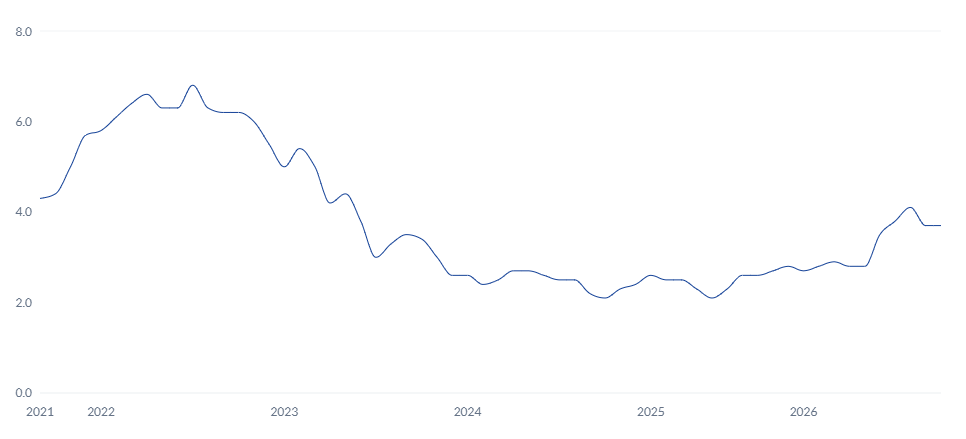
For both indexes February to March produced a sharp break; from 2.4% to 3.3% in the CPI and from 2.8% to 3.5% for the PCE. The US and Israeli attack on Iran in late February drove West Texas Intermediate (WTI), the US price standard, almost 50% higher. North American prices rose from an average of $61.12 for the six months from last September to February, to $90.91 from March to the present. Where oil goes consumer prices are sure to follow.
Core inflation indexes, which strip out energy and food costs, were designed to exclude the distortion of market gyrations on long term inflation rates. They were formulated and became popular among economists in the 1980s after the drama of the 1973 Middle East oil embargo. The results illustrate the difference. Core PCE averaged 2.91% from August last year to March and 3.3% since. Core CPI was 2.71% and then 2.63% in the same two periods.
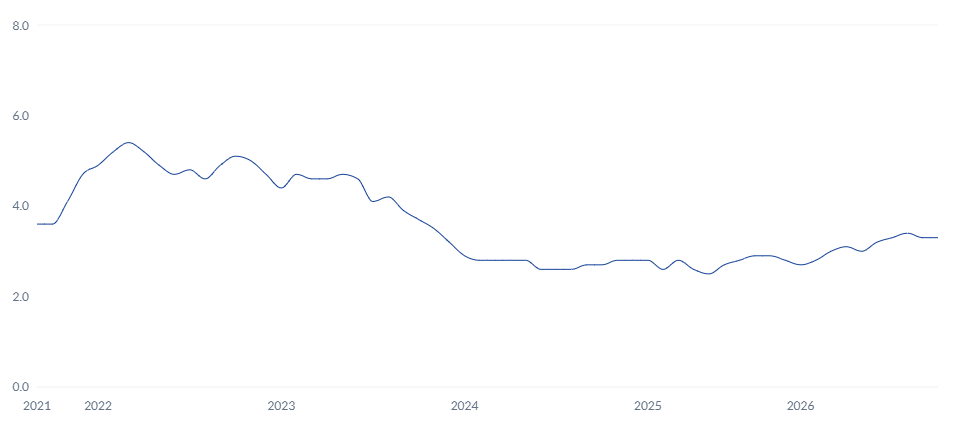
If core inflation indexes are the best indicator of the long term price trends that monetary policy and the Fed should be targeting, then there is little evidence that the current rates have established a new higher threshold.
Another way to look at the present price levels is to consider what would happen if the Iran war ended tomorrow or if the current rulers in Tehran collapse?
By the end of the month, provided the fighting and shipping attacks were halted, oil prices would return to the mid-80s where they were in June and July. The more secure the end of the conflict, the lower energy prices will go. Consumer inflation will fall as surely as it rose in March.
Before the Iran war WTI had been in a steady two year decline, prompted by rising US production. Oil dropped from an average of over $85 in the last quarter of 2023 to under $65 in the second half of 2025. There is every reason to assume that will again become the price dynamic once the current conflict ends.
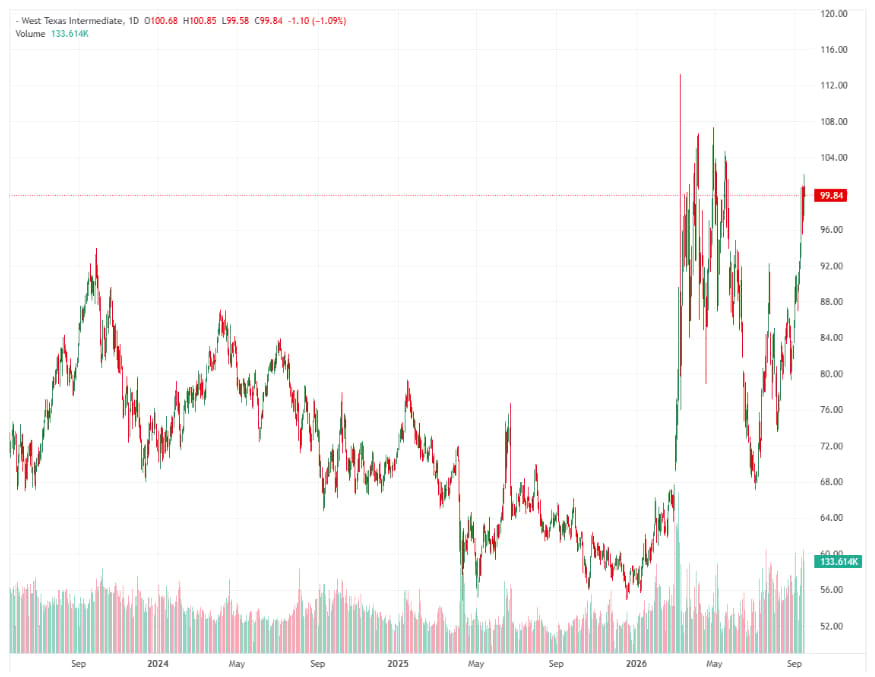
Is the Fed going to predicate monetary policy on the assumption that the war will continue indefinitely and that energy prices are at a permanently higher plateau?
Since inflation is sourced to energy, monetary policy can have no impact, except to drive down demand, that is, to engineer an economic slowdown or recession. A rate increase now would be the reactive policy that Fed rhetoric, economic principals and practical effects should eschew. Oil prices and their impact on inflation, especially in the short term, are not monetary policy issues.
Employment is also not in need of restraint. The six month average of Non-Farm Payrolls is a healthy and non-inflationary 107,000. That is a marked improvement from the half year to February which saw a loss of 6,000 jobs per month, though much of the negative reading was incurred by the annual revisions issued in February.
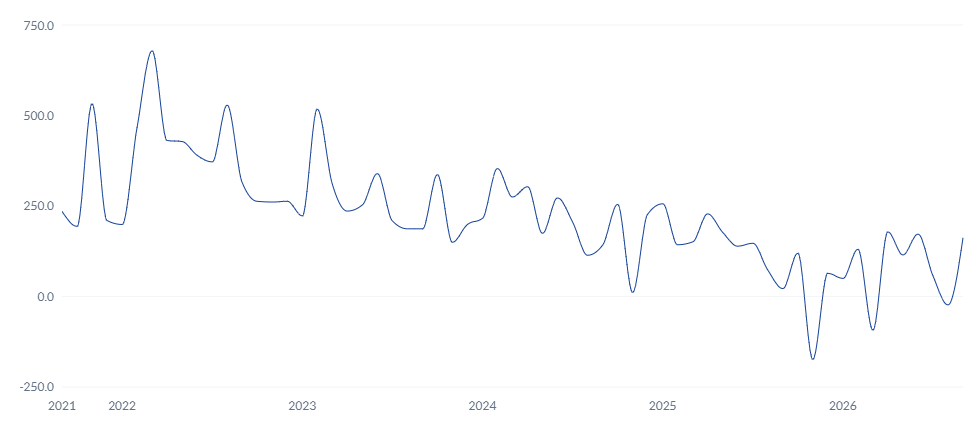
Wage increases are not driving inflation. Average Hourly Earnings have improved 3.6% year on year since February. That is down from 3.8% from the six months from September 2025 and the trend is lower, 3.4% in March to 3.1% in August. That decline occurred despite the jump in overall CPI as above from 2.68% to 3.6% and PCE from 2.80% to 3.76%.
Whatever workers may wish, wages have reversed their advantage over price increases that prevailed in the 12 months to February. It is likely that the speed and brevity of the inflation crest and the possibility of a reversal have also worked to inhibit a wage reaction.
Federal Reserve practice has historically avoided initiating rate changes in the months before a national election. Jerome Powell’s 0.5% cut in mid-September 2024, ostensibly to protect the labor market, is the rare exception. Before that it had been 44 years since Paul Volcker began a rate cycle in September 1980 amid the rampant inflation of the time. Political parties inevitably have policy preferences. Independence requires both sides to be discounted.
In 2021 and 2022, the core PCE rate was 5.6% and had been above 3.5% for 11 months before the Fed surrendered its ‘transitory’ analysis and raised the base rate 25 basis points to 0.5% in March. It took another eight months for the fed funds to reach its current 3.5% -3.75% level.
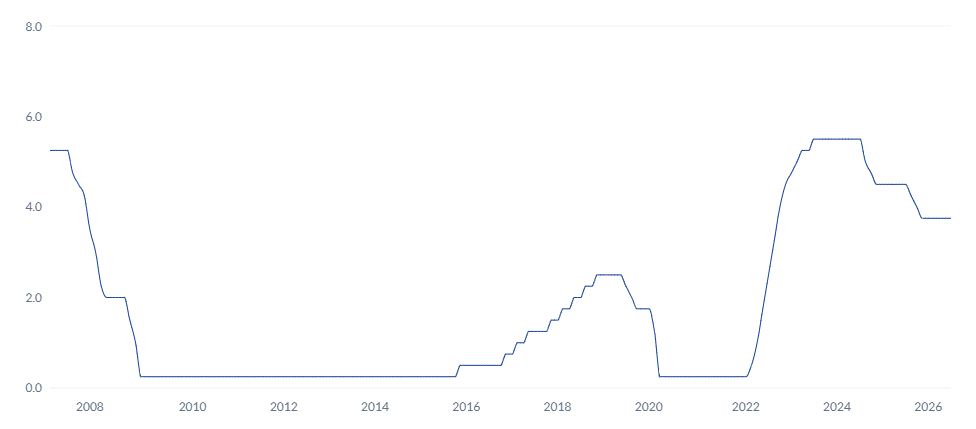
Neither the current inflation rate nor its origin in the Iran war warrant a monetary policy response. Job creation is moderate not inflationary and if a rate hike reinforces a general tendency to higher interest costs they could easily reverse. The elections are seven weeks away. There is no pressing need to begin an increase cycle now.
As was heard so often in the Powell years, Fed policy is data dependent. Well?
Author

Joseph Trevisani
FXStreet
Joseph Trevisani began his thirty-year career in the financial markets at Credit Suisse in New York and Singapore where he worked for 12 years as an interbank currency trader and trading desk manager.