First 2026 manufacturing PMIs set to release

In focus this week
- Monetary policy meetings are scattered throughout the week with the Reserve Bank of Australia (RBA) on Tuesday, National Bank of Poland on Wednesday and the Bank of England and ECB on Thursday. We expect the RBA to deliver its first 25bp rate hike after three cuts seen in 2025. Analyst consensus is also expecting a hike, and markets are pricing around 75% probability for the increase. For the ECB, we expect them to leave the deposit rate unchanged at 2.00% in line with market pricing, with Lagarde refraining from giving new policy signals. Read more in our ECB Preview - Stronger euro? No problem, 30 January.
- Today, January manufacturing PMIs are set for release for the euro area and UK, alongside the ISM manufacturing figures for the US. We expect the final euro area manufacturing PMI data to confirm the flash print which rebounded slightly to 49.4. In the US, flash PMI and the regional Fed indices that were released earlier have signalled improving, but still subdued growth.
- Rounding off the week on Friday, the US labour market will be in the spotlight. We expect January nonfarm payrolls to release at +60k (cons: +78k, prior, +50k) pointing to a modest increase, yet a clear cooling compared to earlier last year. We expect the unemployment rate at 4.4% in line with the market consensus (cons: 4.4%, prior 4.4%).
Economic and market news
What happened overnight
In China, Chinese PMIs for January were a mixed bag but continue to point to muddling through for the Chinese economy. The official NBS PMI manufacturing dropped from 50.1 to 49.3 (consensus 50.1) whereas the private RatingDog PMI manufacturing increased from 50.1 to 50.3 (consensus 50.0). The details show the difference is due to export orders where NBS PMI dropped slightly while RatingDog PMI increased. Other details of interest was a rise in the PMI output price index from both sources above 50 suggesting the deflationary pressures are easing. Employment hung on to gains from previous months giving some rays of light for the consumers. But the construction PMI nose-dived from 47.4 to 40.1 after some improvement in recent months.
In Japan, Nikkei manufacturing PMI climbed to 51.5 in January, confirming the flash print, and up from 50 in December, signalling the first expansion since June. The increase was the strongest improvement since August 2022, driven by an increase in new orders, including exports, while output and employment increased notably.
What happened over the weekend
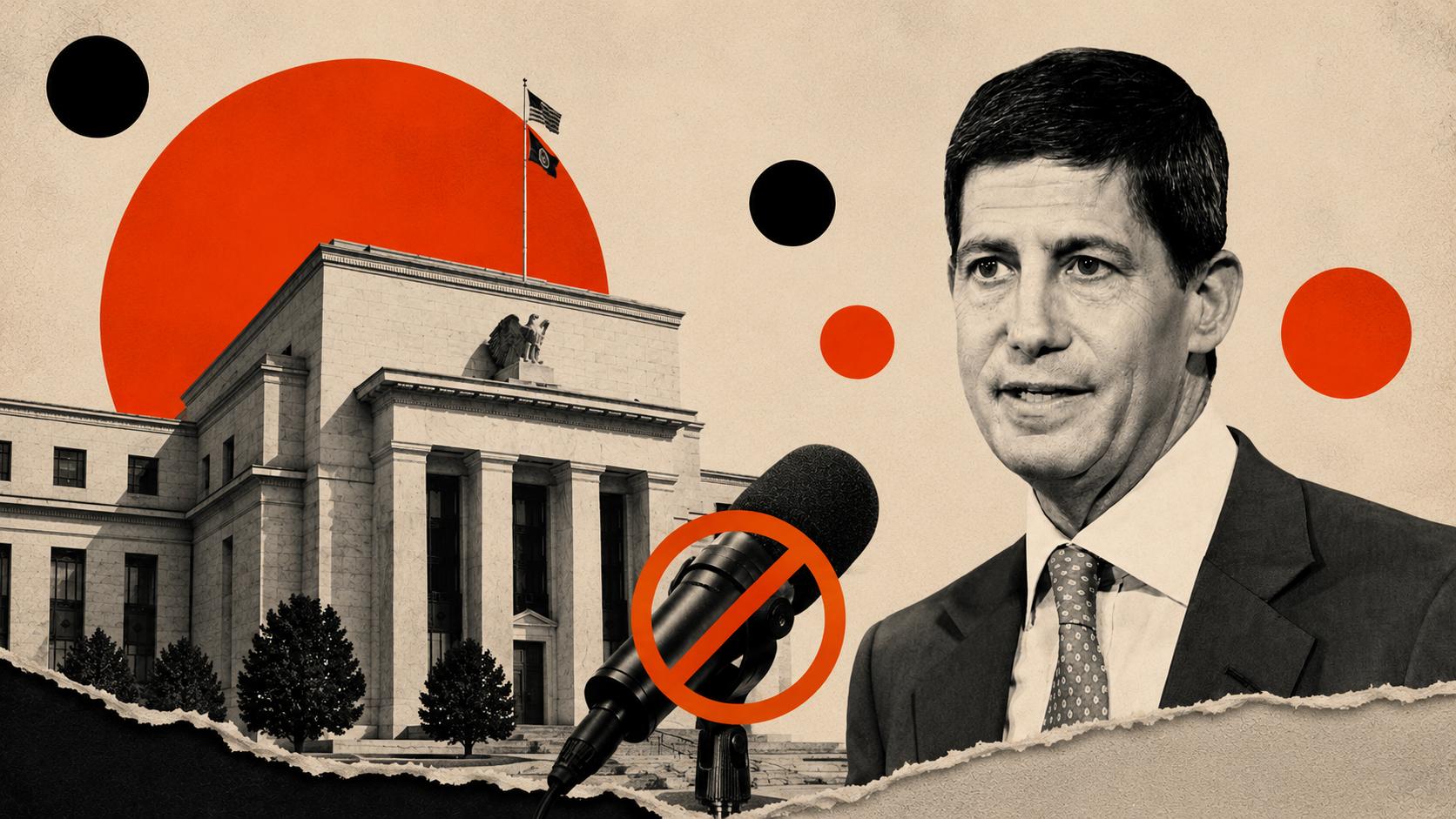
In the US, President Trump announced his nomination of Kevin Warsh as Fed chair. As a previous Fed governor, Warsh obtained a hawkish reputation, however, leading up to the nomination he has aligned with Trump in the push for lower interest rates. The nomination of Warsh still awaits Senate approval, where a majority is required for him to be instated.
The PPI increased by 0.5% m/m (cons: 0.2% m/m, prior: 0.2%), the largest increase in five months. The larger-than-expected increase was driven by the service sector, while the goods market remained unchanged.
On Saturday, the US entered a government shutdown after the House of Representatives failed to meet the deadline for passing the appropriations bill, despite the Senate approving it with a 71-29 vote. Following last week's escalations in Minnesota, where two US citizens were killed, the Senate separated funding for the Department of Homeland Security from the broader spending package in order to approve. This approach ensures continued funding for other federal agencies once passed by the House, granting Congress two weeks to negotiate the remaining funding for the Department of Homeland Security. The House is expected to address the spending package on Monday, with the shutdown potentially ending on Tuesday.
In Finland, Scope downgraded the Finnish credit rating to AA from AA+. Finland's public debt ratio has continued to rise and is now projected by the Finnish Finance Ministry to exceed 97% by 2030, which is 4 pp higher than Scope expected last August. Finland is also being placed under the European Union's Excessive Deficit Procedure (EDP). However, the debt brake agreement, supported by nearly all political parties in Finland, might ease concerns about insufficient fiscal consolidation.
In the euro area, the economy grew more than expected in the final quarter of 2025 and unemployment fell. Real GDP growth came in at 0.3% q/q (cons: 0.2% q/q, prior: 0.3% q/q). The surprise was driven by stronger-than-expected growth in Germany, Spain, and Italy while France grew as expected - still at a modest pace. As growth seems to be driven by consumption and it was broad-based in the eurozone, this is a hawkish surprise for the ECB that forecasted 0.2% q/q growth. Data on the unemployment was also hawkish with the unemployment rate ticking down to 6.2% in December from 6.3% due to a reduction in the number of unemployed by 60k. These data releases support the "good place" assessment of the ECB and cements our expectations of an unchanged decision at the coming meetings.
In Norway, retail sales declined by 0.7% m/m in December, slightly below our estimate of 0.5% m/m and a decline from the 1.2% m/m revised increase in November. The decline was broad-based across goods and due to Black Week shifting Christmas trades. Retail sales rose 3.2% y/y in December marking the weakest growth since May.
In Sweden, December retail sales declined as expected by 0.7% m/m, after a 1.1% m/m increase in November. Retail sales increased by 1.5% y/y, down from a revised increase in November of 6.9% y/y primarily driven by Black week sales.
In China, manufacturing PMI came in below consensus at 49.3 in January, a drop from 50.1 in December. Non-manufacturing PMI declined to 49.4 from 50.2 in December, resulting in its lowest levels since December 2022, although January historically is a slower period.
Equities: Global equities were marginally lower on Friday, recording a -0.4% decline, in what at face value could look like a classic risk-off mode with a continuation of last week's equity rotation, with large caps faring better than small caps. The S&P 500 closed -0.4%, Nasdaq -0.9%, and Russell 2000 down more than 2%.
FI and FX: While US yields showed no clear direction on Friday, UST10y has dropped from 4,25% to 4.21% this morning. The USD strengthened broadly on Friday after the nomination of Kevin Warsh as new Fed Chair and EUR/USD slipped from just below 1.20 to around 1.1850. Meanwhile, USD/JPY moved from 153 to 155 after dovish remarks from PM Takaichi, and cable slipped from above 1.38 to below 1.37. The SEK traded poorly going into January close amid broad dollar strength, risk-off and SEK-negative rebalancing flows, where EUR/SEK gained five, and USD/SEK ten figures in the last hours on Friday. The NOK underperformed in a similar fashion. EUR/SEK is now at 10.58 and EURNOK at 11.47.
Author

Danske Research Team
Danske Bank A/S
Research is part of Danske Bank Markets and operate as Danske Bank's research department. The department monitors financial markets and economic trends of relevance to Danske Bank Markets and its clients.