Fed expectations power USD

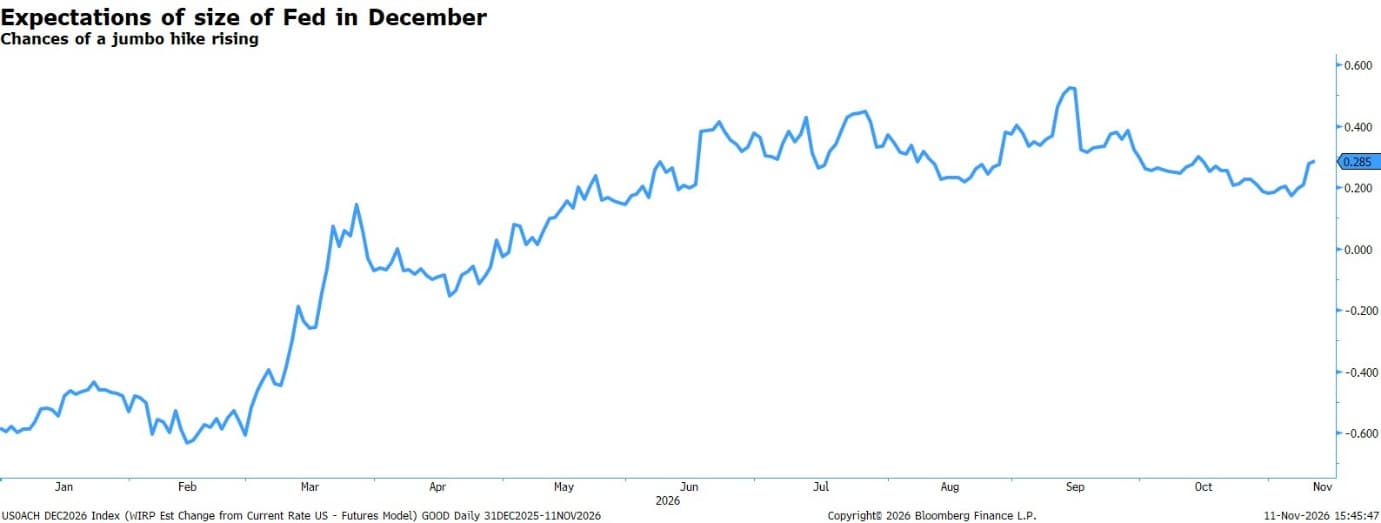
Expectations of the Fed’s interest rate path through to this time next year shifted upwards, with the terminal rate expected to be reached by September of next year being lifted 41bps in 6 days to 4.7%. Big moves, almost all inspired by a single MoM CPI reading, even at a time when WTI futures for Oil are down 15% since the start of the month. FOMC member Waller’s vocal support for a hike in December and his suggestion of a jumbo 50bps hike have sent FX markets scrambling and put the Dollar firmly back on top.
USDEUR hit a May 2025 high in trading today and USDGBP also rallied close to a month high. Put besides the speech of one FOMC member, the evidence to support a prolonged hiking campaign becomes more scant.
If the President sticks to his statement last week that further strikes on Iran were “unnecessary” and news of a pathway to getting Oil flowing through Hormuz again surfaces, the impetus for a hawkish Fed could evaporate quickly. Whilst no recent official talks between Iran and the US have been alluded to, Secretary of State Marco Rubio’s outburst last week that Iranian demands hitherto have been “unacceptable” suggests that talks may be back on the table.
Certainly the US allies in the Gulf seem keen for settlement, with multiple states in the region pushing this week for renewed talks. What has been neglected in the discussions regarding Waller’s comments is that they were qualified with “if readings come in higher than forecast”. Whilst Wednesday’s CPI print was over estimates, that was a single MoM figure, before which the market was not even fully pricing a 25bps hike in December.
The FOMC publishes their decision the day prior to the November CPI print, which makes me suspect that members will not want to look panicked by a single hot MoM reading.
So whilst Dollar bulls can rejoice as of present, such hawkish bets of the Fed’s future rates may prove too far to reach.
Author

David Stritch
Caxton
Working as an FX Analyst at London-based payments provider Caxton since 2022, David has deftly guided clients through the immediate post-Liz Truss volatility, the 2020 and 2024 US elections and innumerable other crises and events.