Fed cuts rates, ends balance sheet reduction but puts on a hawkish front
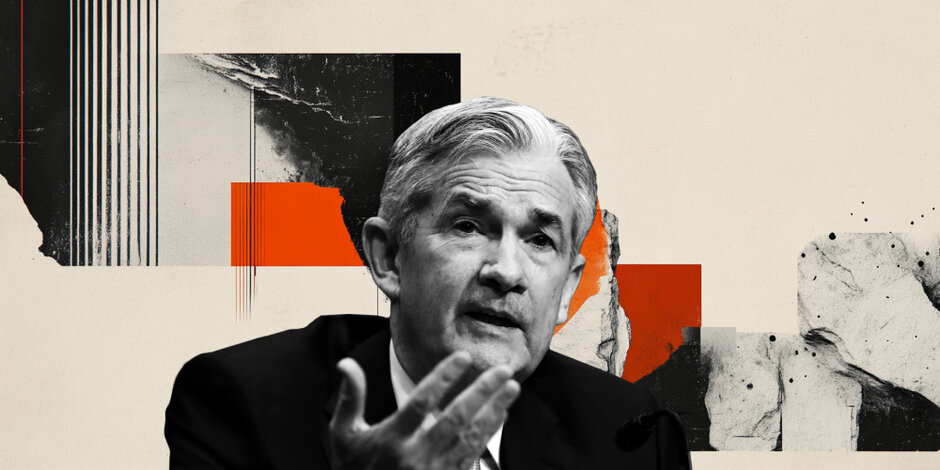

The Powell put is on.
The Federal Reserve chairman tried to sound like a hawk, but the central bank’s actions were those of a dove.
For the second straight meeting, the Fed cut the federal funds rate by a quarter percent on Wednesday. In an even more aggressive move toward monetary easing, the FOMC also announced balance sheet reduction will end in December.
However, Federal Reserve Chairman Jerome Powell tried to keep the party from heating up too much by downplaying the possibility of another cut in December.
The FOMC voted 10-2 to cut rates. The federal funds rate now sits in a range between 3.75 and 4 percent.
As he did at the September meeting, Trump appointee Governor Stephen Miran cast a dissenting vote, indicating he wanted a half-percent cut. On the other side of the coin, Kansas City Fed President Jeffrey Schmid voted NO, signaling that he opposed any cut at this time.
The official FOMC statement acknowledged, “Inflation has moved up since earlier in the year and remains somewhat elevated,” yet eased monetary policy anyway. The committee stated that “downside risks to employment rose in recent months.”
Balance sheet reduction to end
Powell hinted that the central bank could end balance sheet reduction earlier in the month. The FOMC followed through, announcing an end to quantitative tightening as of December 1.
In practice, this means the central bank will stop reducing its holdings of Treasuries and mortgage-backed securities, maintaining the size of its balance sheet at the current level.
Balance sheet reduction, or quantitative tightening (QT), pulls liquidity out of the financial system by reducing bank reserves and shifting government debt financing to the private sector. This tightens funding conditions and market debt. It is effectively deflationary. Ending the balance sheet runoff will increase liquidity. It is also inflationary.
More significantly, an end to balance sheet reduction will take some pressure off the Treasury market, as the central bank would have to purchase new bonds as the old ones mature. In effect, this would create additional artificial demand in the Treasury market. This could help drive bond yields lower, allowing the federal government to borrow at lower rates, lowering its financing costs.
The Fed announced a balance sheet reduction plan in March 2022, when it could no longer convince everybody that price inflation was “transitory.” The plan wasn’t exactly ambitious, given the amount of inflation it created during the pandemic. If the Fed followed the blueprint (and it didn’t), it would take 7.8 years for the Fed to shrink its balance sheet back to pre-pandemic levels. This doesn't even account for the trillions added in the wake of the 2008 financial crisis.
And of course, the central bank didn’t stick with the plan. The Fed slowed the pace of balance sheet reduction in May 2024, and now it’s over.
From its peak, the Fed ran around $2.4 trillion off the balance sheet. That sounds impressive, but it only represents about half of the increase during the pandemic alone.
Chairman Powell’s open mouth operations
Powell and Company filled up the punchbowl and cranked up the easy money party, but the Fed chair then tried to talk the giddy partygoers down by tempering expectations for a December rate cut.
That’s because the Fed just aggressively eased monetary policy despite persistent inflation. In a sane world, the central bank would be holding rates higher to strangle inflation once and for all. It might even be hiking rates.
But we don’t live in a sane world.
We live in a world with a debt black hole and a bubble economy created by decades of easy money that can’t function in a modestly higher interest rate environment.
Powell knows this, so he has to at least talk like a central banker worried about inflation even as he’s cranking up the inflation machine.
Going into the October meeting, most analysts expected the Fed to cut both this month and then again in December. But Powell said we shouldn’t just assume there will be further easing in the final meeting of 2025.
“In the committee’s discussions at this meeting, there were strongly differing views about how to proceed in December. A further reduction in the policy rate at the December meeting is not a foregone conclusion. Far from it.”
Powell also indicated that there is “a growing chorus” among the committee members to “at least wait a cycle” before cutting again.
Powell’s jawboning worked. Traders lowered the odds for a December cut from 90 percent to 67 percent after Powell’s post-meeting presser, and the stock market sank in disappointment.
But this is nothing but talk. Fed officials can say all kinds of things. It’s important to pay attention to what it does. What it did was cut rates and ease monetary policy in an inflationary environment. And the FOMC has no clue what it will do in December because it is effectively flying blind with the government shutdown limiting the release of data. When asked about December, Powell conceded, “We just don’t know what we’re going to get. If there is a very high level of uncertainty, then that could be an argument in favor of caution about moving.”
Powell also claimed, “Inflation, away from tariffs, is actually not so far from our 2 percent goal.”
But no matter how Powell tries to parse and spin the CPI data, inflation is already increasing, and this additional cut, coupled with an end to quantitative tightening, will accelerate that trend.
As of the end of June, the money supply had expanded by more than $600 billion since its low point in mid-2023.
As of September, the M2 money supply stood at $22.2 trillion and is above the peak reached during the pandemic.
I can’t overstate this fact: this IS inflation.
Rising consumer prices are just one symptom of monetary inflation. We also see it showing up in asset prices such as real estate and stocks. This is precisely why the stock market sold off when Powell started in on his hawkish messaging.
The reality is the Fed is in a Catch-22. It simultaneously needs to hold rates higher to deal with inflation and cut rates to try to keep the economy from being completely sucked into the debt black hole. Make no mistake, no matter what you hear coming out of the mouths of Fed officials, they’ve picked inflation.
To receive free commentary and analysis on the gold and silver markets, click here to be added to the Money Metals news service.
To receive free commentary and analysis on the gold and silver markets, click here to be added to the Money Metals news service.
Author
Mike Maharrey
Money Metals Exchange
Mike Maharrey is a journalist and market analyst for MoneyMetals.com with over a decade of experience in precious metals. He holds a BS in accounting from the University of Kentucky and a BA in journalism from the University of South Florida.