Explainer: What moves Natural Gas (NG) and where next for the volatile commodity
- Natural gas prices differ between markets but remain at elevated levels.
- China, Russia and other countries impact prices in the US.
- The reluctance of prices to rise despite a cold spell might be an ominous sign for NG.
- Watching the weather is critical for trading this commodity.

* Note that this content was first published in FXStreet's Trading Studio in a response to a question from a Premium user. Sign up to stay up to speed and have direct access to FXStreet's analysts.
Prices of natural gas are still elevated due to rapid recovery from the pandemic and a sharp imbalance between supply and demand. Covid's outbreak triggered a reduction of investment and the quick bounce earlier this year – due to vaccines, stimulus, etc. – caused supply to rise.
While gas markets are relatively localized, US prices are not fully disconnected from developments elsewhere. Growing demand from China – which is keen to reduce its dependence on polluting coal – contributed to rising prices. That causes global demand for Liquified Natural Gas (LNG) to climb.
In Europe, supplies from Russia's Gazprom have dropped. Some accuse Russian President Vladimir Putin of creating an energy crisis in order to force the new German government to approve the controversial Nord Stream 2 pipeline. Windless autumn also increased the usage of gas.
Looking at weather patterns such as wind and temperatures is also critical to the next moves in gas prices. A relatively mild beginning to the winter prompted a drop in demand for natural gas across the northern hemisphere and sent prices lower. Political pressure in the US also helped push supply higher, pushing prices even further down.
In recent days, temperatures have dropped again, with airlines canceling flights as vast parts of the US were covered with snow.
Natural Gas Technical Forecast
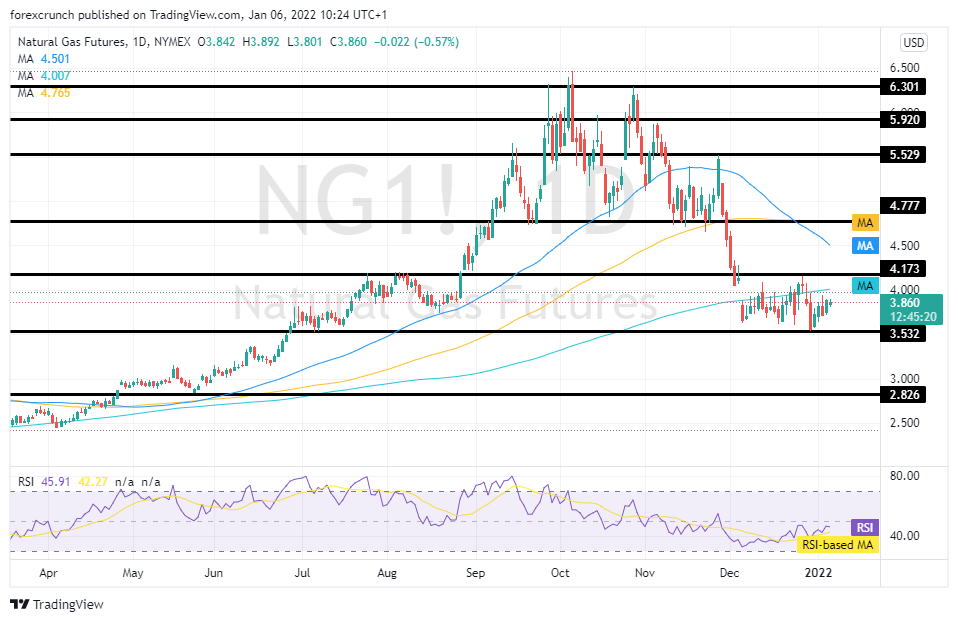
While that helped natural gas prices stabilize, the bounce is limited – a dead-cat bounce. NG has been trading in a range between $3.53 and $4.17 in the past month or so. Back in July and August, prices also traded in that range.
Support at $3.53 is critical and losing it would send prices back to levels last seen in summer – an atypical move for seasonally sensitive gas. At the time of writing, NG is trading at $3.83, in the middle of that range, so the jury is out on the next moves.
For those trading natural gas, it is essential to follow changes in weather patterns. A polar vortex – extremely cold winds escaping from the north pole – could trigger a surge in prices. On the other hand, every day that passes without severe weather could push NG closer to the edge.
At this point in mid-winter, anything can happen, but there is more room to the downside than the upside. It seems that the worst of the energy crunch is over – at least for the US, perhaps not for Europe.
Premium
You have reached your limit of 3 free articles for this month.
Start your subscription and get access to all our original articles.
Author
Yohay Elam
FXStreet
Yohay is in Forex since 2008 when he founded Forex Crunch, a blog crafted in his free time that turned into a fully-fledged currency website later sold to Finixio.
















