Eurozone Inflation Preview: Hotter HICP to cement a 75 bps ECB hike next week
- The Eurozone inflation is seen a tad higher at 9.0% YoY in August.
- Core HICP set to accelerate to 4.1%, justifying a 75 bps ECB rate hike.
- EUR/USD could extend the recovery on hot inflation, hawkish ECB bets.

European Central Bank (ECB) policymakers have strengthened their resolve to fight runaway inflation in the euro area, prompting markets to reprice expectations of a 75 basis points (bps) rate hike next week. Will the Preliminary Eurozone inflation print confirm an outsized rate hike in September?
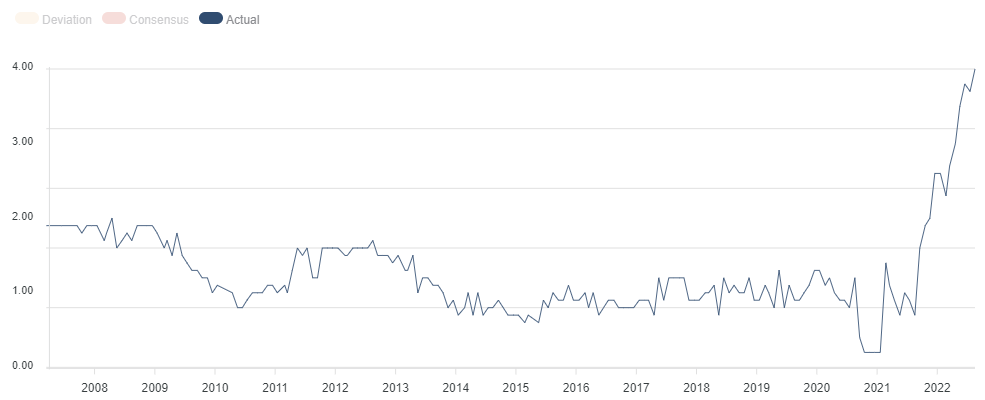
The Eurozone Harmonised Index of Consumer Prices (HICP) hit a new record high of 8.9% in July, surpassing expectations of a steady reading of 8.6%. Meanwhile, the core HICP jumped to 4.0% YoY in the reported month when compared to the 3.8% estimate and 3.7% previous.
Inflation at fresh record highs
For August, the headline annualized HICP is seen a tad higher at 9.0%, with the core figure also likely to see a slight advance to 4.1%. The uptick in monthly readings is likely to add credence to the ECB’s aggressive tightening expectations.
On a monthly basis, the HICP in the old continent is expected to rise to 1.1% vs. 0.1% booked in July while the core HICP is foreseen at 0.4% against the previous figure of -0.2%. The data is scheduled for release on Wednesday at 0900 GMT.
Source: FXStreet
That said, an upside surprise to the Eurozone inflation remains on the table amid soaring energy prices. Last week alone, European natural gas prices surged almost 40% amid a shortfall in Russian deliveries and lower water levels in Germany’s Rhine river due to an excessive heatwave. Further, the ongoing depreciation of the euro makes imports costlier, exacerbating the inflation problem. Meanwhile, industry experts noted that 13 of the latest 16 consecutive euro area inflation prints have surprised to the upside.
Europe’s economic powerhouse, Germany, is almost on the brink of a recession, in the face of squeezing gas deliveries and power-plant outages further sapping supply. Therefore, mounting growth concerns and rising inflation expectations have put pressure on the ECB and the European Union (EU) leaders to act quickly.
At the Kansas City Fed’s Jackson Hole Symposium last week, several ECB policymakers used their speeches to argue that aggressive tightening needs to be considered to tame inflation even if it means tipping the economy into recession. They also pointed to increased risks of inflation expectations becoming de-anchored. ECB Chief Economist Philip Lane said on Monday that inflation in the eurozone is expected to remain high in the near term.
European Commission President Ursula von der Leyen announced on Monday that Brussels was working on “emergency intervention” as well as structural reforms to the power market, in a bid to dampen soaring power costs.
Trading EUR/USD with Eurozone inflation
At the time of writing, EUR/USD is struggling to extend the recovery while trading around the parity mark, having found solid support just above 0.9900 on multiple downside attempts. Despite hawkish ECB bets, bulls are cautious, awaiting the German Preliminary HICP data, which will be released later this Tuesday. The regional inflation readings for Germany are showing an acceleration, suggesting a higher headline print.
As Germany is considered a proxy to the euro area economy as a whole, the old continent could also report a rise in HICP on Wednesday. EUR/USD could still see an extended recovery towards 1.0100 even if the headline HICP meets estimates across the time horizon.
The renewed upside in the pair will gather steam should the headline, as well as, core HICP figures surprise to the upside. Hotter-than-expected inflation data will support the case for a 75 bps rate hike on September 8 when the ECB meets to decide on its policy.
Softer inflation data will weigh down on the shared currency, as it will hint at first signs of peak inflation, in turn, dousing hopes of big ECB rate hikes. In such a case, the main currency pair could break the critical 0.9900 support area to renew 20-year lows.
Author

Dhwani Mehta
FXStreet
Residing in Mumbai (India), Dhwani is a Senior Analyst and Manager of the Asian session at FXStreet. She has over 10 years of experience in analyzing and covering the global financial markets, with specialization in Forex and commodities markets.