EUR/USD: The advantage remains with the Dollar

EUR/USD began the week trading around 1.1381. The US dollar has maintained its strong position following the hawkish outcome of the Federal Reserve’s June meeting. The updated projections from FOMC members confirmed the central bank’s willingness to continue tightening monetary policy, prompting markets to reassess the interest rate outlook. The probability of a rate hike in July is currently estimated at around 29%, while the likelihood of tightening in September has risen to approximately 60%.
In recent days, however, expectations have become slightly less aggressive. One reason has been the sharp decline in oil prices, which have returned to pre-conflict levels seen before the escalation in the Middle East. Lower oil prices have helped reduce inflationary concerns. Additionally, markets have largely priced in the Fed’s hawkish stance. Further appreciation of the US dollar is therefore likely to require fresh support from robust macroeconomic data, particularly employment and inflation data.
Until the release of these key reports, the dollar is expected to remain well supported. However, in the absence of new catalysts, a period of consolidation or a moderate correction cannot be ruled out. Market attention in the coming days will focus on labour market and inflation data, which will play a crucial role in shaping expectations for future Federal Reserve policy.
The outlook for the euro remains less favourable. Although the European Central Bank continues to pursue a tightening bias, much of the expected policy adjustment has already been priced into the market. Investors currently anticipate around 28 basis points of additional tightening by the end of the year, with the next ECB rate increase not expected before September.
The latest preliminary PMI data confirmed a further easing of inflationary pressures in the euro area, with price growth slowing to its lowest level since February. While business activity remains subdued, the pace of economic deterioration appears to have stabilised. An additional positive signal came from a recent ECB survey, which showed that consumers expect inflation to decline over the next 12 months and anticipate an improvement in economic conditions. While this supports the euro’s longer-term outlook, the near-term advantage remains firmly with the US dollar.
Technical analysis
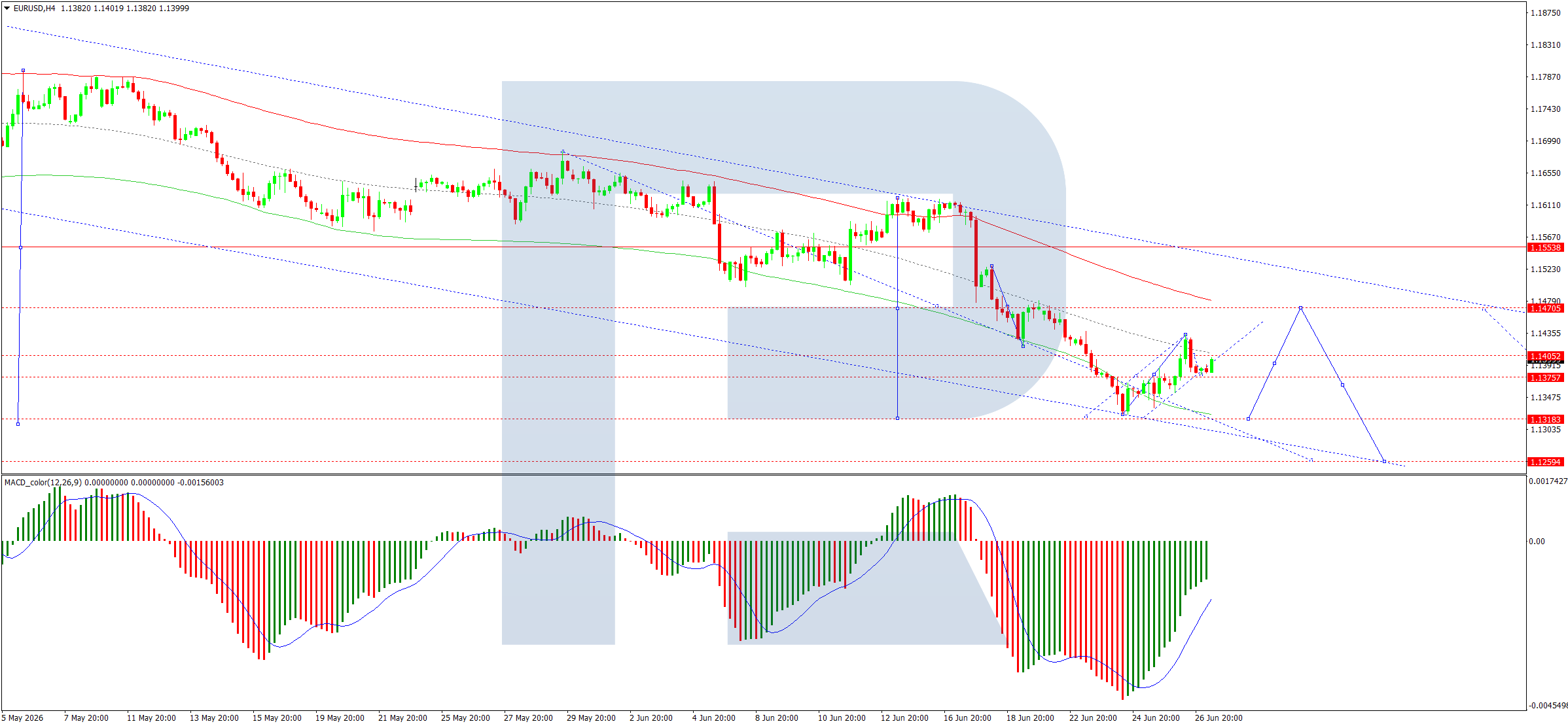
On the H4 chart, EUR/USD is trading within a consolidation range around 1.1405. The range currently extends between 1.1378 and 1.1414. A breakout to the upside could trigger a corrective move towards 1.1470, followed by a potential decline to 1.1385. Conversely, a downside breakout would open the way for a move towards 1.1315.
The MACD indicator supports the bearish scenario, with its signal line below zero and pointing firmly downwards, reflecting persistent negative momentum.
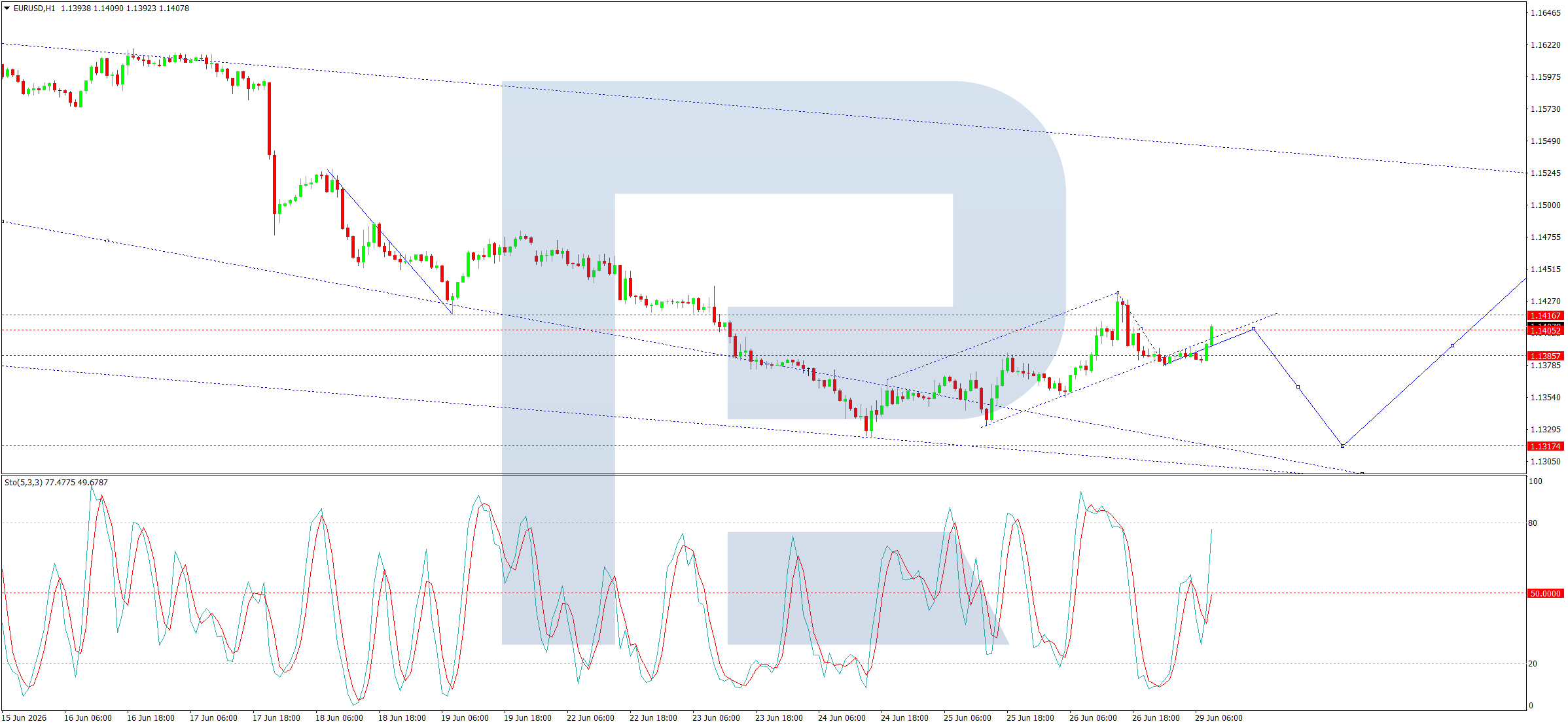
On the H1 chart, EUR/USD has reached 1.1414 and is now consolidating below this level. In the short term, the range may extend between 1.1369 and 1.1317, with further downside potential towards 1.1260.
The Stochastic oscillator confirms this outlook. Its signal line is currently near 80 and turning sharply lower towards 20, indicating weakening bullish momentum and increasing downside pressure.
Conclusion
EUR/USD remains under pressure as the Federal Reserve’s hawkish stance continues to support the US dollar. While falling oil prices and stabilising eurozone data have eased some concerns, investors remain focused on upcoming US employment and inflation reports. Unless these data disappoint significantly, the dollar is likely to retain its advantage in the near term.
Author

RoboForex Analysis Department
RoboForex
RoboForex Analysis Department provides timely market insights, expert technical analysis, and actionable forecasts across forex, commodities, indices, and equities.