EUR/USD Forecast: Risks falling to YTD lows, all eyes on ECB today

The EUR/USD pair came under some intense selling pressure on Wednesday and tumbled to over two-month lows, weighed down by political worries and softer economic data. With the Italian government refusing to back down on the 2019 deficit target, possibilities of a clash over EU's fiscal rules remained in the centre of focus. The shared currency was further weighed down by weaker than expected Euro-zone flash PMI prints, showing that the composite PMI dropped to a 25-month low level of 52.7 in October.
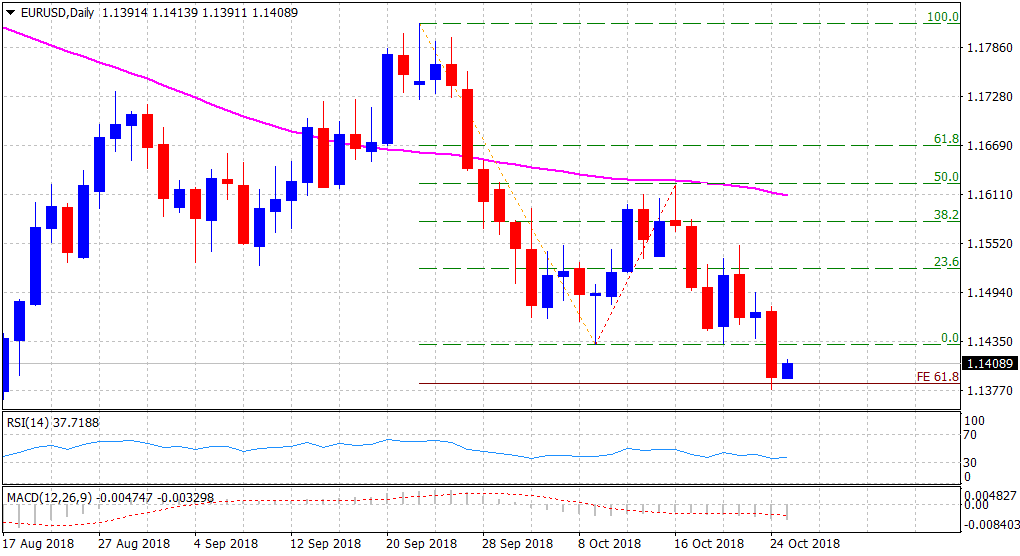
The selling pressure aggravated further on the back of resurgent US Dollar demand, which got an additional boost from safe-haven flows amid a rout on the Wall Street. A combination of negative forces dragged the pair below the 1.1432 (previous October lows), and the 1.1400 handle to its lowest level since August 17.
However, a calmer start for the US equity futures helped ease the bearish pressure and stage a modest rebound during the Asian session on Thursday. Investors also seemed to lighten their bearish bets ahead of the latest ECB monetary policy update. The European Central Bank is widely expected to stick to its plan for winding down the bond-buying program at the end of the year and leave interest rates unchanged at least until next summer.
In the meantime, the release of the German Ifo Business Climate survey might provide some impetus but is more likely to be overshadowed by the key event risk. Later during the early North-American session, the US economic docket highlights the release of durable goods orders data for September, which along with pending home sales data might influence the USD price dynamics and help traders grab some short-term opportunities.
From a technical, the selling pressure abated near a support marked by 61.8% Fibonacci Expansion level of the 1.1815-1.1432 downfall and subsequent rebound. The price action indicates that the uptick is backed by short-covering, which might now confront fresh supply near the 1.1430-35 region, previous support now turned resistance.
The momentum could further get extended, though seems more likely to be capped near the 1.1470-75 supply zone. A convincing break through the mentioned barriers might negate any near-term bearish bias and pave the way for additional gains in the near-term.
On the flip side, the 1.1385-80 region (61.8% Fibonacci Expansion level) might continue to protect the immediate downside, which if broken might turn the pair vulnerable to test 1.1345 horizontal level before eventually dropping to YTD lows, around the 1.1300 handle.
Author

Haresh Menghani
FXStreet
Haresh Menghani is a detail-oriented professional with 10+ years of extensive experience in analysing the global financial markets.