EUR/USD Forecast: Not out of the woods yet, remains vulnerable to slide further
- A combination of diverging forces failed to provide any meaningful impetus to EUR/USD.
- Concerns about the third wave of COVID-19 infections weighed on the shared currency.
- The risk-on mood undermined the safe-haven USD and helped limit any meaningful slide.

The EUR/USD pair lacked any firm directional bias and seesawed between tepid gains/minor losses through the early part of the European session on Monday. The shared currency remained on the defensive amid concerns that the third wave of COVID-19 infections and pandemic-related restrictions in Europe could derail the fragile economic recovery amid the slow pace of vaccinations. This, in turn, was seen as a key factor that kept a lid on the pair's attempted recovery from the 1.1700 mark, or near five-month lows touched last week. However, a subdued US dollar price action extended some support to the major and helped limit any further losses, at least for now.
The USD struggled to capitalize on Friday's positive move led by blockbuster US monthly jobs report, which showed that the economy added 916K new jobs in March. This marked the third consecutive month of growth in employment and the largest gain since last August. Adding to this, February's reading was also revised higher to 468K as against 379K reported previously and the unemployment rate fell to 6.0% from 6.2% previous. The data reinforced the prospects for a relatively faster US economic recovery from the pandemic. This, along with the Biden administration's planned stimulus of more than $2 trillion, fueled speculations about a possible uptick in US inflation.
The developments raised doubts that the Fed will retain ultra-low interest rates for a longer period and pushed the yield on the benchmark 10-year US government bond back above the 1.70% threshold. The USD bulls, however, seemed rather unimpressed by the supporting factors, instead took cues from a generally positive tone around the equity markets. The prevalent risk-on environment undermined the safe-haven greenback and seemed to be the only factor lending some support to the major. Market participants now look forward to the release of the US ISM Services PMI for some impetus amid relatively thin liquidity conditions on the back of the Easter Monday holiday in European markets.
Short-term technical outlook
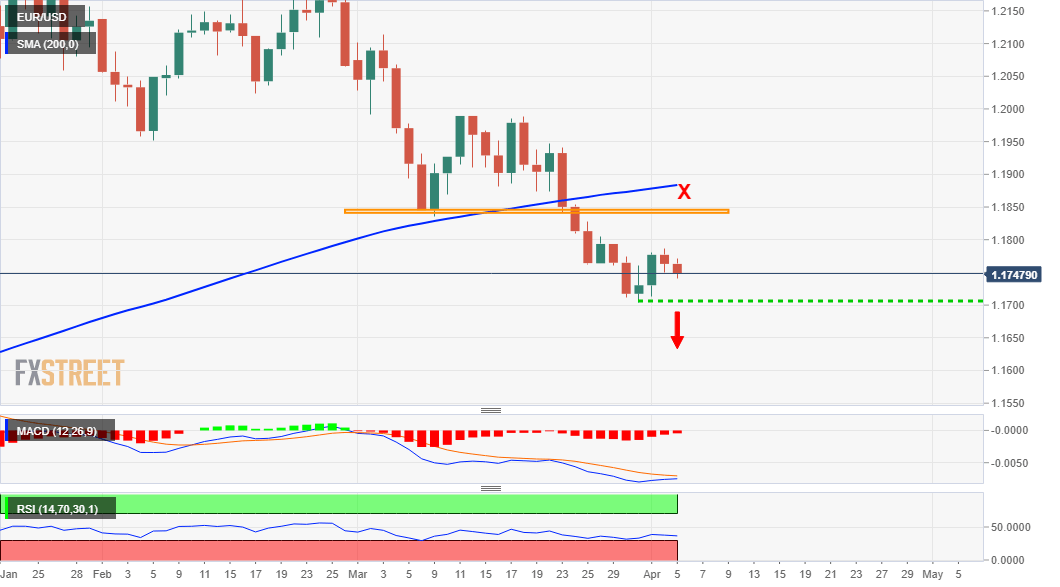
From a technical perspective, the pair's inability to gain any meaningful traction supports prospects for an extension of the recent downward trajectory. That said, bearish traders are likely to wait for some follow-through selling below the 1.1700 mark before positioning for any further depreciating move. The pair might then turn vulnerable to accelerate the fall towards testing the 1.1620-15 support area. This is closely followed by the 1.1600 mark, which if broken should pave the way for a slide towards challenging the key 1.1500 psychological mark.
On the flip side, any meaningful upside is likely to confront a stiff resistance and runs the risk of fizzling out rather quickly near the 1.1800 mark. However, a sustained strength beyond might trigger a short-covering move and push the pair back towards the 1.1860 strong support breakpoint. The mentioned area marks the very important 200-day SMA, which should be a tough nut to crack for bullish traders.
Author

Haresh Menghani
FXStreet
Haresh Menghani is a detail-oriented professional with 10+ years of extensive experience in analysing the global financial markets.